
Nemo non metuit
Magic in the Roman World
Edited by Fabrizio Conti Edited by Elizabeth Ann Pollard

Paperback (No longer our product)
(December 2022)
ISBN: 9786156405449
Price: $79.00
On back order
“Nemo Non Metuit”: Magic in the Roman World has the ambitious goal of discussing some of the fundamental themes in the development of the idea of magic, in all its facets, in the long chronological span of the Roman world, between the 8th century BCE and the 5th century CE. At the same time, this volume is the result of a team effort that has brought together both accomplished scholars and young researchers at the beginning of their scholarly careers. Altogether, this ample work is the result of a synergy that brought together different approaches to the study of Roman magic. The broad content of this volume includes studies on magical gems of Etruscan, Greek and Phoenician background; curse tablets; amulets targeting malaria; erotic spells; the use of veneficia or poisons for magical purposes; judicial prayers in Roman Britain; witches in the literary tradition; the role of women in the matter of magic and divination; the figure of the “Orphic witch” in the age of Augustus; sorcerers and rivals of Jesus Christ; early-Christian sermons against magic and superstition; the fight of late-antique Church against magical powers. By addressing such a diverse spectrum of topics, this volume aims to challenge traditional views and open new paths of interpretation in the reconstruction of a long-term cultural-historical object such as magic in connection to the Roman civilization.
Fabrizio Conti (PhD, Central European University, 2011) teaches Western Civilization, Medieval, Renaissance, and Religious Histories, as well as Magic and Witchcraft at John Cabot University in Rome, Italy. A graduate in the Humanities from the University of Rome “La Sapienza” with certificates from the Pontifical Institute for Christian Archaeology in Rome and the School of the Vatican Secret Archive, Fabrizio is particularly interested in researching cultural fractures and changes within long-term historical structures and patterns. The history of magic and witchcraft is, from this point of view, particularly inspiring as it situates itself at the crossroad of different times, domains, and mindsets. Fabrizio has taught Medieval Christianity and Magic and Witchcraft in Early Modern Europe at the Ohio State University in 2015, and he has lectured in a number of other universities in Europe, the US, and the Middle East. Besides that, he has worked in the catacombs of Rome as a docent and in the Vatican Secret Archive as an archivist. Fabrizio is currently involved in historical TV documentary series ranging from the ancient civilizations and Roman warriors to the mysteries of the Knights Templar. He is the author of “Witchcraft, Superstition, and Observant Franciscan Preachers: Pastoral Approach and Intellectual Debate in Renaissance Milan,” which was published by Brepols in 2015.
- Edited by Fabrizio Conti
- Edited by Elizabeth Ann Pollard
Similar Books
 ‘For You I Study, For You I Work, For You I Live, For You I Am Ready To Even Give My Life’
Essays in Honour of Francis (Frank) J Moloney, SDB

 A Connecting Polemic in the Medieval Mediterranean
The Correspondence of Leo III and ʿUmar II
Volume 6





 Ars Prophetica
Theology in the Poetry of Twentieth-Century Hebrew Poets Avraham Halfi, Shin Shalom, Amir Gilboa, and T. Carmi
 As Messianism Turns to Heresy
The Regenstein Chair Lectures On Lurianic Kabbalah and Shabbatai Tzevi at Hebrew Union College - Cincinnati




 Creating the Woman in Antiquity
Proceedings of the 16th Melammu Workshop, Innsbruck, 2–3 June 2022
Volume 13
 Cultic Kisses
Fruitful Encounters Between Deities and Humans. Festschrift for Angelika Berlejung on the Occasion of Her 65th Birthday
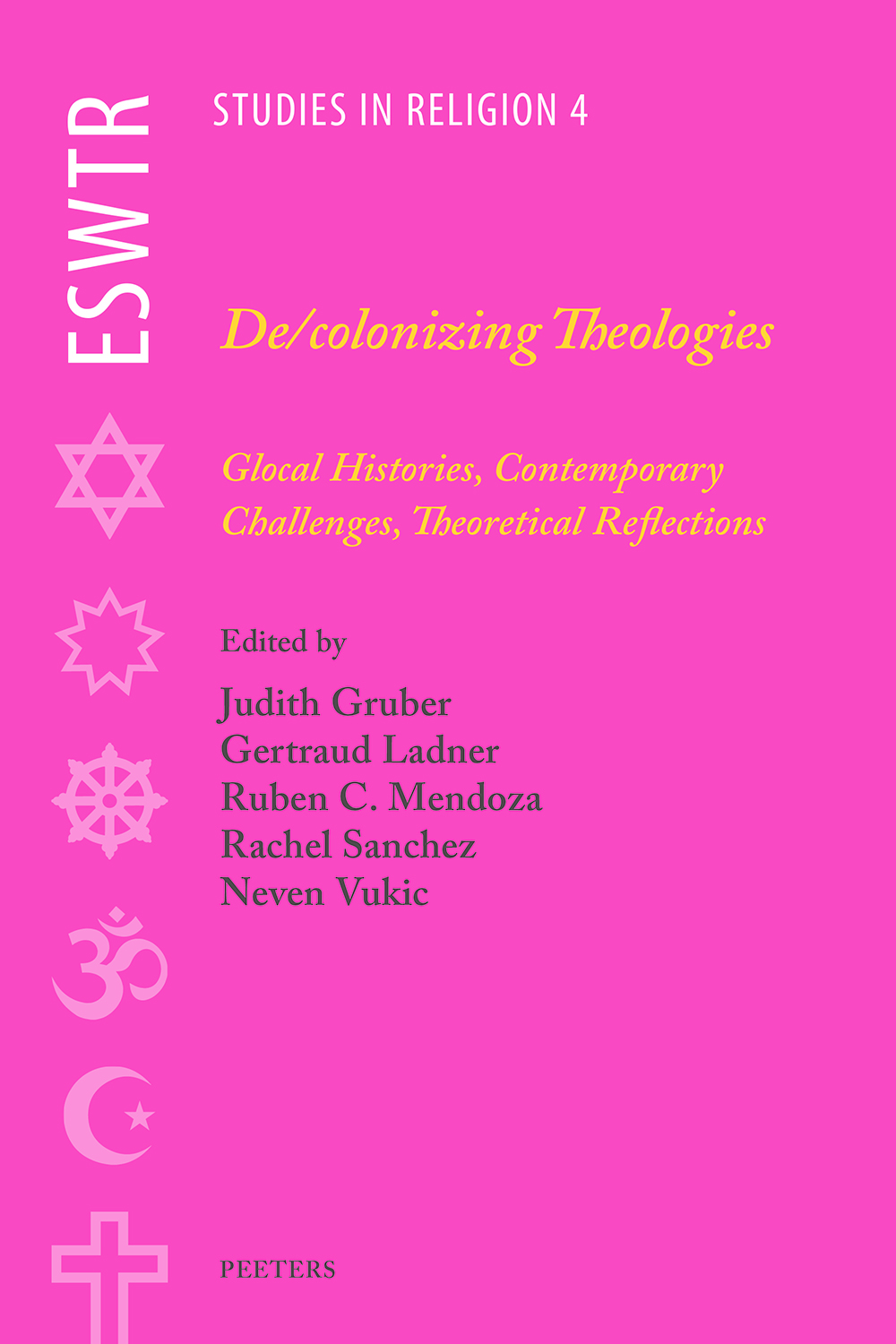 De/colonizing Theologies
Glocal Histories, Contemporary Challenges, Theoretical Reflections
Volume 4
 Drunk the Potion, No Whit Charmed
The Doctrine of Pure and Perfect Souls from Iamblichus to Damascius


 Epigraphic “Shades” from Hellenistic Thrace
Contextualizing Inscriptions in Greek from Thracian Tombs



 Extracanonical Traditions and the Holy Land
Texts, Rituals, and Material Culture in Late Antique Palestine
 Fear, Fear of God, God-Fearers
Philological and Historical Perspectives on the World of Ancient Judaism and Christianity


 Gender and Iconography in Antiquity
Femininities, Masculinities, Ambiguities, and Beyond in the Ancient Levant, Near East, and Mediterranean