
Mais comment peut-on etre persan?’. Elements iraniens en Orient & Occident
Liber Amicorum Annette Donckier de Donceel
edited by C. van Ruymbeke

Mais comment peut-on etre Persan” contains the contributions of colleagues and students written in honour of Professor Annette Donckier de Donceel, who held the chair of Persian studies and of History and Art History of the Islamic world at the Universite Libre de Bruxelles (Belgium) for over 20 years before retiring in 1999.The theme of this Liber Amicorum is the influence exercised by Iran on other civilisations. The 12 contributions gathered here cover a wide range of subjects. They fluctuate from the indo-european concepts of mages and paradise to present day disputes between Orientalists, from astral conjunctions presented by Medieval Islamic Scholars to the career of a 17th century Dutch Orientalist, from a romantic Polish music composer to a plague outbreak in early 20th century Persia, from the influence of Zoroaster on Greek thinkers to the names of flowers in Arabic, from the oral poetry in present day Badakhshan, to the fables of 17th century La Fontaine, from the sun and moon symbolism in the writings of Sadr al-din Shirazi (17th c.), to the Naqshbandiyya in Bosnia Herzegovina.What better way to show the richness of the Persian culture and its remarkable resilience and strength? What better way, also, to thank Annette Donckier de Donceel for her “outstanding service” to Persian studies over the years?
- Edited by C van Ruymbeke
Other Titles in this Series

Similar Books


 Cities through Time
Glimpses into Urbanity and Community in Mediaeval to Modern West Asia and Egypt
Volume 1
 Cuneiform Artefacts from Archaeological Contexts: New Research on Ancient Iraq
Proceedings of a Conference Held at the Bavarian Academy of Sciences and Humanities, July 4–5, 2024
Volume 2
 Des mots aux actes
Traduction épistémique et littéraire. Nouvelles tendances en histoire et didactique
Volume 15


 Global Gulf
Geo-Economic, Geo-Political, and Geo-Technological Transformation in Saudi Arabia, the United Arab Emirates, and Qatar


 Ismail Hakki Bursevi’s translation of and commentary on Fusus al-Hikam By Muhyiddin Ibn ‘Arabi
Volumes 1-4


 Monastic Manuscripts from the Eastern Mediterranean (Sinai, Jerusalem, Antioch)
Production, Use, and Contexts


 Punning in Odd or Elegant Constructions in Jeremiah
The Convergence of Linguistics, Rhetoric, and Textuality in the Hebrew Text of Jeremiah
 Qatar’s Societal Security
Towards the Inclusive National Concept of ‘Baladna’ Identity, Migration and External Threats Since 2017


 The Biblical Tale of Judah and Tamar in Fourteenth-Century Iran
A Judeo-Persian Versified Account by Shāhīn with Scholarly Edition, Annotated Translation and Persian Transliteration
Volume 94, 951
 The Discourse of Rites
Shaping and Reshaping the (Counter-)Priestly Rituals Conducted Outside the Tabernacle



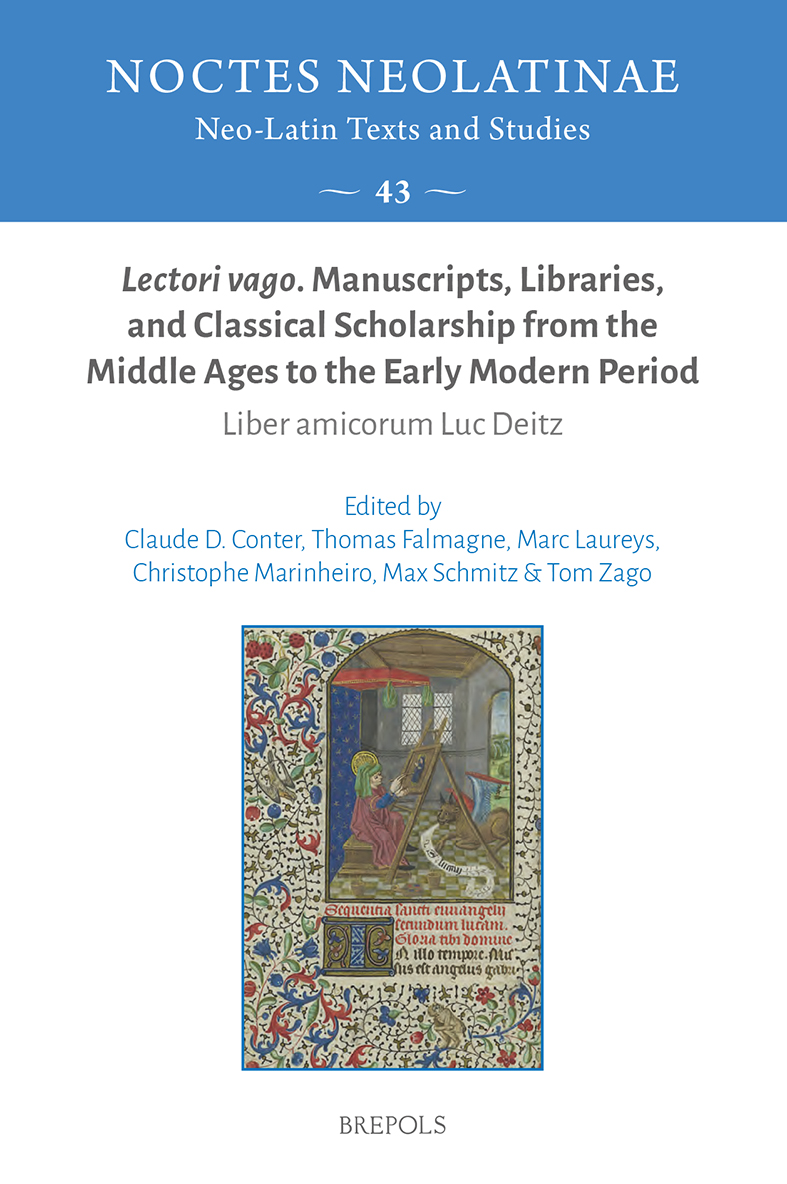 Lectori vago. Manuscripts, Libraries, and Classical Scholarship from the Middle Ages to the Early Modern Period
Liber amicorum Luc Deitz
Volume 43


 »Ein elend-schönes Land«
Gattung und Gedächtnis in Lea Goldbergs hebräischer Literatur. Aus dem Hebräischen von Rainer Wenzel

