Lost Momentum: Austrian Economic Development 1750s-1830s
By (author) Herman Freudenberger
Paperback (Out of print)
(June 2003)
ISBN: 9783205770619
6.69 x 9.49 inches
Price: $69.00
In stock
By 1810 the Austrian empire had achieved an economic momentum that seemed to promise substantial success. It may have been in as good a position as, if not better than, the territorial entities of Germany proper. The present study began with the idea that in its institutional framework as well as in its natural resources the Habsburg monarchy was in a respectable position for development. Austria had been brought to this point by a great momentum that originated with Maria Theresia and continued with her energetic, if politically unwise, son Joseph II as well as her more pedestrian grandson Franz. Austrian policy promoting economic development was a combination of government action and private initiative, which was, of course, not unique to Austria, but the persistence of bureaucratic interference and the weakness of private entrepreneurship proved harmful. By design this study places major emphasis on human activities. Consequently, the roles of central government bureaucrats and regional and local officials have been stressed. Even more emphasis has been placed, however, on Austrian, Moravian and Bohemian entrepreneurs with mercantile and artisan backgrounds, Swiss and west German Protestants and indigenous and foreign Jews and finally and importantly aristocratic landowners.
By 1810 the Austrian empire had achieved an economic momentum that seemed to promise substantial success. It may have been in as good a position as, if not better than, the territorial entities of Germany proper. The present study began with the idea that in its institutional framework as well as in its natural resources the Habsburg monarchy was in a respectable position for development. Austria had been brought to this point by a great momentum that originated with Maria Theresia and continued with her energetic, if politically unwise, son Joseph II as well as her more pedestrian grandson Franz. Austrian policy promoting economic development was a combination of government action and private initiative, which was, of course, not unique to Austria, but the persistence of bureaucratic interference and the weakness of private entrepreneurship proved harmful. By design this study places major emphasis on human activities. Consequently, the roles of central government bureaucrats and regional and local officials have been stressed. Even more emphasis has been placed, however, on Austrian, Moravian and Bohemian entrepreneurs with mercantile and artisan backgrounds, Swiss and west German Protestants and indigenous and foreign Jews and finally and importantly aristocratic landowners.
- By (author) Herman Freudenberger
Other Titles in this Series
 Im Schatten der Diktatur
Die Finanzdiplomatie des Vertreters des Völkerbundes in Österreich Meinoud Marinus Rost van Tonningen 1931-1936

Similar Books

 As Messianism Turns to Heresy
The Regenstein Chair Lectures On Lurianic Kabbalah and Shabbatai Tzevi at Hebrew Union College - Cincinnati

 Beyond Sovereign Courts
Agents and Practices in Early Modern Spanish and Habsburg Diplomacy
Volume 3




 Food Security under Armed Conflict
Global Knowledge Landscape and Public Attention to Social, Economic, and Humanitarian Dimensions


 Innovationes Lovanienses: Arts, Law and Theology at the University of Louvain (1425–1797)
Studium Lovaniense: Learning across Borders, 2
Volume 18


 Myths and Tales of the Inughuit
Erik Holtved's Polar Eskimo Texts Revised and Re-translated into Danish and English
Volume 475, 12


 Students, Scholars and Their Books at the University of Louvain (1425-1797)
Studium Lovaniense: Learning across Borders, 1
Volume 17


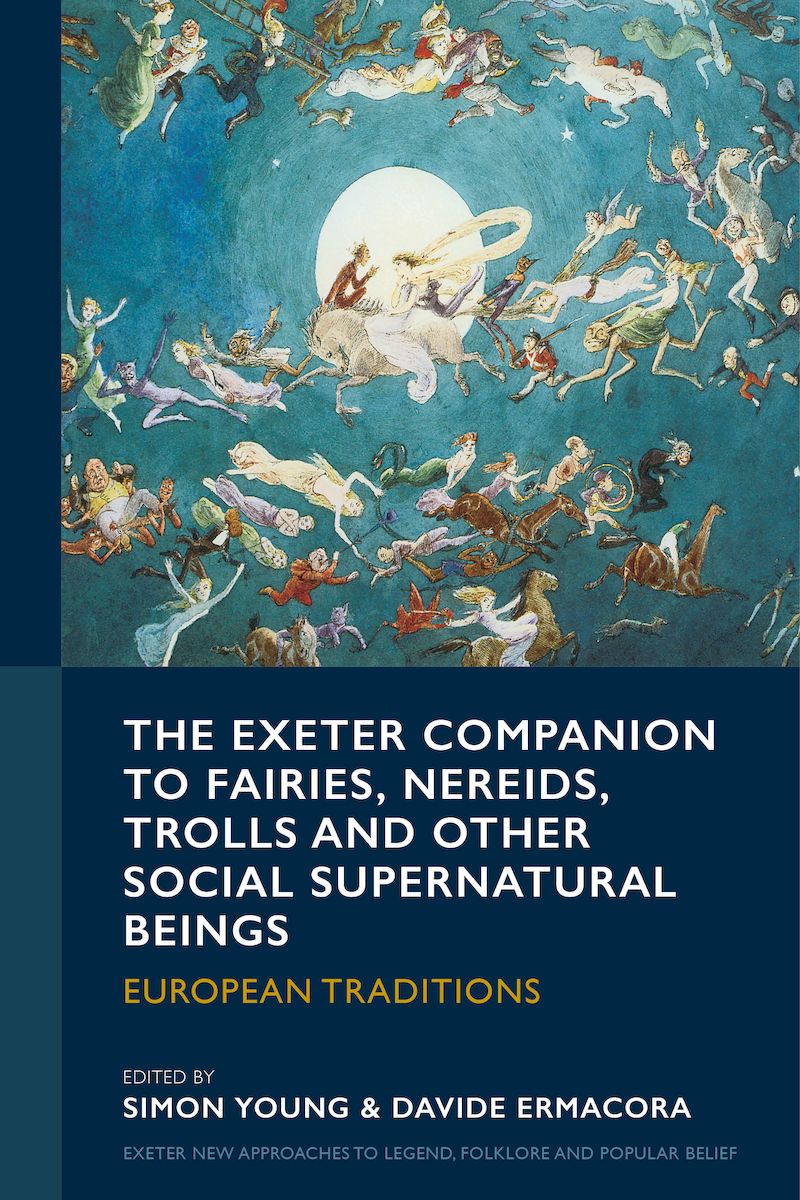 The Exeter Companion to Fairies, Nereids, Trolls and other Social Supernatural Beings
European Traditions


 The Phantom Hitchhiker
Italian Literature, Japanese Lore, and the Transnational Afterlives of a Global Ghost Story