L’homme-machine et ses avatars
Entre science, philosophie et litterature (XVIIe -XXIe siecles)
Edited by Marc Atallah Edited by Dominique Kunz Westerhoff

Paperback (Published)
(January 2012)
ISBN: 9782711623495
5.31 x 8.46 inches
Price: $33.00
On back order
English summary: In the context of the Galilean revolution, Descartes founded a mechanistic anthropology that has not ceased to redefine itself in view of the scientific discoveries and controversies that followed: the human machine was succeeded by electric man and cybernetic man. These avatars signify the constant reevaluation and development of an original metaphor: fertile and insufficient, heuristic and limited at the same time. This literary approach to the topic illuminates it in all its imaginary dimension: from talking automaton to cyborg, scientific innovation is inextricably linked to, if not indiscernible from, a creative explosion in fiction writing. French description: Dans le contexte de la revolution galileenne, Descartes a fonde une anthropologie mecaniste qui n’a cesse de se redefinir au fil des decouvertes scientifiques et des controverses qu’elle a suscitees: apres l’Homme-Machine, est venu l’Homme Electrique, puis l’Homme Cybernetique. Ces avatars signalent la constante reevaluation, la mesure toujours reprise d’une metaphore originaire, a la fois feconde et insuffisante, heuristique et limitee. Au carrefour des sciences humaines, des sciences et de l’ingenierie, il s’agit d’historiciser cette construction culturelle au long cours, jusqu’a la robotique bio-inspiree et a l’hybridation contemporaine du corps et de la technologie. L’approche litteraire en eclaire, elle, toute la dimension imaginaire: de l’automate parleur au cyborg, l’innovation scientifique est indissociable, sinon indiscernable, d’une saillance de la fiction. Fable philosophique, poesie scientifique, roman libertin, conte fantastique, theatre satirique, roman social ou science-fiction: ces differents genres font ainsi valoir la competence de la litterature pour penser la culture de l’homme-machine, et pour faire emerger le mecanique, le non-mecanique, ou l’anti-mecanique, comme autant de proces d’humanisation operes par la pratique symbolique.
- Edited by Marc Atallah
- Edited by Dominique Kunz Westerhoff
Other Titles in this Series


Similar Books


 Drunk the Potion, No Whit Charmed
The Doctrine of Pure and Perfect Souls from Iamblichus to Damascius
 Éthique, politique, religions
Superstition (XVIIe - XXIe siècles). Sémantique, histoires et cultures


 La Lettre clandestine
La littérature philosophique clandestine, ses éditeurs et ses éditions
Volume 34
 Libertinage et philosophie à l’époque classique (XVIe-XVIIIe siècle)
Athéisme, Modernité et Sécularisation / Atheism, Modernity and Secularization
Volume 23


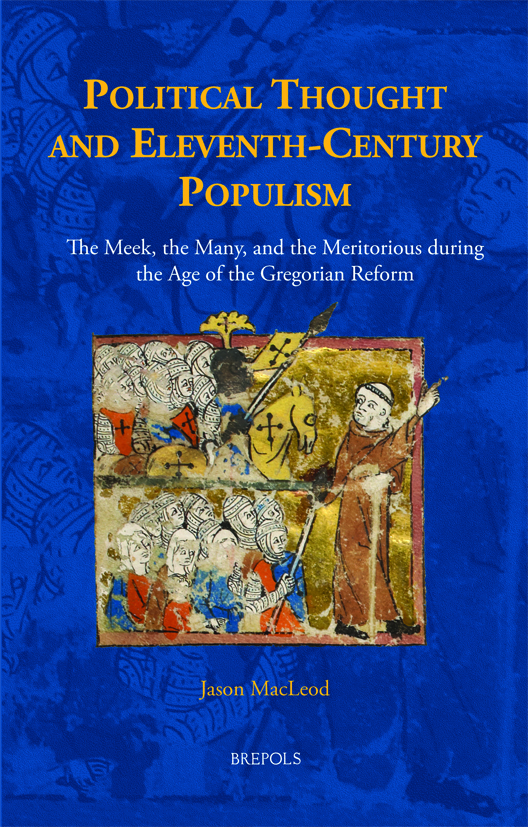 Political Thought and Eleventh-Century Populism
The Meek, the Many, and the Meritorious during the Age of the Gregorian Reform
Volume 38


 The Latin Hermes in Translation
Asclepius, Glosses on Trismegistus, Book of Six Principles of Things, Book of 24 Philosophers
Volume 50




 ‘Emergente Evolution’?
Fallstudien zur philosophischen Rekonstruktion und schopfungstheologischen Rezeption eines naturalistischen Paradigmas
Volume 40
 Al-Ğābirīs Genese und Kritik der Arabischen Vernunft
On Genesis and Critique of Arab Reason by Muḥammed ʿĀbid al-Ğābirī


 Das Dasein und das isolierte Subjekt
Die Frage der philosophischen Selbstinterpretation des Menschen bei Heidegger


 Der Geist des Menschen und die originäre Erfahrung der Zerbrechlichkeit
Eine philosophisch-theologische Grundlegung nach Edith Stein im Dialog mit der medizinischen Anthropologie und der existentiellen Psychologie