
La Favola in Aristofane
By (author) Silvio Schirru
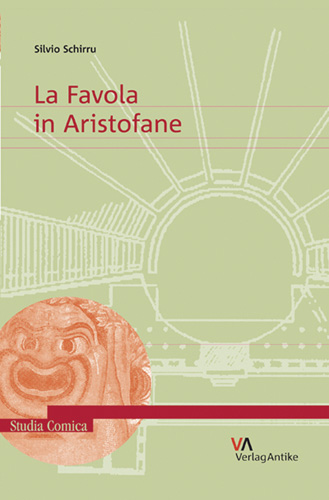
La Favola in Aristofane e la prima monografia espressamente dedicata allo studio dei testi favolistici presenti nelle commedie di Aristofane, principale esponente della commedia greca archaia e tra i maggiori drammaturghi di tutti i tempi. Nella prima parte, lautore focalizza la propria attenzione anzitutto sulla figura di Esopo, il favolista per antonomasia della letteratura greca, che Aristofane menziona in diverse occasioni e al quale si richiama sia in qualita di logopoios, creatore di favole, che, piu in generale, di sophos, sapiente, sulla base di una leggenda biografica nota almeno a partire da Erodoto; analizza quindi le favole esopiche citate da Aristofane, indagandone funzioni e modalita di utilizzo nei drammi del commediografo. La seconda parte e incentrata sulla disamina dei due mythoi, favole di creazione aristofanea che compaiono nella Lisistrata, dedicati a Melanione e Timone. Il volume si conclude con unappendice dedicata alle storie sibaritiche delle Vespe, genere narrativo che presenta diverse affinita con la favola.
- By (author) Silvio Schirru
"(...) l'unique monographie sur le sujet, (...) un outil tres precieux. (...) il s'agit donc d'un ouvrage neuf et tres riche, qui fait de maniere detaillee le point sur la reception de la fable au sein de l'oeuvre aristophanienne." Anne de Cremoux, Bibliotheque des Sciences de l'Antiquite "La favola in Aristofane is the first monograph to examine the fables in Aristophanes' plays. Schirru has attempted to break some new ground in Aesopic studies (...). His investigation of Aristophanes' use of Aesop and Aesopic fables is well-organised and backed up with a good grasp of primary and secondary material. La favola in Aristofane is an attractive addition to both Aesopic and Aristophanic studies." Victoria Jennings, BMCR "(...) il volume di S., con la solidita delle sue argomentazioni, costituisce un?utile lettura per gli studiosi che intendano documentarsi sulla presenza dell?elemento favolistico in Aristofane. Esso rappresenta, nel complesso, una valida aggiunta alla bibliografia aristofanea." Giacomo Mancuso, Lexis 29 (2012), S.416-420.
—
Other Titles in this Series


 Laughing at domestica facta
Identity construction in mid-Republican Rome through the lens of the togata

 Sub palliolo sordido
Studi sulla commedia frammentaria greca e latina - Studies on Greek and Roman Fragmentary Comedies




 Das doppelte Spiel des „servus callidus“
Eine poetologische und gesellschaftliche Reflexionsfigur auf den europäischen Bühnen der Frühen Neuzeit






Similar Books


 Contesting Labeled Identities
The Sociology of Gentilics in Biblical and Northwest Semitic Literature

 Drunk the Potion, No Whit Charmed
The Doctrine of Pure and Perfect Souls from Iamblichus to Damascius

 Epigraphic “Shades” from Hellenistic Thrace
Contextualizing Inscriptions in Greek from Thracian Tombs

 Epiphanies of the Divine in the Septuagint and the New Testament
Fifth International Symposium of the Corpus Judaeo-Hellenisticum Novi Testamenti (CJHNT), 14-17 May 2015, Nottingham


 Gold, Silver and Glass: Power Networks, Cultural Identities, Technology Transfers and Agency across the Old World (7th Century BC – 1st Century AD)
Proceedings of a Conference Held at the British Museum, 16–18 June 2023
 Language and Power in the Roman Empire and Early India
Hierarchy, Ambiguity, and the Art of Reading the Signs in Cosmopolitan Cultures
 Late Antique villae in the Balkans (3rd–7th c. AD): Current Research Questions and Perspectives
HAEMUS Companion to the Late Antique Balkans 1
Volume 4


 Nurturing the Elite
Representations of Drinking, Eating, and Religious Vessels in Palmyrene Funerary Iconography
Volume 13





 Roman Copies, Collecting, and Culture in the Bay of Naples and Beyond
Papers in Honor of Eugene J. Dwyer



 The Compositional History of the Book of Kings
An Analysis of the Evaluative Frameworks in 1 Kings 14–2 Kings 25




 Zooarchaeology of Ancient Greek Sanctuaries in Southwestern Sicily
Faunal Analysis from Selinus and Akragas as Evidence of Differences in the Treatment of Animals for Ritual Purposes
