
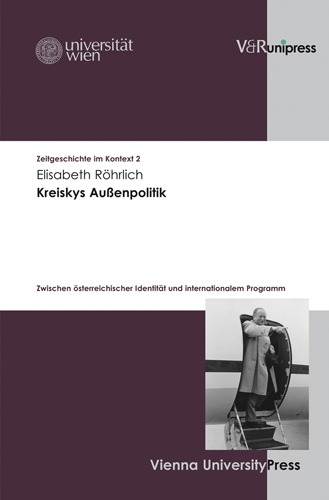
Kreiskys Außenpolitik
Zwischen österreichischer Identität und internationalem Programm
By (author) Elisabeth Röhrlich Series edited by Oliver Rathkolb
Hardback (Published)
(August 2009)
ISBN: 9783899715538
6.46 x 9.69 inches
Price: $119.00
In stock
Bruno Kreisky stands like no other for the foreign policy of the Second Republic of Austria. Beginning as State Secretary, then as Foreign Minister and Federal Chancellor, he shaped Austria’s policy of neutrality, and was internationally respected for the impact he made with his Near East policy. Kreisky’s interest for international politics can be explained by his biographical background. In his early childhood, Austria was still a monarchy; he witnessed the crisis-ridden First Republic and the authoritarian Dollfuss/Schuschnigg regime. In 1938, he was forced into Swedish exile. The author traces his life course and the development of foreign policy issues and their implementation. As a consequence of his life experiences, Kreisky sought to give the small state of Austria a new profile in international relations. He built on a policy of identity, drawing on a re-evaluation of history, thereby integrating his own life course as a leitmotif. Despite the opposition with which he was confronted as a Jew and an emigrant, he himself became an Austrian monument. His international mission established an Austrian identity. German text.
Bruno Kreisky stands like no other for the foreign policy of the Second Republic of Austria. Beginning as State Secretary, then as Foreign Minister and Federal Chancellor, he shaped Austria’s policy of neutrality, and was internationally respected for the impact he made with his Near East policy. Kreisky’s interest for international politics can be explained by his biographical background. In his early childhood, Austria was still a monarchy; he witnessed the crisis-ridden First Republic and the authoritarian Dollfuss/Schuschnigg regime. In 1938, he was forced into Swedish exile. The author traces his life course and the development of foreign policy issues and their implementation. As a consequence of his life experiences, Kreisky sought to give the small state of Austria a new profile in international relations. He built on a policy of identity, drawing on a re-evaluation of history, thereby integrating his own life course as a leitmotif. Despite the opposition with which he was confronted as a Jew and an emigrant, he himself became an Austrian monument. His international mission established an Austrian identity. German text.
- By (author) Elisabeth Röhrlich
- Series edited by Oliver Rathkolb
Other Titles in this Series


 Der Ostmark treue Alpensöhne
Die Integration der Österreicher in die großdeutsche Wehrmacht, 1938–45
 Demokratie ohne Demokraten?
Die Demokratieverständnisse in den politischen Parteien der Ersten Republik Österreich 1918–1933/34


 Der lange Schatten des Antisemitismus
Kritische Auseinandersetzungen mit der Geschichte der Universität Wien im 19. und 20. Jahrhundert
 Die Verjährung im österreichischen Strafrecht
Theoretische Grundlagen und Entwicklung unter besonderer Berücksichtigung von systemischem Unrecht






 Deutschlands »Drang nach Südosten«
Der Mitteleuropäische Wirtschaftstag und der »Ergänzungsraum Südosteuropa« 1931–1945
 Images des Sports in Österreich
Innensichten und Außenwahrnehmungen. Mit zwei Vorworten von Oliver Rathkolb und Monika Sommer
Similar Books


 Dis/United States of Vulnerability
Literary and Cultural Transgressions in U.S. Poetry Since the 1960s
Volume 330


 European Drama and Performance Studies
Dramatisations politiques. Théâtre, politique et idéologie au XIXe siècle (1806-1914)
Volume 27


 Modernization, Crises, Cultural Revolutions
Yugoslavia’s 1960s and 1970s through the amateur film lens


 Visual Memory and Oblivion
Monuments and Conflicts in Urban Spaces in Central and Eastern Europe from the Nineteenth Century to the Present Day



 “Tod durch Erschießen”
Generaloberst Nikolaus von Falkenhorst. Wehrmachtsbefehlshaber in Norwegen 1940–1945. Erinnerungen – Verhörprotokolle – Urteilssprüche
Volume 63
 “Zum Siege unserer menschenfreundlichen Prinzipien”
Ungarische Freimaurernetzwerke im „Orient“ 1886-1920


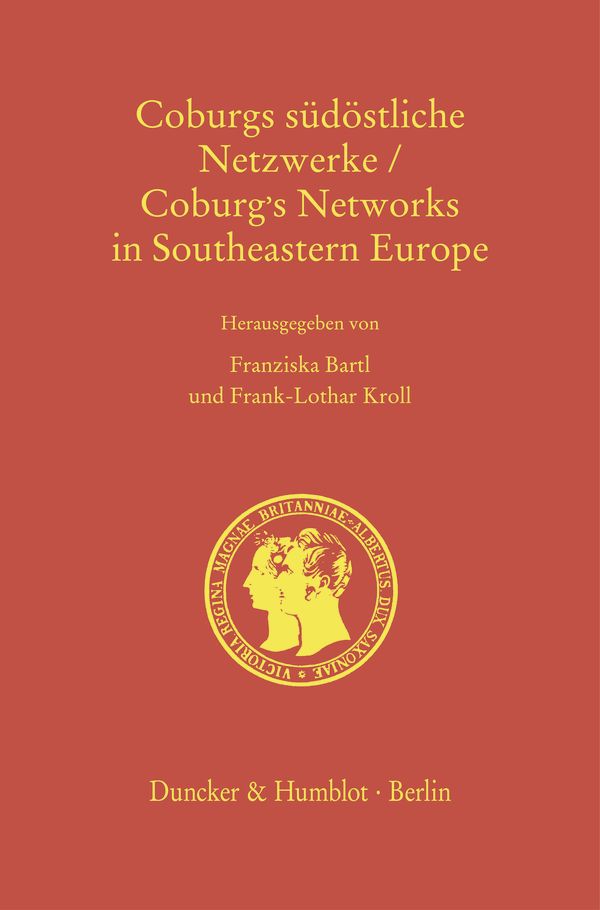 Coburgs südöstliche Netzwerke – Coburg’s Networks in Southeastern Europe
Bulgarien, Rumänien und Ostmitteleuropa im 19. und 20. Jahrhundert. Hrsg. von Franziska Bartl und Frank-Lothar Kroll mit einem Grußwort Seiner Majestät des Königs der Bulgaren Simeon II.
Volume 39


 Dark Like You
Zur medienreflexiven Modernität der Kinder- und Jugendzeitschrift ‚The Brownies’ Book‘ (1920–1921)
Volume 191
 Das Generalgouvernement Belgien im Ersten Weltkrieg 1914-17–1918
Die Erinnerungen des Generalobersten Ludwig Freiherrn von Falkenhausen
Volume 64
 Das Werden einer Universität
Die Protokolle des Akademischen Senats der Hamburgischen Universität 1919–1921