
I banchetti degli imperatori romani
by Claudia Cerchiai Manodori Sagredo

English summary: We often read in the ancient authors, of banquets set up in family triclinia, where simple foods were served, such as snails, lettuce or green sprouts in a blackened pan, or white puls (farro pottage) served with a tasty sausage. However, nowhere do we read explicitly of how foods for the Imperial triclinia, which were often imported from distant lands and seas to satisfy the tastes of the Emperors, were cooked and presented. For them it was of the utmost importance to satisfy their most extravagant desires, but we do not have the description of these banquets, we do not “see” the foods presented at their tables. We know, however, that Emperor Hadrian preferred a particular dish: the tetrafarmacum, composed by a mixture of different meats. In reality, this dish was created by Aelius Verus, Hadrian’s adoptive son, and was called pentafarmacum (thanks to an additional ingredient). This is a dish that denotes a certain creativity in the combination of refined meats that we certainly would not have found in previous eras when triclinia mainly featured unprocessed foods. It is suggestive to think, then, that this dish had a basis of creativity in some particular recipe, conceived by some particular cook and reading how Aelius Verus always kept Apicius’s books at his bedside, as well as those of Ovid and Martial, demonstrates how Apicius’s recipes had not been forgotten. Therefore, the famous gastronome from the Age of Tiberius was still “present” in the Hadrian Age. And also even later, when we read that the Emperor Elagabalus, known for his eccentricity and extravagance in terms of food, was inspired by Apicius, an ordinary citizen, and by the emperors Nero, Otho and Vitellius who, before him, were known for their extravagance and refinement. Above all extravagance, sumptuousness and richness of food are widely visible in the famous dinner of Trimalchio, which we can rightly consider as “Imperial”, and which, held in the Age of Nero, was certainly a source of inspiration for Elagabalus. So, the recipes of Apicius, which were probably intended mainly for the kitchens of the Emperors, elicit curiosity on account of the way they were elaborated. Often made up not only of simple ingredients but also by special foods, they were certainly not followed by the people. Apicius’s recipes surely found expression and presence in Imperial banquets, revealing, after careful reading, also a particular care for the presentation of the dishes prepared. German description: Si legge spesso, negli autori antichi, di banchetti allestiti in triclini familiari, dove si portavano cibi semplici, come lumache, lattughe o verdi cavoletti in un tegame annerito o una bianca puls con una saporita salsiccia ma non si legge, esplicitamente, come i cibi per i triclini imperiali, che venivano spesso portati da terre e mari lontani per soddisfare i gusti degli imperatori, fossero stati cucinati e presentati. Per essi era piu importante soddisfare i desideri piu stravaganti ma non abbiamo la descrizione dei banchetti, i cibi non li vediamo presentati sulle loro tavole. Sappiamo, pero, che limperatore Adriano prediligeva un piatto particolare: il tetrafarmaco composto da un insieme di carni diverse. In realta questo piatto era stato creato da Elio Vero, adottato da Adriano e che si chiamava pentafarmaco (per laggiunta di un altro componente). E un piatto, questo, che denota una creativita nellaccostamento di carni comunque ricercate che non lavremmo certo trovata in epoca precedente quando nei triclini erano soprattutto presentati cibi non elaborati. E suggestivo pensare, allora, che questo piatto avesse avuto una base di creativita in qualche ricetta particolare, ideata da qualche cuoco particolare e leggere come Elio Vero tenesse sempre accanto al letto i libri di Apicio, oltre a quelli di Ovidio e di Marziale, dimostra come le ricette di Apicio non fossero state dimenticate. Quindi il famoso gastronomo di eta tiberiana era ancora presente in eta adrianea ed anche successivamente quando si legge che limperatore Eliogabalo, noto per leccentricita e stravaganza in fatto di cibo, si fosse ispirato ad Apicio, fra i semplici cittadini, e agli imperatori Nerone, Otone e Vitellio che, prima di lui, avevano mostrato stravaganze e raffinatezze. Soprattutto stravaganze, sontuosita e ricchezza di cibi sono ampiamente visibili nella famosa cena di Trimalcione che abbiamo voluto, a buon diritto, considerare imperiale e che, svoltasi in eta neroniana, sara stata sicuramente fonte di ispirazione da parte di Eliogabalo . Quindi le ricette di Apicio, che verosimilmente erano destinate soprattutto alle cucine degli imperatori, incuriosiscono per le loro elaborazioni, spesso realizzate non solo su cibi semplici ma anche su cibi particolari e non certo seguite dal popolo, trovavano sicuramente espressivita e presenza nei banchetti imperiali, svelando ad una attenta lettura anche una cura particolare per la presentazione.
- By (author) Claudia Cerchiai Manodori Sagredo
Other Titles in this Series

 Il Mobile a Pompei ed Ercolano
Letti, tavoli, sedie e armadi. Contributo alla tipologia dei mobili della prima eta imperiale
Volume 151

 Dai palazzi assiri Immagini di potere da Assurnasirpal II ad Assurbanipal (IX-VII sec aC)
Catalogo della mostra. Roma 1995. Palazzo delle Esposizioni
Volume 76


 Spina e il delta padano
Riflessioni sul catalogo e sulla mostra ferrarese. Atti del convegno internazionale di studi: Spina: due civilta a confronto. Ferrara 1994. 21 gennaio. Aula Magna Universita
Volume 90
 Magical Gems in Their Contexts
Proceedings of the International Workshop held in the Museum of Fine Arts, Budapest, 16-18 February 2012
Volume 229


 Genova Romana
Mercato e citta dalla tarda eta repubblicana a Diocleziano dagli scavi del colle di Castello (Genova - S.Silvestro 2)
Volume 62
 Hunters of the Mountain
The Archaeology of Jebel Gharbi, NW Libya, from Final Pleistocene to Early Holocene
Volume 264
 Mouseia
Tipologie, contesti, significati culturali di unistituzione sacra (VII-I sec. A.C.)
Volume 209
 Il Tymbos la Stele la Barca di Caronte
L'immaginario della morte sulle lekythoi funerarie a fondo bianco
Volume 202

 I Sepolcri padovani di Santa Giustina
Il sarcofago 75-1879 del Victoria and Albert Museum di Londra e altri sarcofagi dalla basilica di Santa Giustina in Padova
Volume 141
 Il Guerriero di Agrigento
Una probabile scultura frontonale del Museo di Agrigento e alcune questioni di archeologia siceliota
Volume 77


 Le Terrecotte del Museo Nazionale Romano II
Materiali dai depositi votivi di Palestrina. Collezioni Kircheriana e Palestrina
Volume 112


Similar Books

 Caesar’s Visions and Impact on the Roman Empire
Revisiting the Archaeological and Historical Record of the 40s BC
Volume 2


 Drunk the Potion, No Whit Charmed
The Doctrine of Pure and Perfect Souls from Iamblichus to Damascius

 Epiphanies of the Divine in the Septuagint and the New Testament
Fifth International Symposium of the Corpus Judaeo-Hellenisticum Novi Testamenti (CJHNT), 14-17 May 2015, Nottingham


 Etruscan and Roman Hellenistic Anatomical ex votos
Reassessing Popular Religious Expressions in Central Italy
Volume 8



 Invisible Labour in Antiquity
Visualizing Obscure Work in the Ancient Mediterannean and West Asia
Volume 1
 Language and Power in the Roman Empire and Early India
Hierarchy, Ambiguity, and the Art of Reading the Signs in Cosmopolitan Cultures
 Late Antique villae in the Balkans (3rd–7th c. AD): Current Research Questions and Perspectives
HAEMUS Companion to the Late Antique Balkans 1
Volume 4

 Nurturing the Elite
Representations of Drinking, Eating, and Religious Vessels in Palmyrene Funerary Iconography
Volume 13


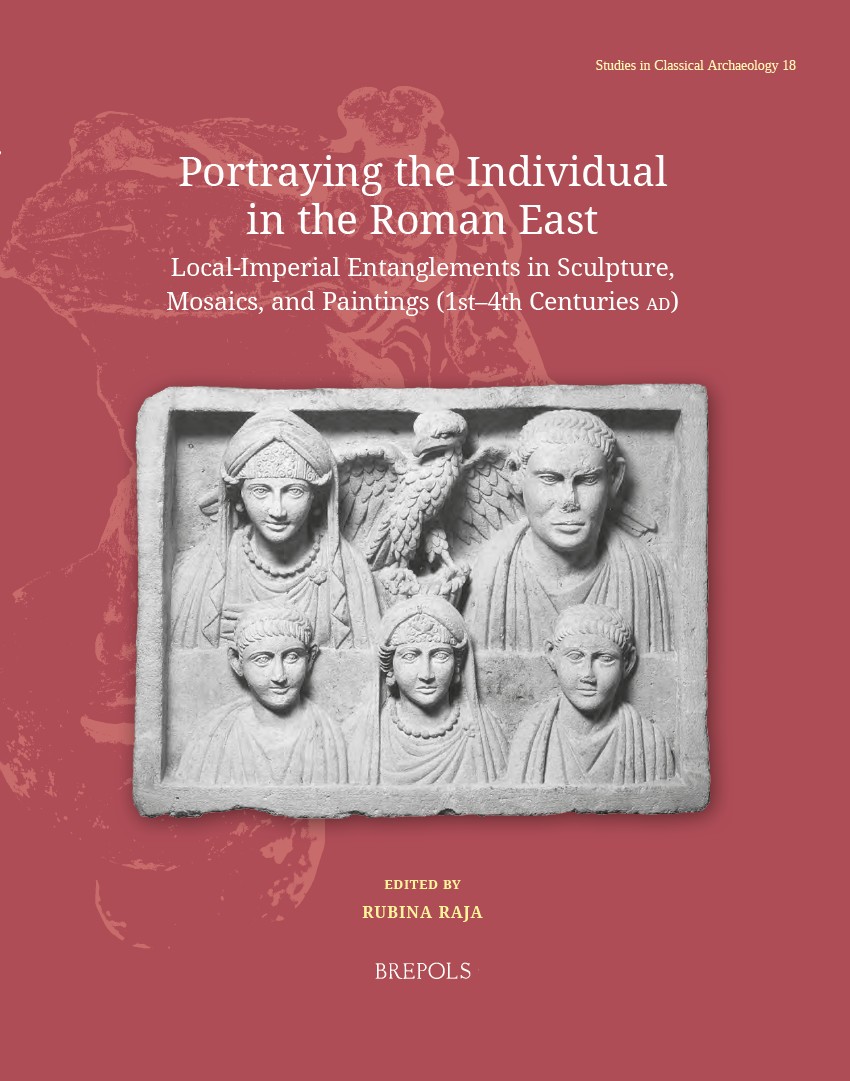 Portraying the Individual in the Roman East
Local–Imperial Entanglements in Sculpture, Mosaics, and Paintings (First–Fourth Centuries AD)
Volume 18

 Small Worlds and Relational Agencies: Local Societies in Early Medieval Iberia
Pequeños mundos y Agencias relacionales: Sociedades locales altomedievales en la Península Ibérica
 The Compositional History of the Book of Kings
An Analysis of the Evaluative Frameworks in 1 Kings 14–2 Kings 25

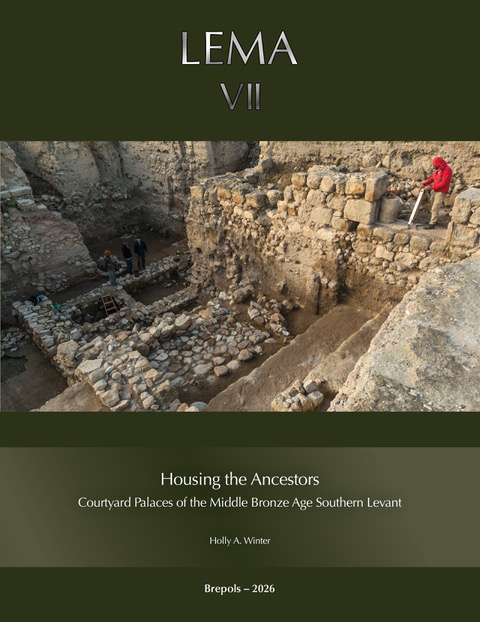
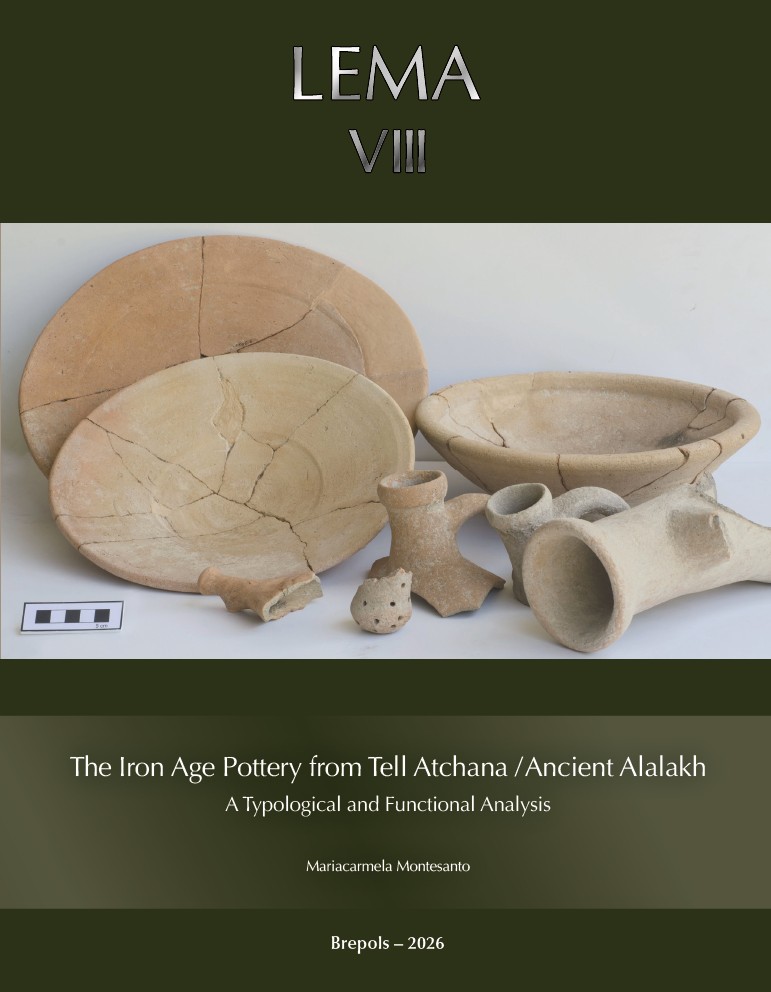 The Iron Age Pottery from Tell Atchana / Ancient Alalakh
A Typological and Functional Analysis
Volume 8

 Writing in the Church of the Nativity in Bethlehem
Inscription and Graffiti in a Multilingual and Multigraphic Perspective
Volume 45
 Contesting Labeled Identities
The Sociology of Gentilics in Biblical and Northwest Semitic Literature


 After Life in Roman Paganism. L’Égypte des astrologues. Les Mages hellénisés
Introductions historiographiques
Volume 7

 Atlante tematico di topografia antica 36-2026
Urbanistica e monumenti, porti, Roma. Ricerche sui monti Aurunci
Volume 36
 Cerámica común romana y ciclo haliéutico
Análisis de los contextos de las cetariae de Iulia Traducta


 Diodor über den ersten Sklavenaufstand auf Sizilien
Ein philologischer und historischer Kommentar
Volume 67