Higher Education Investment in the Arab States of the Gulf
Strategies for Excellence and Diversity
Edited by Dale Eickelman Edited by Rogaia Mustafa Abusharaf

Over the last half-century, the Gulf Cooperation Council states have invested on a huge scale in higher education, but the stated commitment to internationally recognized excellence has also to come to terms with tradition. These pressure points are examined here in a number of comparative studies.
Over the last half-century, the GCC states have invested on a huge scale in higher education, but the stated commitment to internationally recognized excellence has also to come to terms with tradition. These pressure points are examined here in a number of comparative studies, and cover among other topics: – higher education as soft power to promote regional or global influence – intense reliance on foreign instructors – citizen entitlements – badu and hadar divisions – gender separation – different visions of language of instruction – marginalization of foreign students and faculty outside work – branch campuses of foreign universities Despite efforts to train and employ nationals, the vast majority of health workers remain non-local, and major challenges remain in fields such as science and technology. Expenditure has not always led to the effective reform of underperforming educational systems, and institutions often fall short of their world-class aspirations. The studies in this book explore ways of making institutions better realise the balance between global and local.
Muhammad Shahrour, born in Damascus in 1938, Emeritus of Damascus University where he was a faculty member between 1972 and 2000. His first book as an Islamic thinker “Al-Islam wa-l-Kitab” was an instant bestseller and one of the most discussed books in the whole Arab world. It remains banned in many Arab countries. Shahrour received the 2017 Sheikh Zayed Book Award in the category “Contribution to the Development of Nations”
- Edited by Dale Eickelman
- Edited by Rogaia Mustafa Abusharaf
Similar Books
 Cities through Time
Glimpses into Urbanity and Community in Mediaeval to Modern West Asia and Egypt
Volume 1

 Islamic Rituals Beyond the Mosque
Historical Evolution of Prayer and Devotion in Physical Space and Cyberspace
 Ismail Hakki Bursevi’s translation of and commentary on Fusus al-Hikam By Muhyiddin Ibn ‘Arabi
Volumes 1-4

 Qatar’s Societal Security
Towards the Inclusive National Concept of ‘Baladna’ Identity, Migration and External Threats Since 2017


 Beiträge zur Islamischen Kunst und Archäologie
The Arts and Archaeology of Funerary Cultures in Islam
Volume 10.0

 Explorations in Islamic Archaeology
Material Culture, Settlements, and Landscapes from the Mediterranean to Western Asia
Volume 7


 Occasionalism Revisited
New Essays from the Islamic and Western Philosophical Traditions (2nd ed.)
Volume 2
 Proceedings of the Seminar for Arabian Studies Volume 54 2025
Papers from the fifty-seventh meeting of the Seminar for Arabian Studies held at the Institut national d’histoire de l’art, Paris, 27–29 June 2024
 The Logic of al-Fanari
A Study and Annotated Translation of al-Fanari's Commentary on the Isaghuji
Volume 3


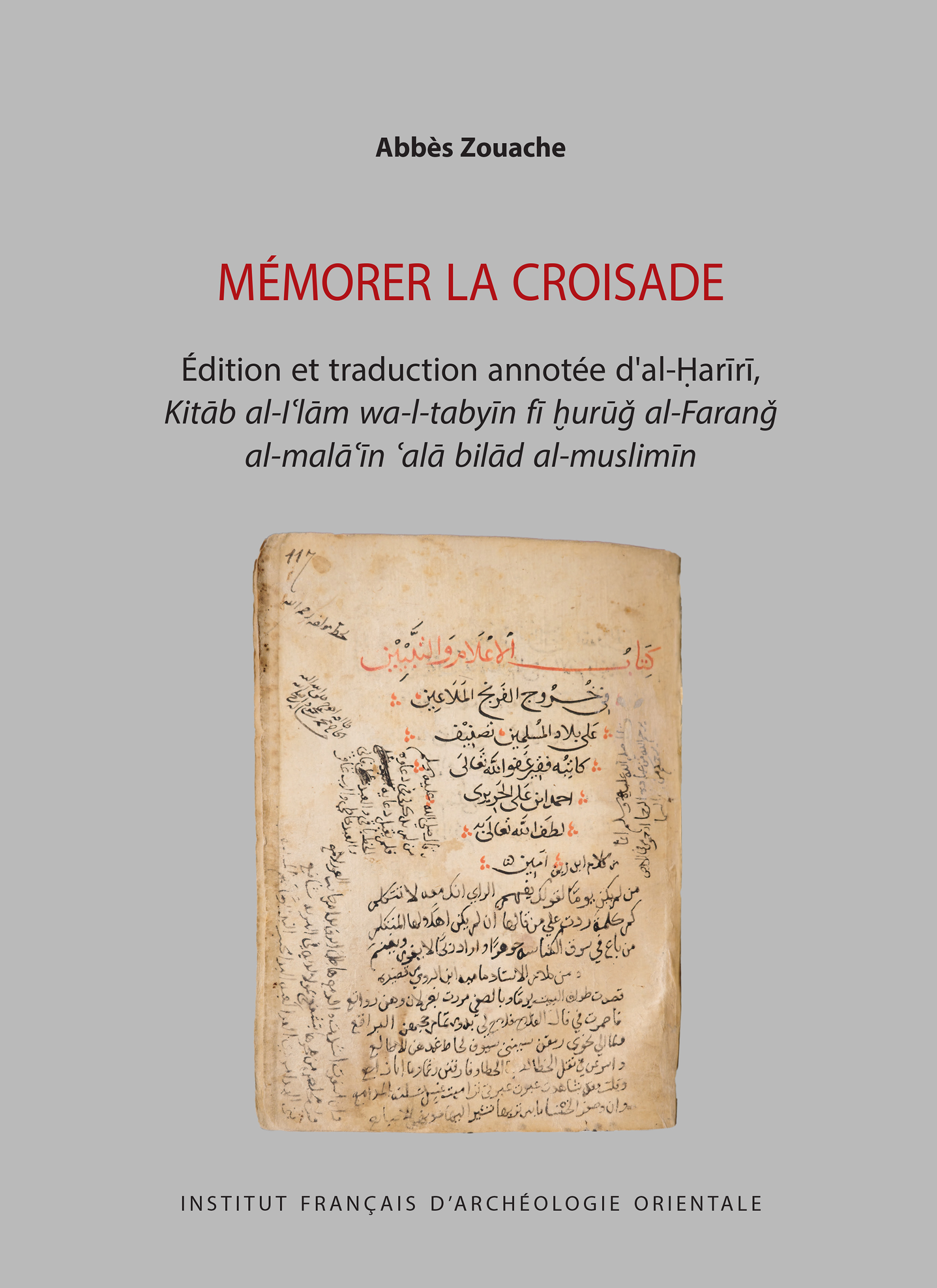 Memorer la croisade
Edition et traduction annotee dal-Hariri, Kitab al-I'lam wa-l-tabyin fi hurug al-Farang al-mala'in 'ala bilad al-muslimin
Volume 64


 Freedom Revisited
A Comparative Theological Approach to the Question of Free Will in Islam
Volume 40


 History of the Oil Industry in the Gulf and the People Who Made it Happen, 1934-1966
Based on Original Documents of Abu Dhabi Petroleum Company
 Navigating Language in the Early Islamic World
Multilingualism and Language Change in the First Centuries of Islam
Volume 2
 Proceedings of the Seminar for Arabian Studies Volume 53 2024
Papers from the fifty-sixth meeting of the Seminar for Arabian Studies held in Aarhus 4–6 August 2023


 The Trucial Coast Political Reports 1963-1966
From Pearls to Oil - at Last. With an Index for vols 1-5
 Zoroastrian Hermeneutics in Late Antiquity
Commentary on the 'Sudgar Nask' of 'Denkard' Book 9
Volume 32