
Hatra: Il territorio e l’urbanistica
Prefazione di Roberta Venco Ricciardi
By (author) Enrico Foietta

Paperback (Published)
(September 2018)
ISBN: 9781789690057
7.99 x 10.91 inches
Price: $141.00
In stock
The main purpose of the research presented in this volume has been the study of the city and the surrounding landscape of Hatra. To achieve this result, a multilayer GIS was created. It will remain an important resource for future excavations, which themselves may expand its dataset and verify it with additional ground control points
The ancient city of Hatra is located 80 km southwest of the modern city of Mosul. The site reached its apogee during the 2nd and 3rd centuries AD, arriving at the striking dimensions of c. 300 hectares and into a new role as the capital of a significant buffer state between the Parthian and Roman empires. This volume is devoted to the study of the landscape surrounding Hatra and of the development of this important city, drawing on published information gathered by Iraqi and foreign expeditions, as well as unpublished data garnered from over fifteen years of fieldwork at the site by the Italian Archaeological Expedition. The study of the landscape comprehends the morphology, hydrology and geology of the region and offers new proposals regarding the exploitation of natural resources and the development of regional and local routes through the territory under Hatra’s political and military control during the 2nd and 3rd centuries AD. The analysis of Hatra as an urban centre consists of a detailed study of the city’s hydrology, street network and urban areas, with the purpose of detecting the principles behind the planning and development of the city. The main elements of the urban space are treated in this book: the Temenos area and the Small Shrines, the Necropoles, the Fortifications, the Houses, and the Palaces. Due to the cross-referencing of archaeological, historical and epigraphic data, new ideas have been proposed regarding the chronological phases of urbanism at Hatra, from its foundation up to the destruction of the city by the Sasanian army in AD 241. u La citta di Hatra si trova nella Jazira irachena a circa 80 km a sud-ovest di Mosul. Il centro raggiunse il suo apogeo durante il II-III sec. d.C., toccando l’impressionante estensione di quasi 300 ettari e divenendo la capitale di un influente stato cuscinetto, collocato tra l’impero partico e l’impero romano. Questo volume e dedicato allo studio del territorio e dell’urbanistica di questo importante sito antico, impiegando contestualmente informazioni edite, raccolte dalle varie missioni irachene e straniere che si sono avvicendate sul terreno, e inedite, provenienti dal vasto Archivio della Missione Archeologica Italiana a Hatra in piu di quindici anni di ricerche sul campo. Lo studio del territorio definisce un quadro dettagliato della morfologia, idrologia e geologia della regione e dell’area prossima al centro, oltre a proporre alcune nuove ipotesi interpretative sullo sfruttamento delle risorse ambientali, sull’articolazione della rete viaria periurbana e regionale e sull’estensione del territorio sottoposto al controllo politico e militare della citta durante il II e III sec. d.C. L’analisi urbanistica comprende uno studio approfondito dell’idrologia cittadina, della rete stradale e delle aree urbane, allo scopo di individuarne le principali caratteristiche ed eventuali regole nella pianificazione e nello sviluppo della citta. Nel libro sono inoltre analizzati i principali elementi che compongono il tessuto urbano: il Temenos e i templi minori, le necropoli, le difese cittadine, le case e i palazzi. Grazie all’utilizzo contestuale del dato archeologico, storico ed epigrafico, e stato inoltre possibile formulare nuove ipotesi sulle fasi urbanistiche e sulla cronologia di Hatra dalla fondazione alla sua distruzione, avvenuta per mano sasanide nel 241 d.C.
Enrico Foietta è dottore di ricerca e borsista presso l’Università degli Studi di Torino. È membro di varie missioni archeologiche nel Vicino Oriente (Siria e Iran). Attualmente collabora attivamente con la Missione Archeologica Congiunta Italo-Iraniana in Khuzistan (ICAR – CRAST), con la Missione Archeologica Italiana a Hatra, con il Centro Ricerche Archeologiche e Scavi di Torino (CRAST) e la Missione Franco-Siriana a Europos-Dura (CNRs Paris).
- By (author) Enrico Foietta
Similar Books






 Boğazköy Tablets in the Museum of Anatolian Civilizations (Bo 9032–Bo 9097)
Anadolu Medeniyetleri Müzesinde Bulunan Boğazköy Tabletleri (Bo 9032–Bo 9097)
Volume 4
 Connecting the Dots: Counting, Writing, and the Beginnings of Civilization
The Secret Lives of Clay Tokens: A Memoir

 Curating the Prehistoric Past
Studies on West Asian Archaeology and Beyond in Honour of Yoshihiro Nishiaki

 Exploring Gender Dynamics across the Ancient Near East
Collected Essays of Gender and Methodology in the Ancient Near East (GeMANE) 4 and 5
Volume 7


 Ḫattušaš utnē išḫameški
Hittite and Other Ancient Near Eastern Studies Presented to Piotr Taracha on the Occasion of His 65th Birthday




 Kultur – Kontakt – Kultur
Beiträge anlässlich der 66. Rencontre Assyriologique Internationale in Frankfurt/Main und Mainz, 25.–29. Juli 2022
Volume 35
 Money of Mercenaries in the Cimmerian Bosporus
From the Mithridatic Wars to the Roman-Bosporan War of AD 45-49
Volume 45

 New Research on Old Collections in Southwest Asian Archaeology
Proceedings of the Workshop Held at the British Museum, London, 31 July – 2 August, 2023
 Old Aramaic Inscriptions and their Contexts
An Epigraphic, Archaeological, and Historical Synthesis
Volume 63

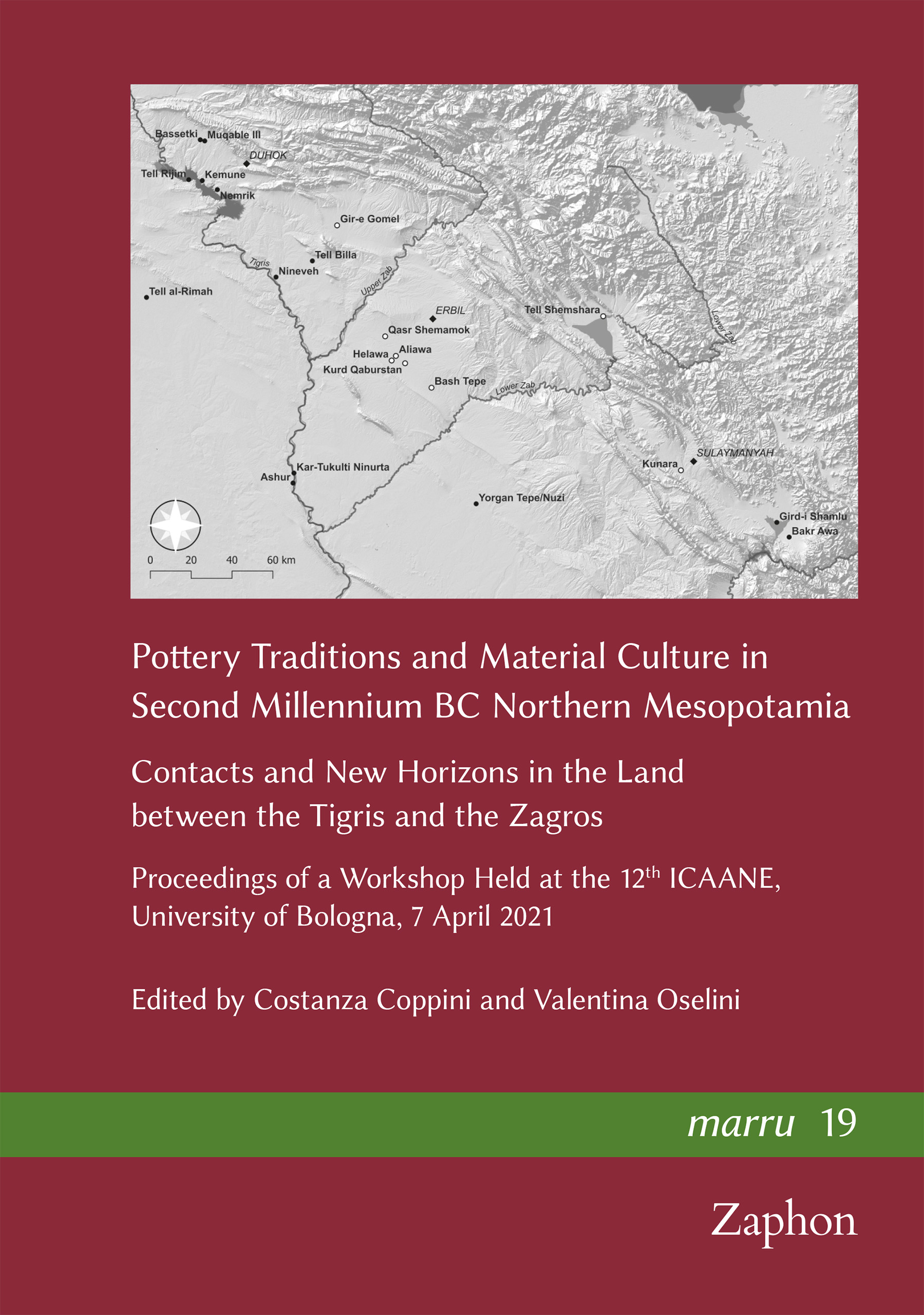 Pottery Traditions and Material Culture in Second Millennium BC Northern Mesopotamia
Contacts and New Horizons in the Land between the Tigris and the Zagros. Proceedings of a Workshop Held at the 12th ICAANE, University of Bologna, 7 April 2021
Volume 19
 Punning in Odd or Elegant Constructions in Jeremiah
The Convergence of Linguistics, Rhetoric, and Textuality in the Hebrew Text of Jeremiah

 Sertorius, the Exiles of the Sullan Regime and the Provinces of the Empire
Legitimacy, Morality and Imperial Discourse in the 70s BCE
 Shame in the Worlds of the Hebrew Bible and Akkadian Texts
A Linguistic Study and Its Implications
Volume 33

 Telling Contexts
Archaeological and Textual Studies in Honor of Elizabeth Bloch-Smith and Mark S. Smith
 The Body
Lived, Cultured, Adorned: Essays on Dress and the Body in the Bible and Ancient Near East in Honor of Nili S. Fox
 The Discourse of Rites
Shaping and Reshaping the (Counter-)Priestly Rituals Conducted Outside the Tabernacle
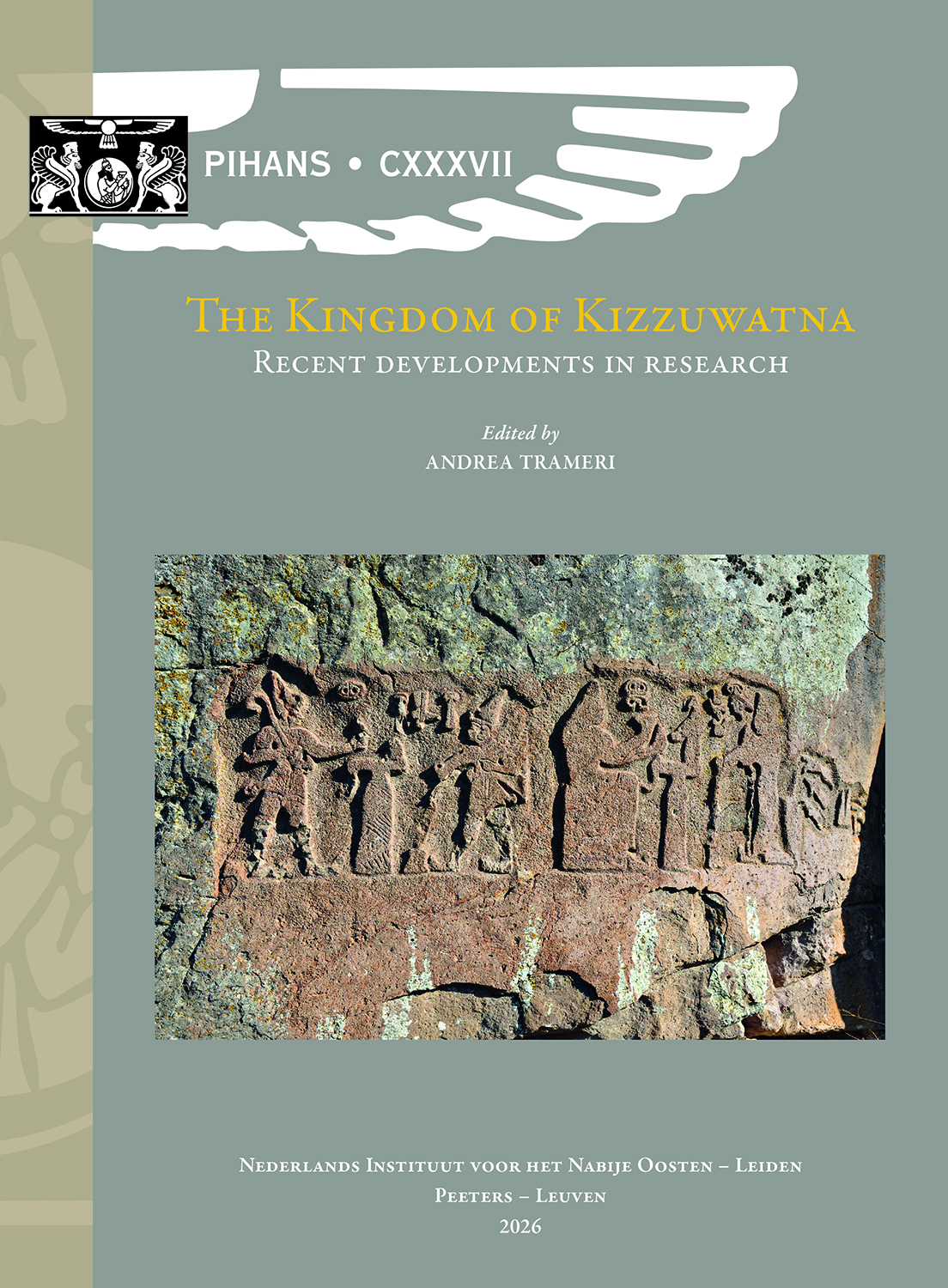 The Kingdom of Kizzuwatna: Recent Developments in Research
Proceedings of the Third NINO Postdoctoral Research Fellow Annual Conference, Leiden, 23rd-25th March 2023
Volume 137
