
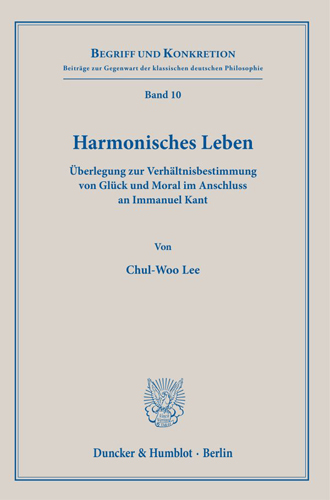
Harmonisches Leben.
Überlegung zur Verhältnisbestimmung von Glück und Moral im Anschluss an Immanuel Kant.
By (author) Chul-Woo Lee
Hardback (Published)
(May 2023)
ISBN: 9783428187027
6.18 x 9.17 inches
Price: $145.00
In stock
Die Arbeit legt die ethische Verhaltnisbestimmung von Gluck und Moral bei Kant dar. Die These der Arbeit lautet, dass Kant im Unterschied zur Unvereinbarkeitsthese, Dissonanzthese und Koinzidenzthese des Verhaltnisses von Gluck und Moral eine dissonante Harmoniethese vertritt als plausibelste Antwort auf die fundamentalethische Grundfrage, ob und inwiefern die Moral zum Gluck fuhren kann. Damit wird die aktuelle ethische Relevanz der kantischen autonomen Moral fur das Gluck als gutes Leben aufgezeigt.
English summary: Harmonious Life. Reflection on Determining the Relationship between Happiness and Morality in Connection to Immanuel Kant: The study investigates the ethical relationship between happiness and morality in Kant, and argues for the following claim: While rejecting an Incompatibility-Thesis, a Dissonance-Thesis and a Coincidence-Thesis Kant defends a dissonant Harmony-Thesis as the most plausible answer to the fundamental ethical question whether and to what extent morality can lead us to happiness. It thus updates the ethical relevance of Kant’s autonomous morality for happiness as a good life. German description: Die Arbeit untersucht systematisch die ethische Verhaltnisbestimmung von Gluck und Moral im Anschluss an Kants autonomes Moralsystem. Hierbei thematisiert die Arbeit nicht die begrundungs- und motivationstheoretische Bedeutung des Glucks fur die Moral, sondern erweist den handlungstheoretisch-existentiellen Sinn der Moral fur das Gluck als gutes Leben. Die Untersuchung erhellt somit die aktuelle ethische Relevanz der kantischen autonomen Moral fur das Gluck als gutes Leben, welches das allerletzte Handlungsziel des menschlichen Daseins ist. Die These der Arbeit lautet, dass Kant im Unterschied zur Unvereinbarkeitsthese, Dissonanzthese und Koinzidenzthese des Verhaltnisses von Gluck und Moral eine dissonante Harmoniethese vertritt als plausibelste Antwort auf die fundamentalethische Grundfrage, ob und inwiefern die Moral zum Gluck fuhren kann.
"Einleitung I. Kant uber Gluck und Moral: Gluck kontra Moral? Uberblick uber die Verhaltnisbestimmung von Gluck und Moral - Dissonantes Harmoniemodell: Ein ursprunglich kantisches Modell? II. Kants Verhaltnisbestimmung von Gluck und Moral in seinem autonomen Moralsystem Eine kurze systematische Darstellung des Moralsystems in den Vorlesungsschriften uber Moralphilosophie Kants - Gluck und Moral in der Begrundungsfrage der Moralitat - Gluck und Moral in der Motivationsfrage der Moralitat - Gluck und Moral in der Sinnfrage der Moralitat - Ausblick: Harmonisches Leben. Gluck und Moral bei Kant Literatur-, Personen- und Stichwortverzeichnis ", Einleitung
I. Kant über Glück und Moral: Glück kontra Moral?
Überblick über die Verhältnisbestimmung von Glück und Moral – Dissonantes Harmoniemodell: Ein ursprünglich kantisches Modell?
II. Kants Verhältnisbestimmung von Glück und Moral in seinem autonomen Moralsystem
Eine kurze systematische Darstellung des Moralsystems in den »Vorlesungsschriften über Moralphilosophie« Kants – Glück und Moral in der Begründungsfrage der Moralität – Glück und Moral in der Motivationsfrage der Moralität – Glück und Moral in der Sinnfrage der Moralität – Ausblick: Harmonisches Leben. Glück und Moral bei Kant
Literatur-, Personen- und Stichwortverzeichnis
Chul-Woo Lee teaches philosophy at Sejong University in Seoul, South Korea, with a focus on ethics, political philosophy, and philosophy of religion. He received his Ph.D. from the Eberhard Karls University of Tübingen under the supervision of Prof. Dr. Dr. h.c. mult. Otfried Höffe. He currently serves as the Director of Research of the Korean Kant Society (South Korea). In May 2025, he was awarded the Academic Prize of a Korean Philosophical Society for his paper »For a Theory of Autonomous Happiness – The Present and Future of Kantian Ethics.«
- By (author) Chul-Woo Lee
Other Titles in this Series
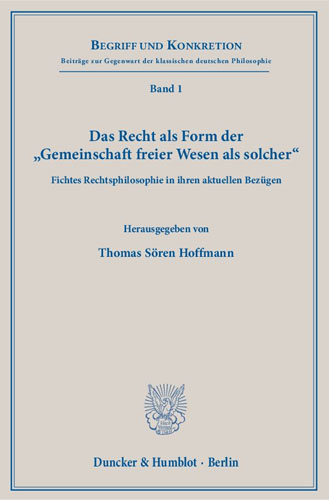 Das Recht als Form der “Gemeinschaft freier Wesen als solcher”.
Fichtes Rechtsphilosophie in ihren aktuellen Bezügen.
Volume 1
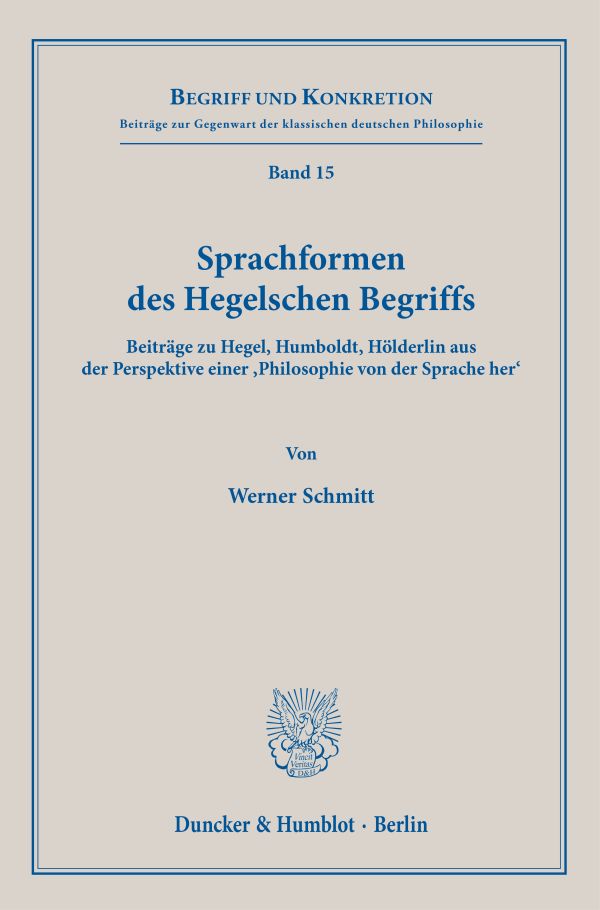 Sprachformen des Hegelschen Begriffs
Beiträge zu Hegel, Humboldt, Hölderlin aus der Perspektive einer ›Philosophie von der Sprache her‹
Volume 15
 Die Rolle von Anschauung und Begriff bei Johann Gottlieb Fichte.
Mit Kant über Kant hinaus.
Volume 9
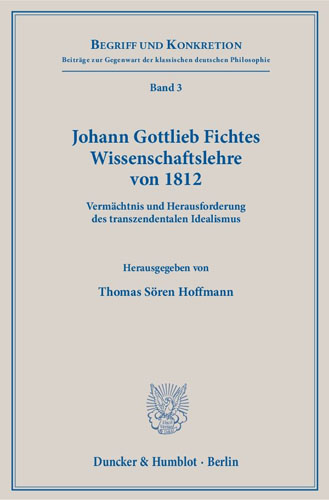 Johann Gottlieb Fichtes Wissenschaftslehre von 1812.
Vermächtnis und Herausforderung des transzendentalen Idealismus.
Volume 3
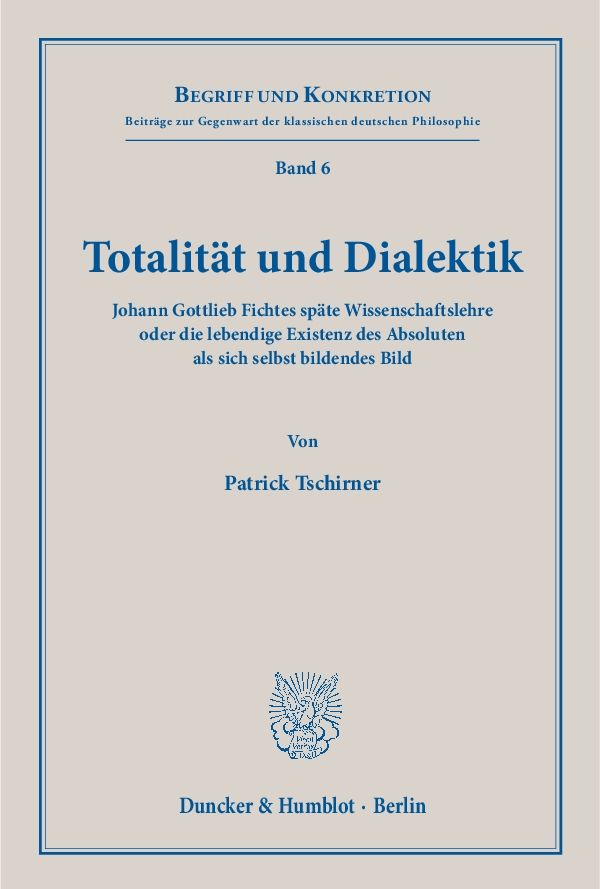 Totalität und Dialektik.
Johann Gottlieb Fichtes späte Wissenschaftslehre oder die lebendige Existenz des Absoluten als sich selbst bildendes Bild.
Volume 6
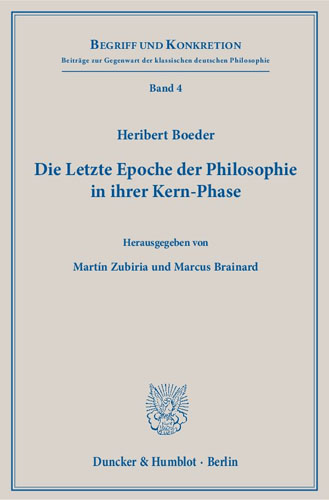 Die Letzte Epoche der Philosophie in ihrer Kern-Phase.
Hrsg. von Martín Zubiria - Marcus Brainard.
Volume 4
Similar Books


 Drunk the Potion, No Whit Charmed
The Doctrine of Pure and Perfect Souls from Iamblichus to Damascius
 Éthique, politique, religions
Superstition (XVIIe - XXIe siècles). Sémantique, histoires et cultures


 La Lettre clandestine
La littérature philosophique clandestine, ses éditeurs et ses éditions
Volume 34
 Libertinage et philosophie à l’époque classique (XVIe-XVIIIe siècle)
Athéisme, Modernité et Sécularisation / Atheism, Modernity and Secularization
Volume 23


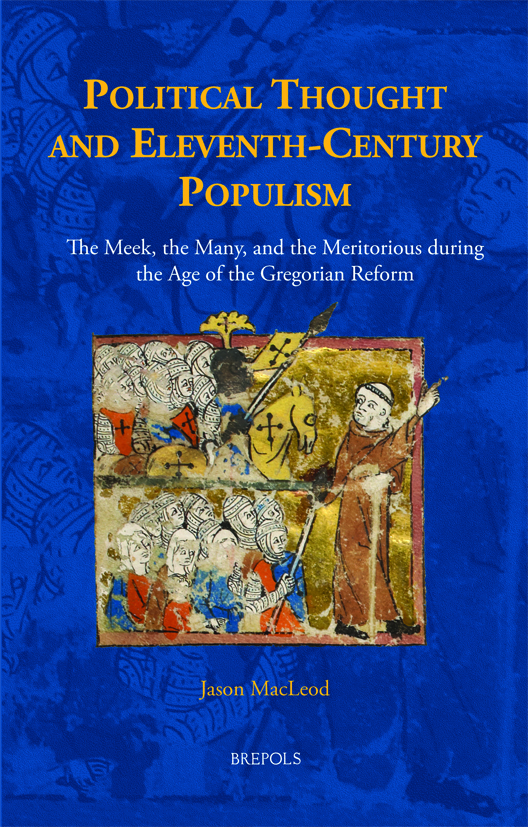 Political Thought and Eleventh-Century Populism
The Meek, the Many, and the Meritorious during the Age of the Gregorian Reform
Volume 38


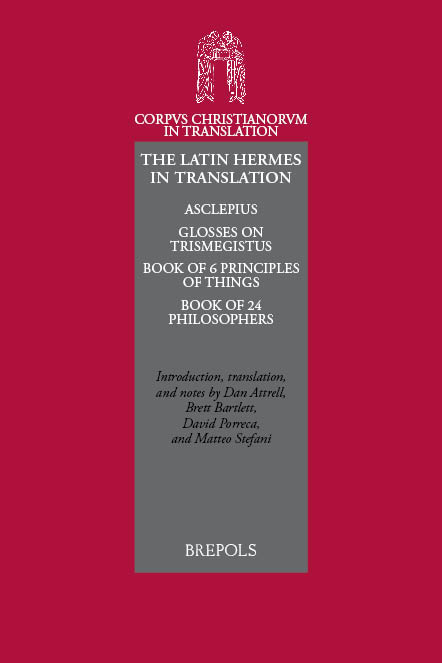 The Latin Hermes in Translation
Asclepius, Glosses on Trismegistus, Book of Six Principles of Things, Book of 24 Philosophers
Volume 50



 ‘Emergente Evolution’?
Fallstudien zur philosophischen Rekonstruktion und schopfungstheologischen Rezeption eines naturalistischen Paradigmas
Volume 40
 Al-Ğābirīs Genese und Kritik der Arabischen Vernunft
On Genesis and Critique of Arab Reason by Muḥammed ʿĀbid al-Ğābirī


 Geschichte der Ästhetik und Kunsttheorie
Band 1: Von der Antike bis zum 19. Jahrhundert. 2. aktualisierte Auflage

