
Graphic Signs of Identity, Faith, and Power in Late Antiquity and the Early Middle Ages
Edited by Ildar H Garipzanov Edited by Caroline Goodson Edited by Henry Maguire

In this volume, twelve specialists examine the role of graphic signs such as cross signs, christograms, and monograms in the late Roman and post-Roman worlds and the contexts that facilitated their dissemination in diverse media. The essays collected here explore the rise and spread of graphic signs in relation to socio-cultural transformations during Late Antiquity and the early Middle Ages, focusing in particular on evolving perceptions and projections of authority. They ask whether some culturally specific norms and practices of graphic composition and communication can be discerned behind the rising corpus of graphic signs from the fourth to tenth centuries and whether common features can be found in their production and use across various media and contexts. The contributors to this book analyse the uses of graphic signs in quotidian objects, imperial architectural programmes, and a wide range of other media. In doing so, they argue that late antique and early medieval graphic signs were efficacious means to communicate with both the supernatural and earthly worlds, as well as to disseminate visual messages regarding religious identity and faith, and social power.
In this volume, twelve specialists examine the role of graphic signs such as cross signs, christograms, and monograms in the late Roman and post-Roman worlds and the contexts that facilitated their dissemination in diverse media. The essays collected here explore the rise and spread of graphic signs in relation to socio-cultural transformations during Late Antiquity and the early Middle Ages, focusing in particular on evolving perceptions and projections of authority. They ask whether some culturally specific norms and practices of graphic composition and communication can be discerned behind the rising corpus of graphic signs from the fourth to tenth centuries and whether common features can be found in their production and use across various media and contexts. The contributors to this book analyse the uses of graphic signs in quotidian objects, imperial architectural programmes, and a wide range of other media. In doing so, they argue that late antique and early medieval graphic signs were efficacious means to communicate with both the supernatural and earthly worlds, as well as to disseminate visual messages regarding religious identity and faith, and social power.
- Edited by Ildar H Garipzanov
- Edited by Caroline Goodson
- Edited by Henry Maguire
Other Titles in this Series



 Andreas Vesalius and the ‘Fabrica’ in the Age of Printing
Art, Anatomy, and Printing in the Italian Renaissance
Volume 33
 Saints and their Lives on the Periphery
Veneration of Saints in Scandinavia and Eastern Europe (c.1000-1200)
Volume 9

 Material Restoration
A Fragment from Eleventh-Century Echternach in a Nineteenth-Century Parisian Codex
Volume 7


 Eclipse of Empire?
Perceptions of the Western Empire and its Rulers in Late-Medieval France
Volume 1

 Jerusalem in the Alps
The Sacro Monte of Varallo and the Sanctuaries of North-Western Italy
Volume 37

 Guests, Strangers, Aliens, Enemies
Ambiguities of Hospitality in the Middle Ages, c. 1000-1350
Volume 45

 Pregnancy and Childbirth in the Premodern World
European and Middle Eastern Cultures, from Late Antiquity to the Renaissance
Volume 36
 The Presence of Medieval English Literature
Studies at the Interface of History, Author, and Text in a Selection of Middle English Literary Landmarks
Volume 14


 Visions of Unity after the Visigoths
Early Iberian Latin Chronicles and the Mediterranean World
Volume 26

 Visions of Medieval History in North America and Europe
Studies on Cultural Identity and Power
Volume 41

 King John’s Delegation to the Almohad Court (1212)
Medieval Interreligious Interactions and Modern Historiography
Volume 23


Similar Books
 «Solazoxa festa, stradolze e stracomplia»
Festschrift für Raymund Wilhelm zum 65. Geburtstag mit Beiträgen zu Diskurstraditionen und mittelalterlicher Philologie
Volume 249
 A Collaborative Tapestry in Honour of Shirley Ann Brown / Une fresque brodée en l’honneur de Shirley Ann Brown
The Bayeux Tapestry Seen by her Colleagues and Friends / La Tapisserie de Bayeux vue par ses collègues et amis




 Behind the Scenes of Medieval Roofs
An Overview of the Roofing Systems of Italian Churches
Volume 90
 Between Bones and Beliefs
Human-Bird Relations in Central and Northern Europe in the First Millennium AD
Volume 4

 Cahiers de recherches médiévales et humanistes – Journal of Medieval and Humanistic Studies
Volume 51


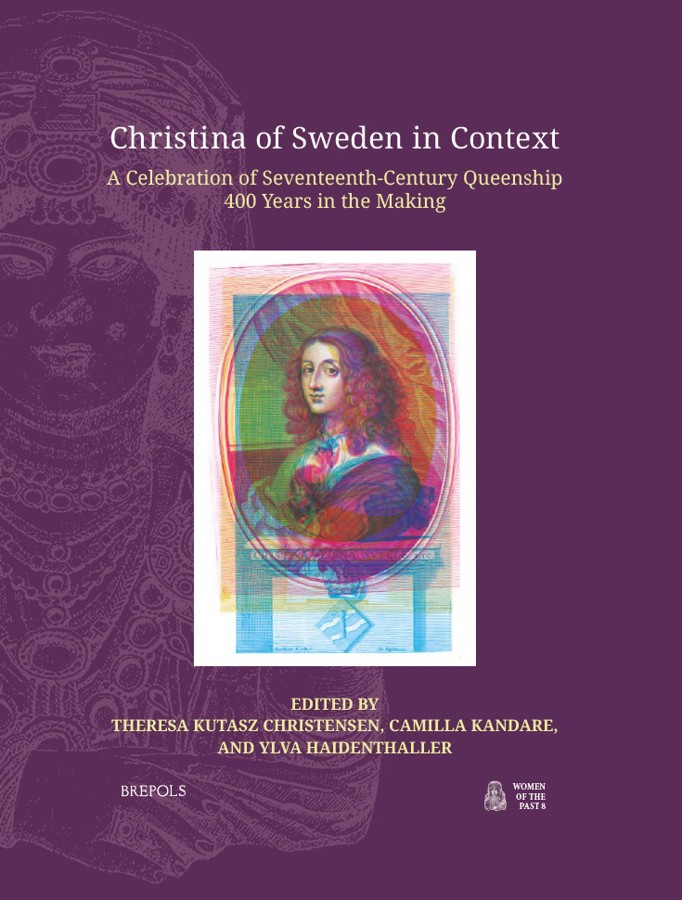 Christina of Sweden in Context
A Celebration of Seventeenth-Century Queenship 400 Years in the Making


 Contesting Labeled Identities
The Sociology of Gentilics in Biblical and Northwest Semitic Literature



 Drunk the Potion, No Whit Charmed
The Doctrine of Pure and Perfect Souls from Iamblichus to Damascius


 Engaged Languages and Literatures / Langues et Littératures engagées
Critical Views / Regards Critiques
 Epigraphic “Shades” from Hellenistic Thrace
Contextualizing Inscriptions in Greek from Thracian Tombs

 Epiphanies of the Divine in the Septuagint and the New Testament
Fifth International Symposium of the Corpus Judaeo-Hellenisticum Novi Testamenti (CJHNT), 14-17 May 2015, Nottingham




 Gold, Silver and Glass: Power Networks, Cultural Identities, Technology Transfers and Agency across the Old World (7th Century BC – 1st Century AD)
Proceedings of a Conference Held at the British Museum, 16–18 June 2023
