
Genre Scenes
By (author) Nils Buttner

This volume catalogues the paintings and drawings that Ludwig Burchard (1886-1960) gathered under the heading ‘Genre Scenes’ when planning his catalogue raisonne of Rubens’s oeuvre. Not that Rubens has ever been thought of as a genre painter in the conventional sense of the term. Besides, even the individual works assembled here do not accord with the customary definitions of genre painting, a category of subject-matter that was introduced relatively late in the history of art. The famous Garden of Love in the Prado, for example, with its fluttering amoretti, is more accurately described as an allegory. Even the picture in the Louvre frequently referred to as the Kermesse clearly does not reproduce an actual kermis or any other such event as witnessed by the artist, but is a fictional construct in which precisely observed details are designed to convey a message that is more symbolic than realistic in content. Yet no history of genre painting can fail to include Rubens. His pictures occupy a firm place in the relevant section of any imaginary museum of European art, whatever strictures the guides to that museum may apply. The works discussed in this volume belong to the most famous creations of the painter. They are also among the most personal of his inventions. Most of them were never sold by Rubens, but remained in his possession, a circumstance that suggests they should be viewed as a particular artistic legacy. That is not to say that they did not offer contemporaries a wide range of possible interpretations unconnected with the artist’s own life. For a historically appropriate interpretation it is essential to examine closely not only the artistic process of creation, but also the former contexts of the pictures. Establishing the most complete provenance possible not only for the primary version of a composition but for all the various copies plays an important part in this process.
- By (author) Nils Buttner
Other Titles in this Series


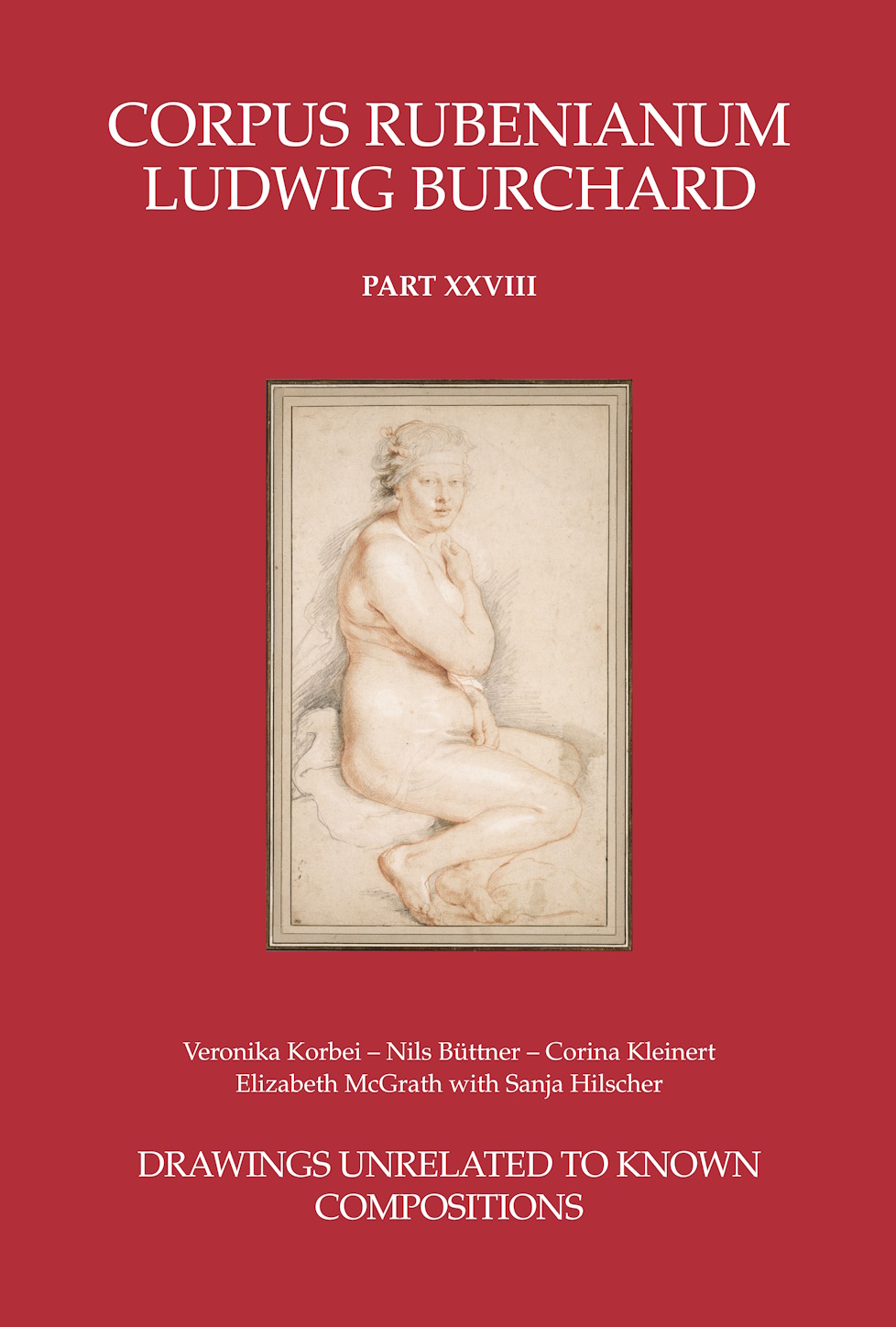


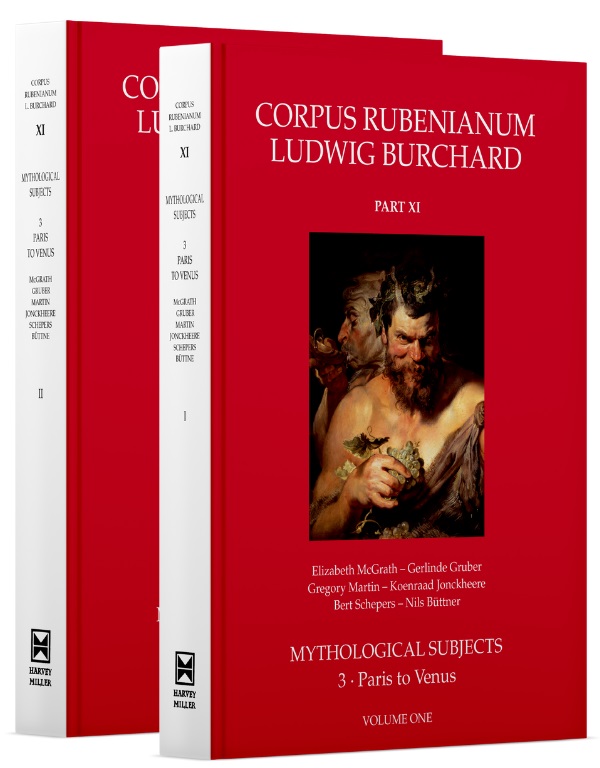

 Corpus Rubenianum Ludwig Burchard
Copies and Adaptations from Renaissance and Later Artists: Italian Masters. Titian and North Italian Art


 Corpus Rubenianum Ludwig Burchard
Copies and Adaptations from Renaissance and Later Artists: Italian Masters. Artists Working in Central Italy and France
 Corpus Rubenianum Part IV
The Holy Trinity, The Life of the Virgin, Madonnas, and The Holy Family: The Holy Trinity and The Life of the Virgin
Volume 4.1


 Copies and Adaptations from Renaissance and Later Artists
German and Netherlandish Artists
Volume 26.1


Similar Books
 A Collaborative Tapestry in Honour of Shirley Ann Brown / Une fresque brodée en l’honneur de Shirley Ann Brown
The Bayeux Tapestry Seen by her Colleagues and Friends / La Tapisserie de Bayeux vue par ses collègues et amis





 Balthasar Caymox of Nuremberg
Early Modern German Print Publishers: Popular Prints of the Seventeenth Century


 Beyond Sovereign Courts
Agents and Practices in Early Modern Spanish and Habsburg Diplomacy
Volume 3


 Circulation, Use, Impact
The Consumption of Architectural Books in the Early Modern Eastern Adriatic
Volume 1



 Councils, Conflicts, Correspondence
Urban Diplomacy in Reval (Tallinn) and Lübeck (c. 1470–1570)
Volume 67


 ENTANGLED AFRICA
Intra-African Relations Between Rain Forest and Mediterranean from Around 4,000 BCE to 1,500 CE


 Gold, Silver and Glass: Power Networks, Cultural Identities, Technology Transfers and Agency across the Old World (7th Century BC – 1st Century AD)
Proceedings of a Conference Held at the British Museum, 16–18 June 2023


 Homo-Politicus in the Balkans
Early Modern Southeast European History in Imperial and Regional Context

 Innovationes Lovanienses: Arts, Law and Theology at the University of Louvain (1425–1797)
Studium Lovaniense: Learning across Borders, 2
Volume 18
 Legal Visuality
Exegesis, Ambiguity, and Dissimulation of the Donation of Constantine in the Early Modern Period
 Listening to the Swan Song
More-than-Human Beings and Sounds in Literature and Culture Through the Ages


 Monastic Manuscripts from the Eastern Mediterranean (Sinai, Jerusalem, Antioch)
Production, Use, and Contexts


 Naples as Laboratory / Laboratorium Neapel
Style Options, Artistic Rivalry and Self Fashioning in Neapolitan Baroque Painting / Plurale Stilbildung, Kunstlerkonkurrenz und Self Fashioning in der neapolitanischen Barockmalerei

 Nurturing the Elite
Representations of Drinking, Eating, and Religious Vessels in Palmyrene Funerary Iconography
Volume 13

