
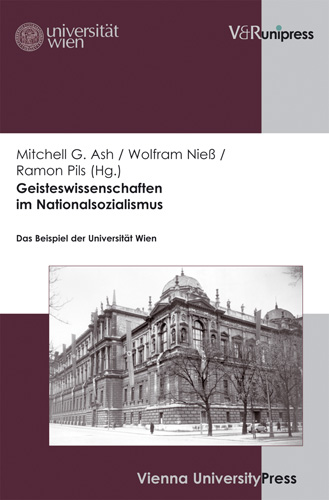
Geisteswissenschaften im Nationalsozialismus
Das Beispiel der Universität Wien
Contributions by Robert Tanzmeister Contributions by Wolfram Niess Contributions by Irene M. Leitner Contributions by Petra Svatek Contributions by Vera Ahamer Contributions by Olaf Bockhorn Contributions by Ramon Pils Contributions by Gudrun Wlach Contributions by Doris Ingrisch Contributions by Gernot Heiss Contributions by Julia Gohm-Lezuo Contributions by Irene Ranzmaier Contributions by André Gingrich Contributions by Wolfgang Duchkowitsch Contributions by Otto H. Urban Contributions by Martina Pesditschek Contributions by Mitchell G. Ash Contributions by Dirk Rupnow Edited by Mitchell G. Ash Edited by Wolfram Niess Edited by Ramon Pils
Hardback (Published)
(September 2010)
ISBN: 9783899715682
6.46 x 9.69 inches
Price: $138.00
On back order
English summary: In recent years, interest has increased in the humanities under the National Socialist regime. In addition to the roles of individual disciplines, politically oriented inter- and multidisciplinary projects such as folk, spatial, and enemy research have received increased scrutiny. In the 18 chapters of this volume, results of recent research on these topics at the University of Vienna are presented and the involvement of the humanities in the National Socialist dictatorship in these cases illuminated and interpreted. The contributions focus on the following issues: continuities and discontinuities in personnel before and after 1938, including racist dismissals of scholars defined as Jews; research trends made possible by professorial appointments after 1938; room for autonomous action by university professors and others in connection with efforts to establish alliances with the Nazi party, state ministries and the military; impacts of Nazism on scholarly research; and contributions of humanities in Vienna to the Nazi war effort and the occupation of Eastern and Southeastern Europe. German text. German description: Die Rolle der Geisteswissenschaften im Dritten Reich wird an der Universitat Wien in letzter Zeit verstarkt erforscht. Neben den Rollen verschiedener Disziplinen werden politisch ausgerichtete inter- und multidisziplinare Forschungen, wie Volks-, Raum- und Gegnerforschung thematisiert. Neben etablierten FachwissenschaftlerInnen befassen sich auch DiplomandInnen und DissertantInnen mit Fragen zu Personen, Institutionen und Aspekten der Wiener Geisteswissenschaften und deren Verflechtung in das nationalsozialistische Herrschaftssystem. Ziel dieses Bandes ist es, die Ergebnisse dieser neueren Arbeiten bekannt zu machen und Verflechtungen der Geisteswissenschaften in das NS- Herrschaftssystem anhand dieser Beispiele zu beleuchten und zu interpretieren. Themen der Analysen sind personelle (Dis-)Kontinuitaten und das Verhaltnis zwischen diesen (Dis-)Kontinuitaten und der Wissenschaftsentwicklung in der NS-Zeit, die Nutzung der durchaus nennenswerten Handlungsspielraume, die die relevanten Akteure hatten, Auswirkungen der nationalsozialistischen Machtubernahme auf die Forschung, sowie nicht zuletzt der so genannte Kriegseinsatz der Geisteswissenschaften und die Involvierung der Wiener Universitat. Der Band leistet erstmals eine Zusammenfuhrung der bisherigen Forschungen zum Thema.
- Contributions by Robert Tanzmeister
- Contributions by Wolfram Niess
- Contributions by Irene M. Leitner
- Contributions by Petra Svatek
- Contributions by Vera Ahamer
- Contributions by Olaf Bockhorn
- Contributions by Ramon Pils
- Contributions by Gudrun Wlach
- Contributions by Doris Ingrisch
- Contributions by Gernot Heiss
- Contributions by Julia Gohm-Lezuo
- Contributions by Irene Ranzmaier
- Contributions by Andre Gingrich
- Contributions by Wolfgang Duchkowitsch
- Contributions by Otto H. Urban
- Contributions by Martina Pesditschek
- Contributions by Mitchell G. Ash
- Contributions by Dirk Rupnow
- Edited by Mitchell G. Ash
- Edited by Wolfram Niess
- Edited by Ramon Pils
Similar Books


 Dis/United States of Vulnerability
Literary and Cultural Transgressions in U.S. Poetry Since the 1960s
Volume 330


 European Drama and Performance Studies
Dramatisations politiques. Théâtre, politique et idéologie au XIXe siècle (1806-1914)
Volume 27


 Modernization, Crises, Cultural Revolutions
Yugoslavia’s 1960s and 1970s through the amateur film lens



 Visual Memory and Oblivion
Monuments and Conflicts in Urban Spaces in Central and Eastern Europe from the Nineteenth Century to the Present Day







 “Tod durch Erschießen”
Generaloberst Nikolaus von Falkenhorst. Wehrmachtsbefehlshaber in Norwegen 1940–1945. Erinnerungen – Verhörprotokolle – Urteilssprüche
Volume 63
 “Zum Siege unserer menschenfreundlichen Prinzipien”
Ungarische Freimaurernetzwerke im „Orient“ 1886-1920




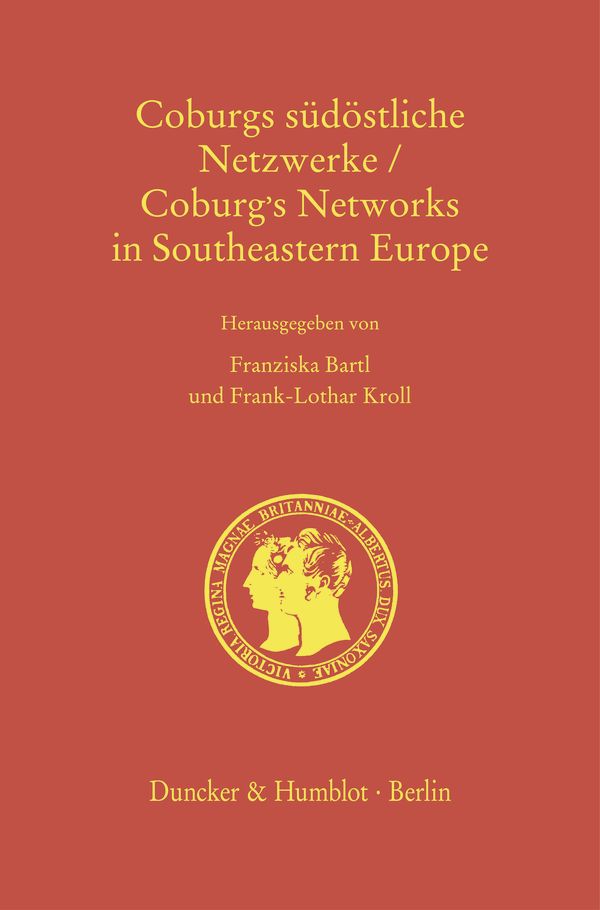 Coburgs südöstliche Netzwerke – Coburg’s Networks in Southeastern Europe
Bulgarien, Rumänien und Ostmitteleuropa im 19. und 20. Jahrhundert. Hrsg. von Franziska Bartl und Frank-Lothar Kroll mit einem Grußwort Seiner Majestät des Königs der Bulgaren Simeon II.
Volume 39


 Dark Like You
Zur medienreflexiven Modernität der Kinder- und Jugendzeitschrift ‚The Brownies’ Book‘ (1920–1921)
Volume 191