
Galloromische Heiligtumer
Neue Studien zur Lage und den raumlichen Bezugen
by Julia Budei
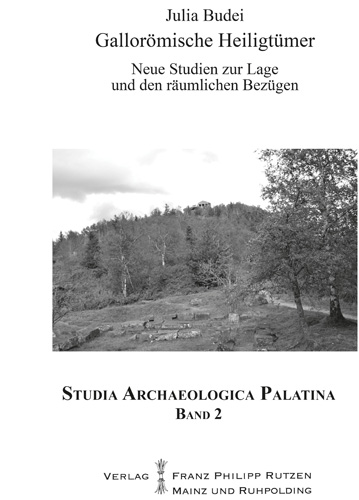
English summary: Even before the conquest of Gaul by Julius Caesar, there had been sustained contact between the Celtic peoples of Gaul and the Romans and this cultural contact intensified as Gaul became a Roman province. One aspect of the mixing of Celtic and Roman traditions that was unique to the northwest provinces of the Roman Empire is the development of the Gallo-Roman ambulatory temples, a temple that emerged alongside a new Gallo-Roman pantheon. Using new methods for understanding the construction and awareness of space, Julia Budei’s offers a new examination into this type of temple and how it operated in the process of creating a new cultural form that borrowed from both Roman and Celtic traditions. German description: Schon vor der Einnahme Galliens begann ein durch Kulturkontakte initiierter Prozess der Romanisierung, aus dem eine gallo-romische Variante der Provinzialkultur hervorging, die romische und keltische Traditionen vereinte. Vor allem im Bereich der Religion ist die kulturelle Vermischung und Neuformung deutlich zu erkennen. Neben einem gallo-romischen Pantheon entsteht ein vollig neuer Typus des Heiligtums, der nur in den nordwestlichen Provinzen des imperium Romanum zu finden ist: der gallo-romische Umgangstempel. Diese Tempelgattung wird in Julia Budeis Studie unter Gesichtspunkten untersucht, die in der provinzialromischen Forschung erst seit Kurzem Anwendung finden. Zu ihnen gehoren die genaue Betrachtung der Lage der Bauten innerhalb der Landschaft sowie ihre raumlichen Bezuge. Uber diese Aspekte konnen neue Erkenntnisse in Bezug auf die Wahrnehmung des Raumes und der entstandenen Religion gewonnen werden. Zudem bietet sich durch die Untersuchung eine neue Perspektive auf die Frage der Romanisierung und die haufig gestellte Frage nach der Gewichtung der romischen und keltischen Traditionen innerhalb der neuen Kultur.
English summary: Even before the conquest of Gaul by Julius Caesar, there had been sustained contact between the Celtic peoples of Gaul and the Romans and this cultural contact intensified as Gaul became a Roman province. One aspect of the mixing of Celtic and Roman traditions that was unique to the northwest provinces of the Roman Empire is the development of the Gallo-Roman ambulatory temples, a temple that emerged alongside a new Gallo-Roman pantheon. Using new methods for understanding the construction and awareness of space, Julia Budei’s offers a new examination into this type of temple and how it operated in the process of creating a new cultural form that borrowed from both Roman and Celtic traditions. German description: Schon vor der Einnahme Galliens begann ein durch Kulturkontakte initiierter Prozess der Romanisierung, aus dem eine gallo-romische Variante der Provinzialkultur hervorging, die romische und keltische Traditionen vereinte. Vor allem im Bereich der Religion ist die kulturelle Vermischung und Neuformung deutlich zu erkennen. Neben einem gallo-romischen Pantheon entsteht ein vollig neuer Typus des Heiligtums, der nur in den nordwestlichen Provinzen des imperium Romanum zu finden ist: der gallo-romische Umgangstempel. Diese Tempelgattung wird in Julia Budeis Studie unter Gesichtspunkten untersucht, die in der provinzialromischen Forschung erst seit Kurzem Anwendung finden. Zu ihnen gehoren die genaue Betrachtung der Lage der Bauten innerhalb der Landschaft sowie ihre raumlichen Bezuge. Uber diese Aspekte konnen neue Erkenntnisse in Bezug auf die Wahrnehmung des Raumes und der entstandenen Religion gewonnen werden. Zudem bietet sich durch die Untersuchung eine neue Perspektive auf die Frage der Romanisierung und die haufig gestellte Frage nach der Gewichtung der romischen und keltischen Traditionen innerhalb der neuen Kultur.
- By (author) Julia Budei
"Overall, this book is a useful resource, and serves in particular as a good testimony to the variety of sites and locations where Romano-Celtic temples can be found. Its abundant illustrations, mostly site plans and reconstructions reproduced from other sources, but also including the author's own photographs illustrating landscape settings, are particularly welcome, since they enable the reader to compare and contrast a large number of different sites with ease. [...] This is a worthwhiles addition to the literature on 'Romano-Celtic' temples, and hopefully will serve as the springboard and inspiration for further contextualized studies." --Eleri Cousins, University of St Andrews, Bryn Mawr Classical Review 2017.07.24
—
Other Titles in this Series
Similar Books

 Caesar’s Visions and Impact on the Roman Empire
Revisiting the Archaeological and Historical Record of the 40s BC
Volume 2


 Etruscan and Roman Hellenistic Anatomical ex votos
Reassessing Popular Religious Expressions in Central Italy
Volume 8



 Invisible Labour in Antiquity
Visualizing Obscure Work in the Ancient Mediterannean and West Asia
Volume 1
 Late Antique villae in the Balkans (3rd–7th c. AD): Current Research Questions and Perspectives
HAEMUS Companion to the Late Antique Balkans 1
Volume 4


 Portraying the Individual in the Roman East
Local–Imperial Entanglements in Sculpture, Mosaics, and Paintings (First–Fourth Centuries AD)
Volume 18

 Small Worlds and Relational Agencies: Local Societies in Early Medieval Iberia
Pequeños mundos y Agencias relacionales: Sociedades locales altomedievales en la Península Ibérica

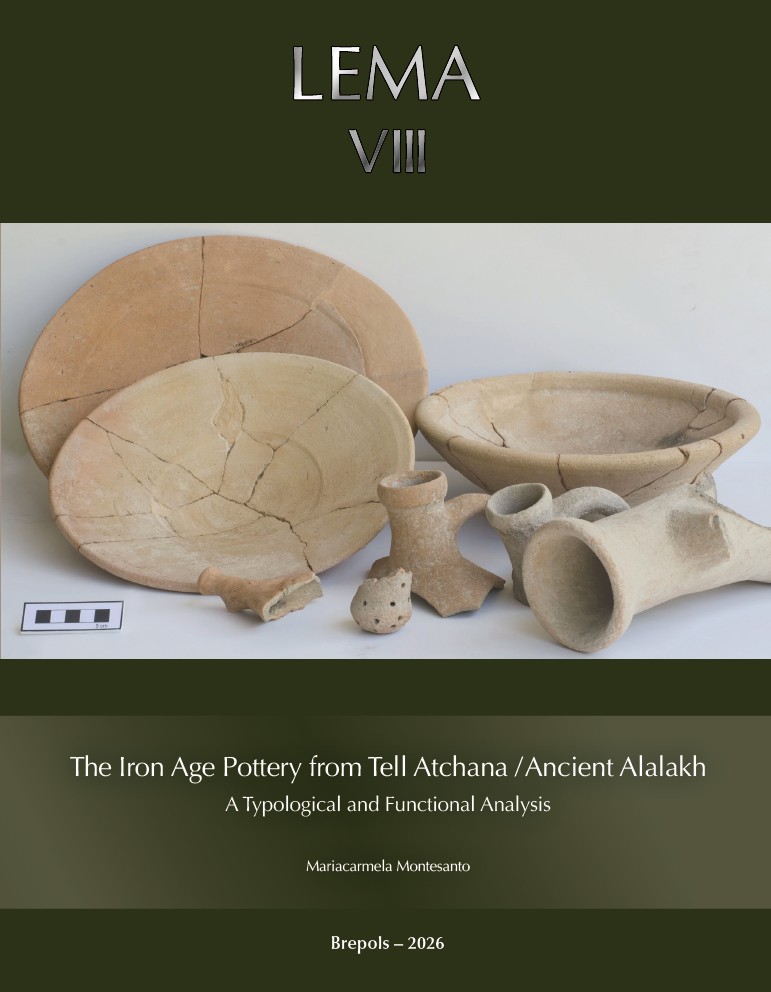 The Iron Age Pottery from Tell Atchana / Ancient Alalakh
A Typological and Functional Analysis
Volume 8

 Writing in the Church of the Nativity in Bethlehem
Inscription and Graffiti in a Multilingual and Multigraphic Perspective
Volume 45


 Atlante tematico di topografia antica 36-2026
Urbanistica e monumenti, porti, Roma. Ricerche sui monti Aurunci
Volume 36
 Cerámica común romana y ciclo haliéutico
Análisis de los contextos de las cetariae de Iulia Traducta

 Nuove scoperte e progressi nelle metodologie di rilievo e analisi dell’arte rupestre post-paleolitica in Italia
New discoveries and progress in the tracing and analysis methodologies of the post-Paleolithic rock art in Italy


 A Dramatic Event in Late Roman Florence
The Anomalous Burial Site Discovered beneath the Uffizi Gallery

 Alexander the Great and the Campaign of Gaugamela
New Research on Topography and Chronology. IAMNI 1 (Italian Archaeological Mission to Northern Iraq)
Volume 53


 Ceramic Finds in Context (Roman to Early Islamic Times)
Final Publications from the Danish-German Jerash Northwest Quarter Project VII
Volume 13