
Galatian Victories and Other Studies into the Agency and Identity of the Galatians in the Hellenistic and Early Roman Periods
Edited by A. Coskun

The introduction to this volume synthesizes the results of some 700 mostly very recent scholarly publications, before ten case studies explore new trends in military, political, cultural and religious history. Methodologically refined approaches to the fragmentary literary sources have nuanced our understanding of the Galatians’ migration, settlement, state formation, warfare and diplomacy.
Stephen Mitchell’s Anatolia (1993) and Karl Strobel’s Die Galater (1996) were by no means end points for the study of Hellenistic and Roman Galatia. Rather, they stimulated several new research initiatives. The introduction to this volume synthesises the results of some 700 mostly very recent scholarly publications, before ten case studies explore new trends in military, political, cultural and religious history. Methodologically refined approaches to the fragmentary literary sources have nuanced our understanding of the Galatians’ migration, settlement, state formation, warfare and diplomacy. Investigations into the Galatians as the object of Attalid and Seleukid propaganda are complemented by studies into their political agency as independent tribes with varying objectives. For the Roman period, Greek inscriptions available in constantly growing numbers, besides coinage and other archaeological data, allow for a nuanced understanding of what provincialisation meant in practice: the loss of political autonomy was immediate (25 BC), as was the foundation of colonies in Pisidia; a landscape of monumentalised cities in the heartland of Galatia followed only slowly in the course of the next century. Cultic innovation was also diverse: the temple for the goddess Roma and the god Augustus was constructed in Ankyra from 5 BC to AD 14, whereas traditional Hellenistic-Phrygian cults densely resurface in the epigraphic evidence of the 2nd and 3rd centuries AD. Interest in Paul’s evangelisation of Asia Minor has been the catalyst of scholarly interest in the Galatians since the 4th century. Two studies devoted to the historical context of Paul’s Letter to the Galatians try to connect the bulk of Pauline scholarship with latest research on urbanisation, ethnic constructs and spatial conceptions in the Graeco-Roman world, to lift discussions to a new level.
- Edited by A. Coskun
Other Titles in this Series

 From Old Cairo to the New World
Coptic Studies Presented to Gawdat Gabra on the Occasion of his Sixty-Fifth Birthday
Volume 9

 L’aristocratie odryse
Insignes et lieux du pouvoir en Thrace (Ve-IIIe siècles avant J.-C.)
Volume 39

 Kulturkontakte in antiken Welten: vom Denkmodell zum Fallbeispiel
Proceedings des internationalen Kolloquiums aus Anlass des 60. Geburtstages von Christoph Ulf, Innsbruck, 26. bis 30. Januar 2009
Volume 10


 Greek Colonisation
Continuing an Account of Greek Colonies and Settlements Overseas (Greek Colonisation vol. 3)
Volume 41
 Sylloge Nummorum Graecorum: State Pushkin Museum of Fine Arts
Coins of the Black Sea Region. Part II: Ancient Coins of the Black Sea Littoral
Volume 11
 Religious Excitement in Ancient Anatolia
Cult and Devotional Forms for Solar and Lunar Gods
Volume 23

 Archaeology of Eastern Anatolia II: From Prehistoric Times to the End of the Iron Ages
Proceedings of the 2nd Archaeology of Eastern Anatolia Colloquium, 23-25 April 2021, Online (Arkeolojihaber Youtube Channel)
Volume 43

 Phrygia in Antiquity: From the Bronze Age to the Byzantine Period
Proceedings of an International Conference 'The Phrygian Lands over Time: From Prehistory to the Middle of the 1st Millennium AD', held at Anadolu University, Eskisehir, Turkey, 2nd-8th November, 2015
Volume 24


 Ex toto orbe Romano: Immigration into Roman Dacia
With Prosopographical Observations on the Population of Dacia
Volume 5
 An Approach to the Historical Geography of the Southern Black Sea Littoral (First Millennium BC)
Volume 36
 Tell Qudadi
An Iron Age IIB Fortress on the Central Mediterranean Coast of Israel (with References to Earlier and Later Periods): Final Report on the Hebrew University of Jerusalem Excavations Directed by E.L. Sukenik and S. Yeivin, with the Participation of N.
Volume 15
 Une autre façon d’être grec: interactions et productions des Grecs en milieu colonial. Another Way of Being Greek: Interactions and Cultural Innovations of the Greeks in a Colonial Milieu
Actes du colloque international organisé à Amiens (Université de Picardie Jules Verne/TRAME) et Paris (ANHIMA), 18-19 novembre 2016
Volume 26
 Sylloge Nummorum Graecorum: State Pushkin Museum of Fine Arts
Coins of the Black Sea Region. Part I: Ancient Coins from the Northern Black Sea Littoral
Volume 3

 Dining and Death
Interdisciplinary Perspectives on the 'Funerary Banquet' in Ancient Art, Burial and Belief
Volume 16


Similar Books

 Caesar’s Visions and Impact on the Roman Empire
Revisiting the Archaeological and Historical Record of the 40s BC
Volume 2



 Drunk the Potion, No Whit Charmed
The Doctrine of Pure and Perfect Souls from Iamblichus to Damascius

 Epiphanies of the Divine in the Septuagint and the New Testament
Fifth International Symposium of the Corpus Judaeo-Hellenisticum Novi Testamenti (CJHNT), 14-17 May 2015, Nottingham


 Etruscan and Roman Hellenistic Anatomical ex votos
Reassessing Popular Religious Expressions in Central Italy
Volume 8




 Invisible Labour in Antiquity
Visualizing Obscure Work in the Ancient Mediterannean and West Asia
Volume 1

 Language and Power in the Roman Empire and Early India
Hierarchy, Ambiguity, and the Art of Reading the Signs in Cosmopolitan Cultures
 Late Antique villae in the Balkans (3rd–7th c. AD): Current Research Questions and Perspectives
HAEMUS Companion to the Late Antique Balkans 1
Volume 4

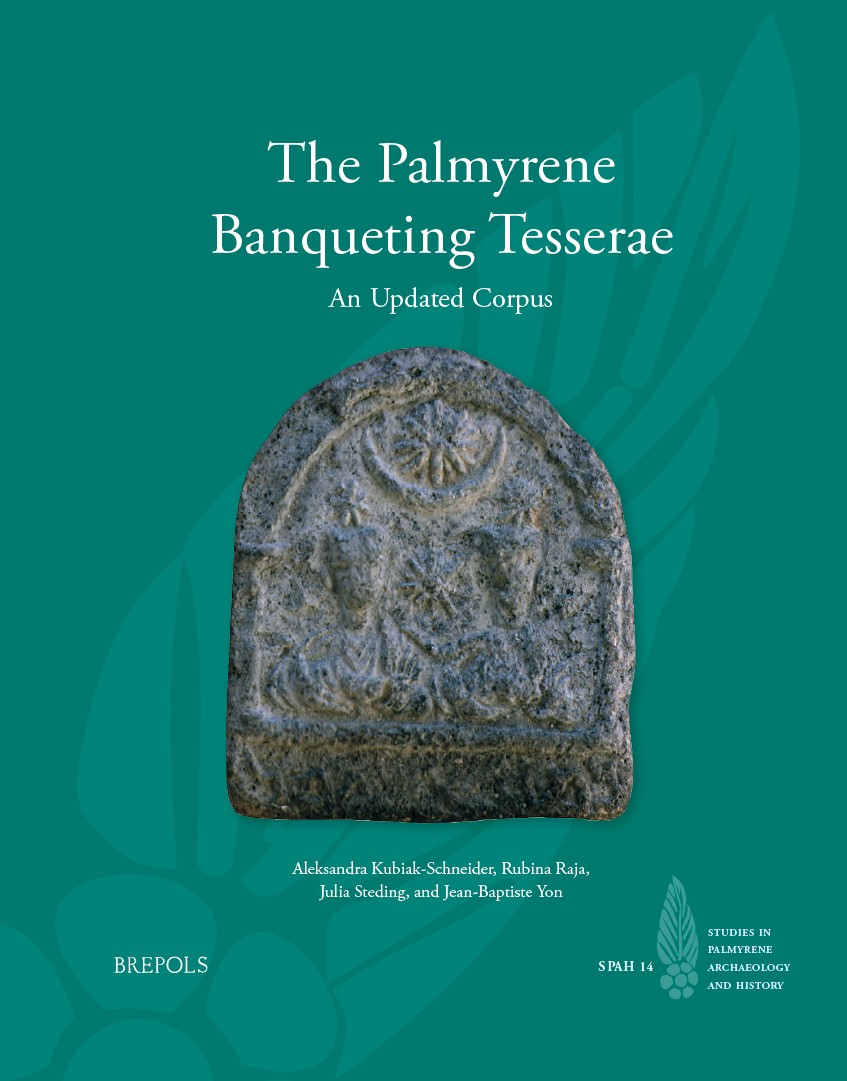
 Nurturing the Elite
Representations of Drinking, Eating, and Religious Vessels in Palmyrene Funerary Iconography
Volume 13


 Portraying the Individual in the Roman East
Local–Imperial Entanglements in Sculpture, Mosaics, and Paintings (First–Fourth Centuries AD)
Volume 18

 Small Worlds and Relational Agencies: Local Societies in Early Medieval Iberia
Pequeños mundos y Agencias relacionales: Sociedades locales altomedievales en la Península Ibérica
 The Compositional History of the Book of Kings
An Analysis of the Evaluative Frameworks in 1 Kings 14–2 Kings 25

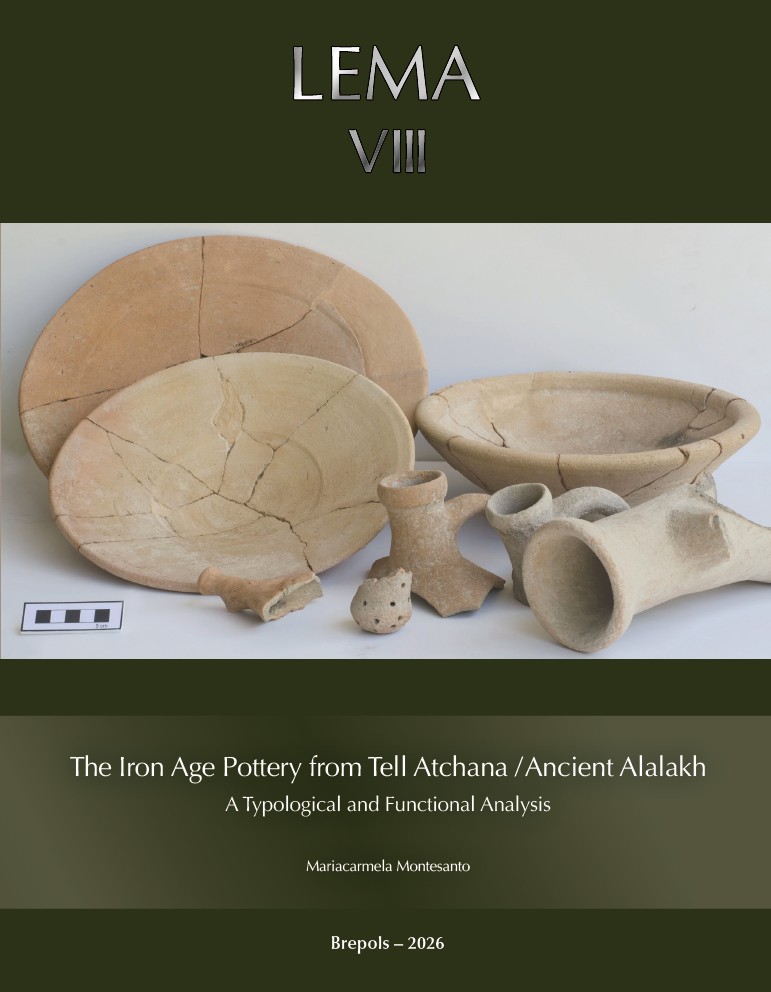 The Iron Age Pottery from Tell Atchana / Ancient Alalakh
A Typological and Functional Analysis
Volume 8



 Writing in the Church of the Nativity in Bethlehem
Inscription and Graffiti in a Multilingual and Multigraphic Perspective
Volume 45
 Contesting Labeled Identities
The Sociology of Gentilics in Biblical and Northwest Semitic Literature



