From Sun-Day to the Lord’s Day
The Cultural History of Sunday in Late Antiquity and the Early Middle Ages
Edited by Uta Heil

This anthology, based on a conference in Vienna in 2019, investigates the relevance of Sunday and the weekly rhythm in Late Antiquity and the Early Middle Ages in the everyday life of people, in monasticism, in synods, in further imperial and ecclesiastical laws, in disciplinary and liturgical developments.
Ever since the Christianization of the planetary week in Late Antiquity, the notion of Sunday as a day of rest, as well as the rhythm of a seven-day week, has been a constant. Yet the cultural history of Sunday in Late Antiquity and the Early Middle Ages is complex. Detailed research reveals a greater diversity than appears at first glance. For example, Sunday did not simply replace the Sabbath, nor was the Jewish Sabbath commandment directly adopted. Furthermore, the Sunday laws of Emperor Constantine officially gave the inhabitants of the Roman Empire a day of rest free of work, but the effect and reception of the laws is hard to grasp, even among Christian authors. Moreover, Sunday was by no means a central theme in the history of late antique Christianity, so that the scattered references must be interpreted. This edited collection, based on a conference in Vienna in 2019, investigates the relevance of Sunday and the weekly rhythm in Late Antiquity and the Early Middle Ages in the everyday life of people, in monasticism, in synods, in further imperial and ecclesiastical laws, and in disciplinary and liturgical developments. It also covers controversies with the Jewish Sabbath as well as reflections on the aspect of rest, freedom, and of charity. While exploring different views and regional differences, the contributions show the growing importance of the Lord’s Day, especially since the sixth century, as part of the Christianization of society and the sacralization of the calendar.
- Edited by Uta Heil
Other Titles in this Series
 Between Personal and Institutional Religion
Self, Doctrine, and Practice in Late Antique Eastern Christianity
Volume 15


 The Introduction of Christianity into the Early Medieval Insular World
Converting the Isles I
Volume 19
 Women in Late Antiquity and the Early Middle Ages
Studies from Western Europe and North Africa
Volume 44
 Historiography and Identity VI
Competing Narratives of the Past in Central and Eastern Europe, c. 1200 -c. 1600
Volume 32
 D’Orient en Occident
Les recueils de fables enchassees avant les Mille et une Nuits de Galland (Barlaam et Josaphat, Calila et Dimna, Disciplina clericalis, Roman des Sept Sages)
Volume 16

 Writing in the Church of the Nativity in Bethlehem
Inscription and Graffiti in a Multilingual and Multigraphic Perspective
Volume 45


 Transforming Landscapes of Belief in the Early Medieval Insular World and Beyond
Converting the Isles II
Volume 23
 Incubation in Early Byzantium
The Formation of Christian Incubation Cults and Miracle Collections
Volume 41
 Political Ritual and Practice in Capetian France
Essays in Honour of Elizabeth A. R. Brown
Volume 34


 Liturgy and Sequences of the Sainte-Chapelle
Music, Relics, and Sacral Kingship in Thirteenth-Century France
Volume 35
 Carolingian Scholarship and Martianus Capella
Ninth-Century Commentary Traditions on 'De nuptiis' in Context
Volume 12


 Les transferts culturels dans les mondes normands medievaux (VIIIe-XIIe siecle)
objets, acteurs et passeurs
Volume 36


 Motions of Late Antiquity
Essays on Religion, Politics, and Society in Honour of Peter Brown
Volume 20

 Writing ‘True Stories’
Historians and Hagiographers in the Late Antique and Medieval Near East
Volume 9
 Historiography and Identity V
The Emergence of New Peoples and Polities in Europe, 1000-1300
Volume 31

Similar Books
 ‘For You I Study, For You I Work, For You I Live, For You I Am Ready To Even Give My Life’
Essays in Honour of Francis (Frank) J Moloney, SDB
 A Collaborative Tapestry in Honour of Shirley Ann Brown / Une fresque brodée en l’honneur de Shirley Ann Brown
The Bayeux Tapestry Seen by her Colleagues and Friends / La Tapisserie de Bayeux vue par ses collègues et amis






 Ars Prophetica
Theology in the Poetry of Twentieth-Century Hebrew Poets Avraham Halfi, Shin Shalom, Amir Gilboa, and T. Carmi
 As Messianism Turns to Heresy
The Regenstein Chair Lectures On Lurianic Kabbalah and Shabbatai Tzevi at Hebrew Union College - Cincinnati

 Behind the Scenes of Medieval Roofs
An Overview of the Roofing Systems of Italian Churches
Volume 90



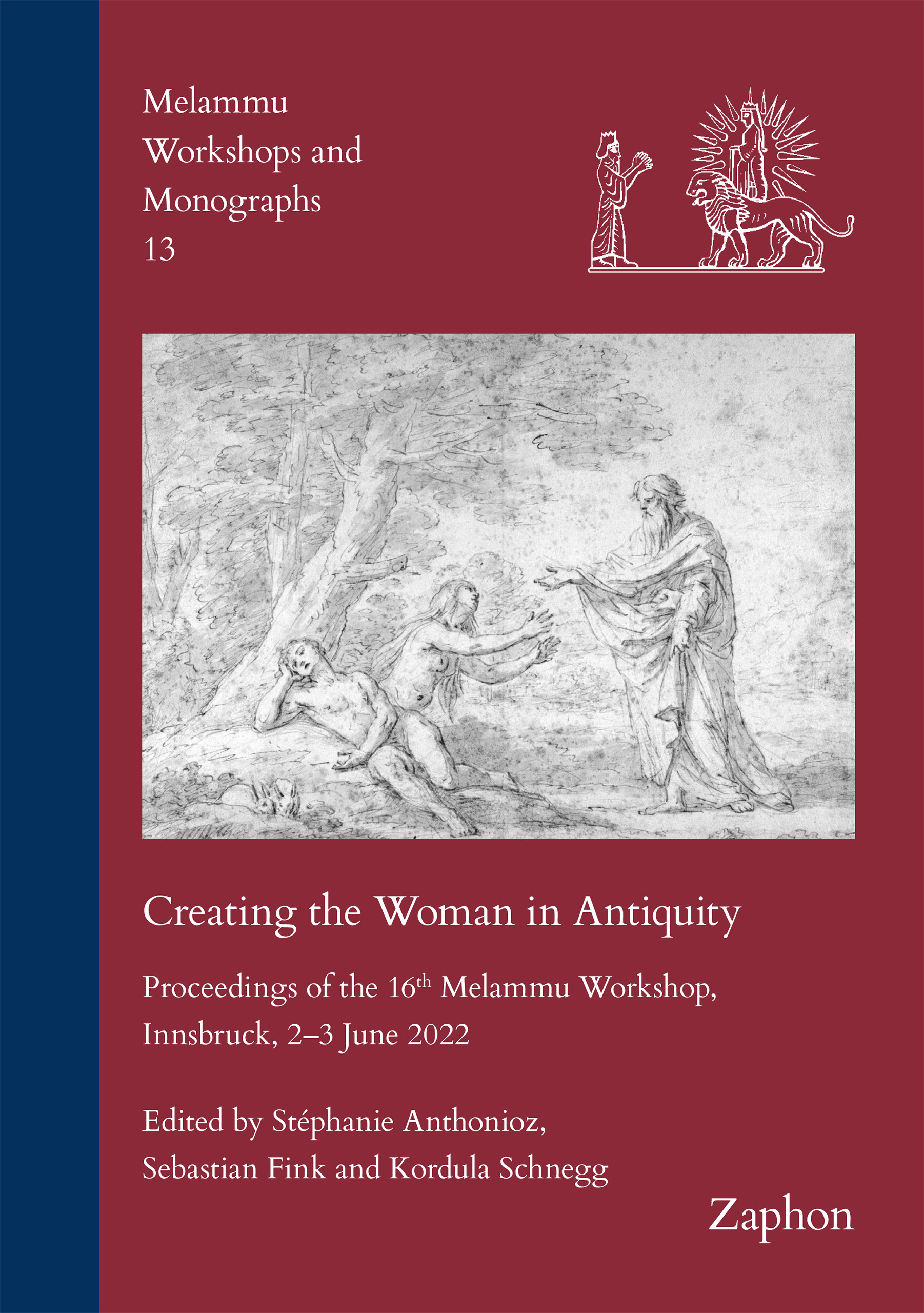 Creating the Woman in Antiquity
Proceedings of the 16th Melammu Workshop, Innsbruck, 2–3 June 2022
Volume 13


 Drunk the Potion, No Whit Charmed
The Doctrine of Pure and Perfect Souls from Iamblichus to Damascius


 Epiphanies of the Divine in the Septuagint and the New Testament
Fifth International Symposium of the Corpus Judaeo-Hellenisticum Novi Testamenti (CJHNT), 14-17 May 2015, Nottingham