Euphrat und Tigris im Alten Orient
by Theresa Blaschke

English summary: When we talk about the history and culture of the ancient Near East, we often use the term Mesopotamia, or land “between two rivers” – the region between the Euphrates and the Tigris. These two rivers were formative for the civilizations that developed on their banks. So far, however, there has been no study devoted to the question of how these rivers were perceived in the ancient Near East and how they shaped people’s lives. To answer this question, Theresa Blaschke analyzed cuneiform texts that mention the rivers across all genres and periods of ancient Near Eastern history. Since the historical course of the two rivers is debated, a detailed examination of their geography was imperative. Especially the Tigris emerges as more important for the region than long assumed. In addition, the study deals with the origins and spelling of the river names, river crossings and their perception as borders, the use of rivers as traffic routes, the description of rivers as water suppliers and bringer of abundance, as well as ritual aspects and the question of the deification of rivers. Thus, Blaschke provides for the first time a comprehensive overview of the natural and cultural history of the Euphrates and Tigris rivers in ancient times and of life on their shores. German description: Sprechen wir uber die Geschichte und Kultur des Alten Orient, verwenden wir haufig die Begriffe Mesopotamien und Zweistromland – das Land zwischen Euphrat und Tigris. Diese beiden Flusse waren pragend fur die Zivilisationen, die sich an ihren Ufern entwickelten. Bisher existiert jedoch keine Studie, die sich der Frage widmet, wie die beiden Flusse zur Zeit des Alten Orient wahrgenommen wurden und wie sie das Leben der Menschen pragten. Theresa Blaschke zieht zur Beantwortung dieser Frage Keilschrifttexte, die die beiden Flusse namentlich nennen, aus allen Textgattungen und Zeitperioden der altorientalischen Geschichte zur Analyse heran. Da der Verlauf der beiden Flusse zur Zeit des Alten Orient umstritten ist, ist eine detaillierte Auseinandersetzung mit ihrer Geografie zwingend erforderlich. Vor allem dem Tigris ist eine grossere Bedeutung fur die Region zuzuschreiben, als lange angenommen wurde. Daruber hinaus widmet sich die Studie den Themenbereichen der Herkunft und Schreibung der Flussnamen, der Uberquerung der Flusse und ihrer Wahrnehmung als Grenzen, der Nutzung der Flusse als Verkehrswege, der Beschreibung der Flusse als Wasserlieferanten und Uberflussbringer sowie rituellen Aspekten und der Frage der Vergottlichung der Flusse. Auf diese Weise gibt Blaschke erstmals einen umfassenden natur- und kulturgeschichtlichen Uberblick uber Euphrat und Tigris im Alten Orient und das Leben an ihren Ufern.
- By (author) Theresa Blaschke
Other Titles in this Series

 Supplement to the Akkadian Dictionaries
Vol. 2: D,T,T. With the collaboration of Janine Wende, Bert Kouwenberg, Nadezda Rudik, Johannes Hackl, Frank Simons and Elyze Zomer
Volume 7.2

 Mountains and Trees, Rivers and Springs
Animistic Beliefs and Practices in ancient Mesopotamian Religion
Volume 11


 Supplement to the Akkadian Dictionaries
Vol. 4: L, M, N, R. With the collaboration of Bert Kouwenberg, Maria Teresa Renzi-Sepe, Tommaso Scarpelli, Vitaly Margolin and Nadezda Rudik


 Supplement to the Akkadian Dictionaries
Vol. 3: G, K, Q. With the collaboration of Bert Kouwenberg, Nadezda Rudik, Jonas Kloker and Frank Simons
Volume 7.3

 Akkadian Magic Literature
Old Babylonian and Old Assyrian Incantations: Corpus - Context - Praxis
Volume 12

 The Unknown Benno Landsberger
A Biographical Sketch of an Assyriological Altmeister's Development, Exile, and Personal Life
Volume 10
Similar Books





 Boğazköy Tablets in the Museum of Anatolian Civilizations (Bo 9032–Bo 9097)
Anadolu Medeniyetleri Müzesinde Bulunan Boğazköy Tabletleri (Bo 9032–Bo 9097)
Volume 4
 Connecting the Dots: Counting, Writing, and the Beginnings of Civilization
The Secret Lives of Clay Tokens: A Memoir

 Curating the Prehistoric Past
Studies on West Asian Archaeology and Beyond in Honour of Yoshihiro Nishiaki

 Exploring Gender Dynamics across the Ancient Near East
Collected Essays of Gender and Methodology in the Ancient Near East (GeMANE) 4 and 5
Volume 7


 Ḫattušaš utnē išḫameški
Hittite and Other Ancient Near Eastern Studies Presented to Piotr Taracha on the Occasion of His 65th Birthday




 Kultur – Kontakt – Kultur
Beiträge anlässlich der 66. Rencontre Assyriologique Internationale in Frankfurt/Main und Mainz, 25.–29. Juli 2022
Volume 35
 Money of Mercenaries in the Cimmerian Bosporus
From the Mithridatic Wars to the Roman-Bosporan War of AD 45-49
Volume 45

 New Research on Old Collections in Southwest Asian Archaeology
Proceedings of the Workshop Held at the British Museum, London, 31 July – 2 August, 2023
 Old Aramaic Inscriptions and their Contexts
An Epigraphic, Archaeological, and Historical Synthesis
Volume 63

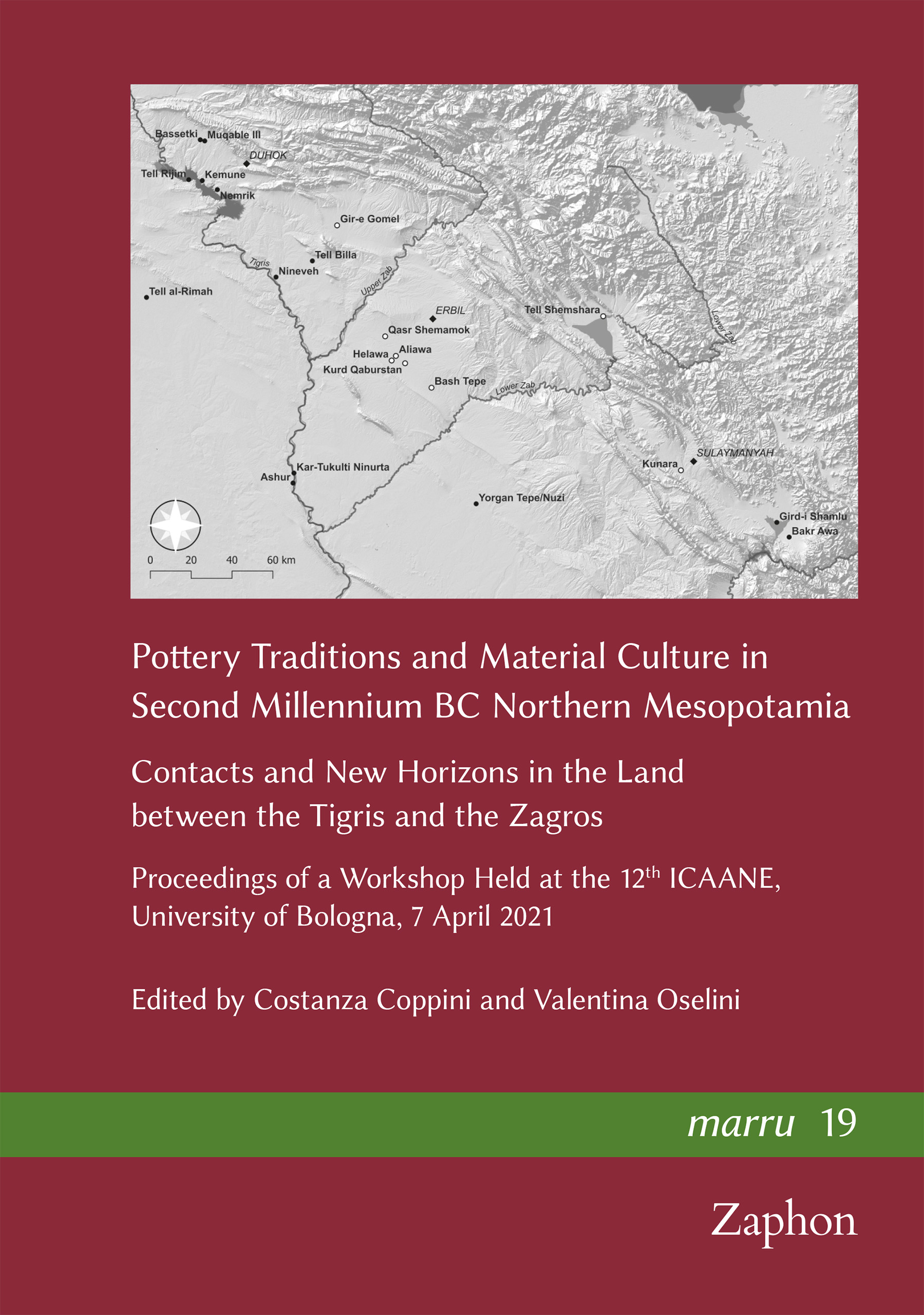 Pottery Traditions and Material Culture in Second Millennium BC Northern Mesopotamia
Contacts and New Horizons in the Land between the Tigris and the Zagros. Proceedings of a Workshop Held at the 12th ICAANE, University of Bologna, 7 April 2021
Volume 19
 Punning in Odd or Elegant Constructions in Jeremiah
The Convergence of Linguistics, Rhetoric, and Textuality in the Hebrew Text of Jeremiah

 Sertorius, the Exiles of the Sullan Regime and the Provinces of the Empire
Legitimacy, Morality and Imperial Discourse in the 70s BCE
 Shame in the Worlds of the Hebrew Bible and Akkadian Texts
A Linguistic Study and Its Implications
Volume 33

 Telling Contexts
Archaeological and Textual Studies in Honor of Elizabeth Bloch-Smith and Mark S. Smith
 The Body
Lived, Cultured, Adorned: Essays on Dress and the Body in the Bible and Ancient Near East in Honor of Nili S. Fox
 The Discourse of Rites
Shaping and Reshaping the (Counter-)Priestly Rituals Conducted Outside the Tabernacle
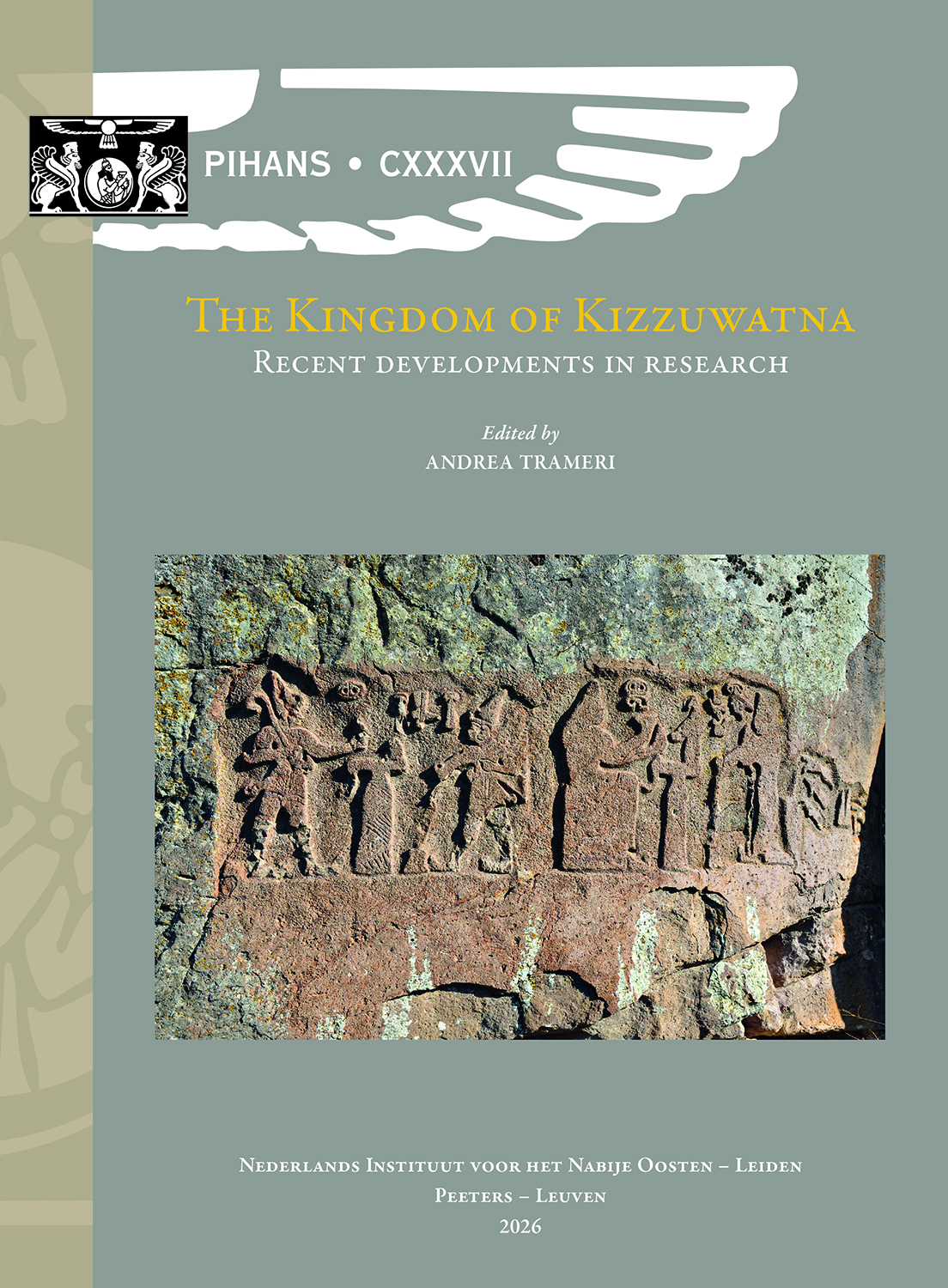 The Kingdom of Kizzuwatna: Recent Developments in Research
Proceedings of the Third NINO Postdoctoral Research Fellow Annual Conference, Leiden, 23rd-25th March 2023
Volume 137