
Equal Temperament in the Eighteenth Century
The Ear versus Numbers
By (author) Beverly Jerold

This monograph aims to make the subjects of tuning, temperament and intonation accessible to performers, as well as scholars
Today, many have urged early music specialists to adopt a historical unequal temperament for keyboards and harps, and even for instruments whose frets produce equal temperament naturally. Equal temperament, however, played a significant role during this period, but most writing today has stressed the numbers from early mathematicians who believed that the more just intervals a temperament has, the better it will be. Major writers, however, pressed for equal temperament because it enabled full use of the keyboard, transposition, and enharmonic notes. In contrast, the major and minor semitones of unequal temperaments, and their flats pitched higher than sharps, limited the keyboard’s usable compass and made enharmonic notes and transposition impossible. As advanced thinkers were aware, performers with pitch flexibility did not follow the theorists’ numbers. An accompaniment in equal temperament offered them free rein to find the best intonation because its ratios for fourths and fifths are closest to the natural ones. Among the many writers who supported equal temperament was Jakob Adlung, who observed that the theorists’ calculations gave rise to the argument: “Whether the ear or the numbers should judge if music sounds in or out of tune”.
- By (author) Beverly Jerold
Other Titles in this Series


Similar Books




 John Dunstaple Reading Boethius
John Dunstaple’s Annotations to Boethius’s “De institutione musica” in the Manuscript Oxford, Corpus Christi College Library, MS 118
 Lobbying for Equality
Jacques Godard and the Struggle for Jewish Equality during the French Revolution
 Music and Colonialism in Fascist Italy
Identity, Propaganda, and Ethnographic Representation
Volume 13



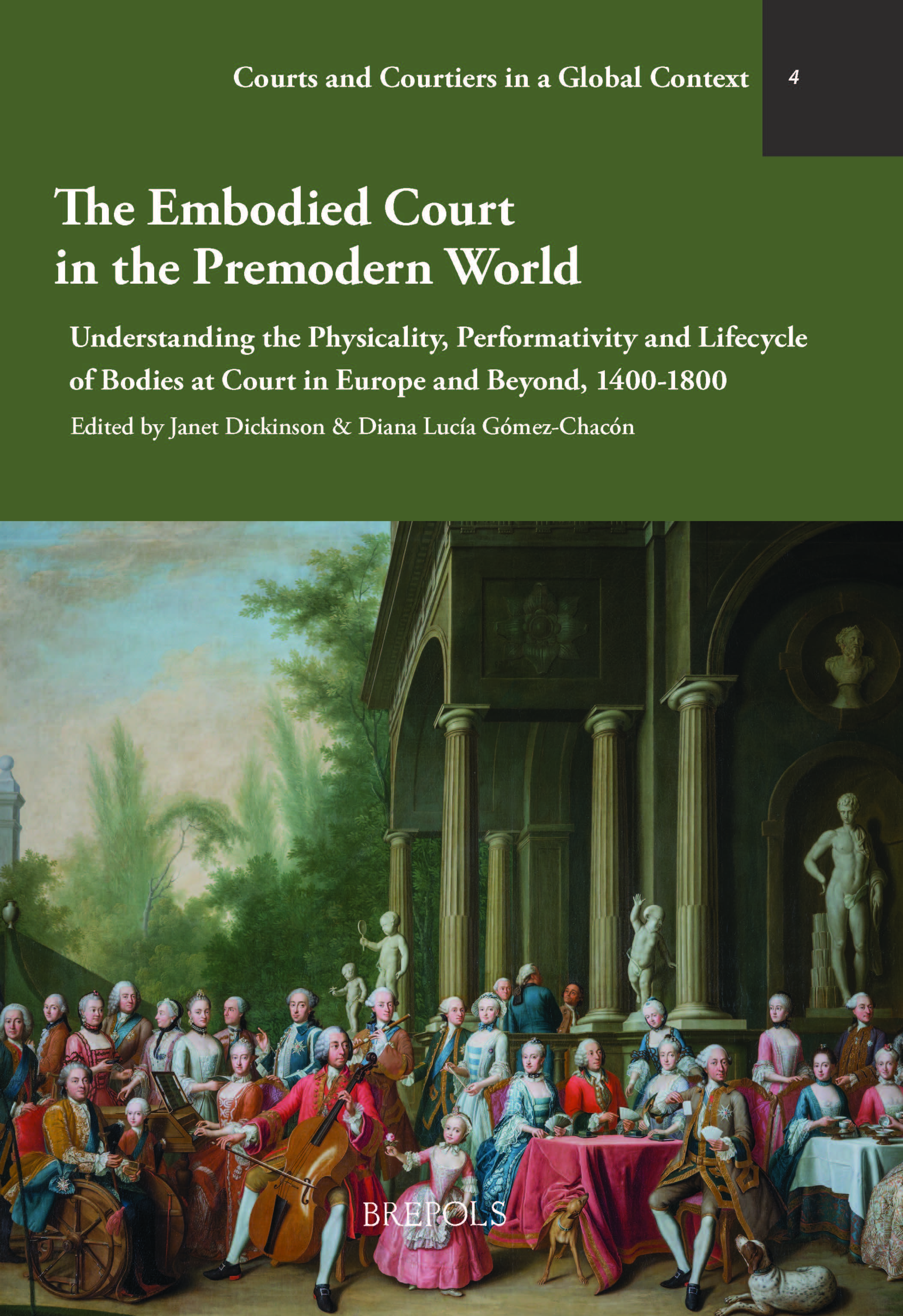 The Embodied Court in the Premodern World
Understanding the Physicality, Performativity and Lifecycle of Bodies at Court in Europe and Beyond, 1400-1800
Volume 4



 “Italien übertrifft alles, was man mir darüber gesagt hat”
Wilhelmine von Bayreuth und Friedrich II. im Briefdialog über die Italienreise der Markgräfin


 Die Österreichischen Niederlande und die Debatte über den Reichskammergerichtsunterhalt (1719-1740)
Eine Studie zur Reichspolitik Kaiser Karls VI.
Volume 43
 Die Popularität des Französischen im Europa des 17. und 18. Jahrhunderts
Akten des 13. Kongresses des Frankoromanistikverbandes vom 21.–23. September 2022 an der Universität Wien

 Jüdische Musikerziehung im Preußen des 19. Jahrhunderts
Gesangunterricht an jüdischen Reformschulen als Facette bürgerlicher Akkulturation
Volume 21