
Eastern Turkey
An Architectural and Archaeological Survey, Volume I
by T. A. Sinclair
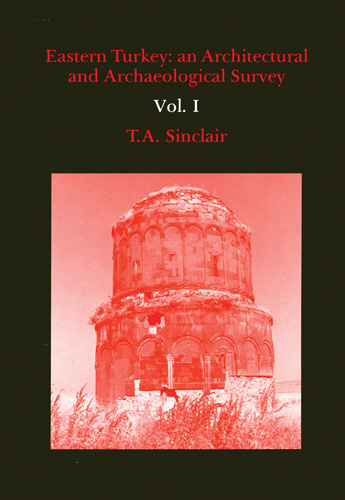
Civilizations of great diversity have succeeded each other or co-existed in Eastern Turkey, and most of them have left monuments of high quality. Hittite, Urartian, Hellenistic, Roman, Syrian, Byzantine, Armenian, Arab, Seljuk and Ottoman, their remains are all represented in the region. These include some of the most important sites in Near Eastern archaeology, in regions in and near the heartland of the Hittite and Urartian cultures. The Hellenistic cities reflect the introduction of a new civilization, and the Roman and Byzantine empires included all or part of the region, with the prosperous feudal states of Georgia and Armenia on their borders. Besides the Byzantine, three great East Christian monastic traditions, Syrian, Georgian and Armenian, flourished here from the late fourth century onwards, and their monuments have left a permanent mark on the landscape. The Seljuk invasion, followed by the more recent period of Ottoman rule, led to the imposition of a new culture on the region, and its reflection in the monuments. Some of the finest Seljuk buildings are in Eastern Turkey, and the buildings of the Turkish states east of the Seljuk empire form much of the early history of Turkish architecture. The independent Greek empire of Trebizond and two of the four Crusader states lay in Eastern Turkey. The lands of the empires and the smaller medieval states were heavily fortified, and their castles and other fortifications are now spread over the region. The cultural diversity of its inheritance has made Eastern Turkey one of the most fascinating regions for archaeological and art-historical research. These four volumes provide the first comprehensive guide to all of the important historical sites of the region, the result of eight years of travel and research. The monuments are dealt with by geographical location, including a full description of each site, and details on how it can be reached. In the case of the more important monuments, a full bibliography of earlier work is provided. The ample provision of photographs and plans enhances the value of the author’s detailed descriptions.
Civilizations of great diversity have succeeded each other or co-existed in Eastern Turkey, and most of them have left monuments of high quality. Hittite, Urartian, Hellenistic, Roman, Syrian, Byzantine, Armenian, Arab, Seljuk and Ottoman, their remains are all represented in the region. These include some of the most important sites in Near Eastern archaeology, in regions in and near the heartland of the Hittite and Urartian cultures. The Hellenistic cities reflect the introduction of a new civilization, and the Roman and Byzantine empires included all or part of the region, with the prosperous feudal states of Georgia and Armenia on their borders. Besides the Byzantine, three great East Christian monastic traditions, Syrian, Georgian and Armenian, flourished here from the late fourth century onwards, and their monuments have left a permanent mark on the landscape. The Seljuk invasion, followed by the more recent period of Ottoman rule, led to the imposition of a new culture on the region, and its reflection in the monuments. Some of the finest Seljuk buildings are in Eastern Turkey, and the buildings of the Turkish states east of the Seljuk empire form much of the early history of Turkish architecture. The independent Greek empire of Trebizond and two of the four Crusader states lay in Eastern Turkey. The lands of the empires and the smaller medieval states were heavily fortified, and their castles and other fortifications are now spread over the region. The cultural diversity of its inheritance has made Eastern Turkey one of the most fascinating regions for archaeological and art-historical research. These four volumes provide the first comprehensive guide to all of the important historical sites of the region, the result of eight years of travel and research. The monuments are dealt with by geographical location, including a full description of each site, and details on how it can be reached. In the case of the more important monuments, a full bibliography of earlier work is provided. The ample provision of photographs and plans enhances the value of the author’s detailed descriptions.
- By (author) T A Sinclair
Similar Books


 Behind the Scenes of Medieval Roofs
An Overview of the Roofing Systems of Italian Churches
Volume 90
 Caesar’s Visions and Impact on the Roman Empire
Revisiting the Archaeological and Historical Record of the 40s BC
Volume 2

 Circulation, Use, Impact
The Consumption of Architectural Books in the Early Modern Eastern Adriatic
Volume 1


 Etruscan and Roman Hellenistic Anatomical ex votos
Reassessing Popular Religious Expressions in Central Italy
Volume 8




 Invisible Labour in Antiquity
Visualizing Obscure Work in the Ancient Mediterannean and West Asia
Volume 1
 Late Antique villae in the Balkans (3rd–7th c. AD): Current Research Questions and Perspectives
HAEMUS Companion to the Late Antique Balkans 1
Volume 4


 Portraying the Individual in the Roman East
Local–Imperial Entanglements in Sculpture, Mosaics, and Paintings (First–Fourth Centuries AD)
Volume 18

 Small Worlds and Relational Agencies: Local Societies in Early Medieval Iberia
Pequeños mundos y Agencias relacionales: Sociedades locales altomedievales en la Península Ibérica


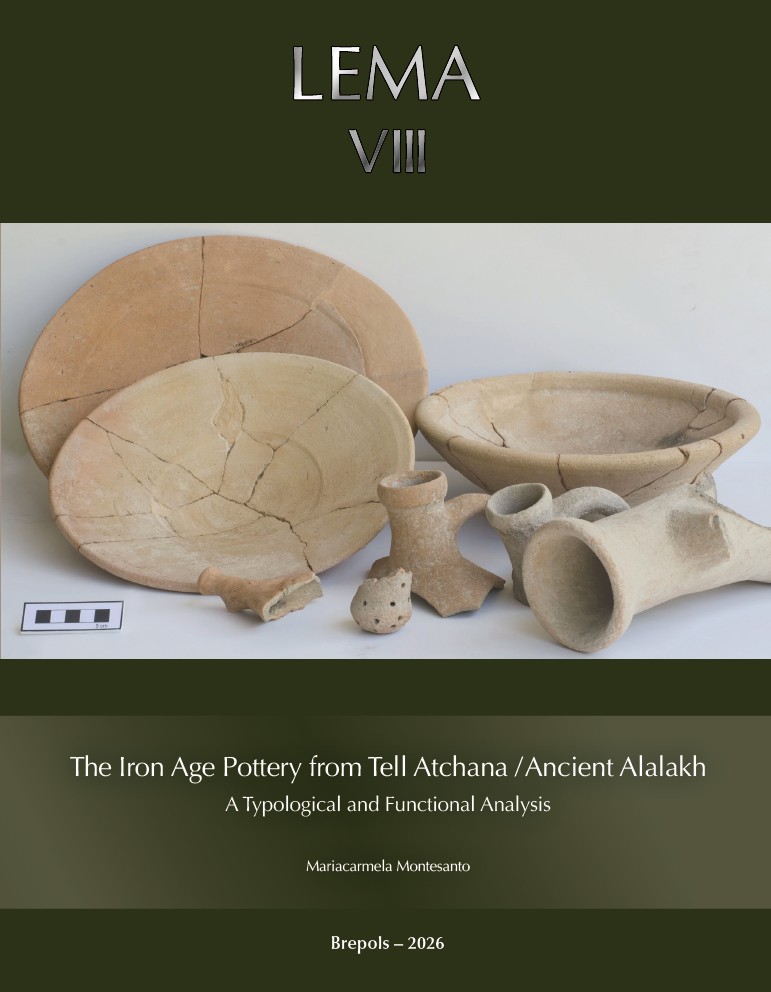 The Iron Age Pottery from Tell Atchana / Ancient Alalakh
A Typological and Functional Analysis
Volume 8


 Visual Memory and Oblivion
Monuments and Conflicts in Urban Spaces in Central and Eastern Europe from the Nineteenth Century to the Present Day

 Writing in the Church of the Nativity in Bethlehem
Inscription and Graffiti in a Multilingual and Multigraphic Perspective
Volume 45


 Atlante tematico di topografia antica 36-2026
Urbanistica e monumenti, porti, Roma. Ricerche sui monti Aurunci
Volume 36
 Cerámica común romana y ciclo haliéutico
Análisis de los contextos de las cetariae de Iulia Traducta
 Die Entwicklung erdbebensicherer Bautechniken in der Frühen und Mittleren Eisenzeit in Ostanatolien
Volume 11

 La chiesa di San Francesco grande e l’ospedale antico di Padova
Archeologia Storia Arte Architettura e Restauri
Volume 8