Die pragmatische Wende
Die Max-Planck-Gesellschaft und die Sozialwissenschaften 1975–1985
By (author) Ariane Leendertz
Paperback (Published)
(December 2009)
ISBN: 9783525367889
4.84 x 8.07 inches
Price: $40.00
In stock
Von Starnberg nach Köln – Die Max-Planck-Gesellschaft und die Sozialwissenschaften 1975–1985.
In 1984, the Max-Planck-Gesellschaft founded a new institute for social sciences in Cologne, the Max-Planck-Institut fur Gesellschaftsforschung, run by Renate Mayntz. The new institute was the outcome of an unsuccessful experiment led by the MPG 14 years earlier. In 1970, the MPG began to work on a project in Starnberg that explored living conditions in a scientific-technical world. The project was run by Carl Friedrich von Weizsacker and Jurgen Habermas. The institute mainly dealt with explosive political topics. It was known for its left-wing tendencies, for talking politics and being polarizing. When Weizsacker’s research came to a standstill in 1980, an outcry went through the left wing and an alternative part of the Federal Republic of Germany. The nomination of the renowned head of the London School of Economics, Ralf Dahrendorf, failed and the resignation of Jurgen Habermas in 1981 sealed the end of the Starnberg enterprise. The reputation of the MPG and its president Reimar Lust suffered, and the traditional society was put under pressure to act. The end of the Starnberg institute was not meant to turn into the end of social sciences within the MPG. A new and successful institute had to be established without repeating the mistakes made in Starnberg. In her book, Ariane Leendertz gives insight into discussions of and decisions made by the MPG that lead to the closure of the Starnberg institute but also to the new institute in Cologne. Debates that took place within the MPG are put into a broader context of the social-political climate and developments in the social sciences and sociology in the 1970s and early 1980s. In the years after the boom, the Federal Republic of Germany changed fast and profoundly and caused a new trend in social sciences and to a series in crisis discourse. This also had an effect on the founding programme of the MPI for social sciences. German text.
- By (author) Ariane Leendertz
Similar Books

 As Messianism Turns to Heresy
The Regenstein Chair Lectures On Lurianic Kabbalah and Shabbatai Tzevi at Hebrew Union College - Cincinnati

 Beyond Sovereign Courts
Agents and Practices in Early Modern Spanish and Habsburg Diplomacy
Volume 3




 Food Security under Armed Conflict
Global Knowledge Landscape and Public Attention to Social, Economic, and Humanitarian Dimensions

 Innovationes Lovanienses: Arts, Law and Theology at the University of Louvain (1425–1797)
Studium Lovaniense: Learning across Borders, 2
Volume 18


 Myths and Tales of the Inughuit
Erik Holtved's Polar Eskimo Texts Revised and Re-translated into Danish and English
Volume 475, 12


 Students, Scholars and Their Books at the University of Louvain (1425-1797)
Studium Lovaniense: Learning across Borders, 1
Volume 17


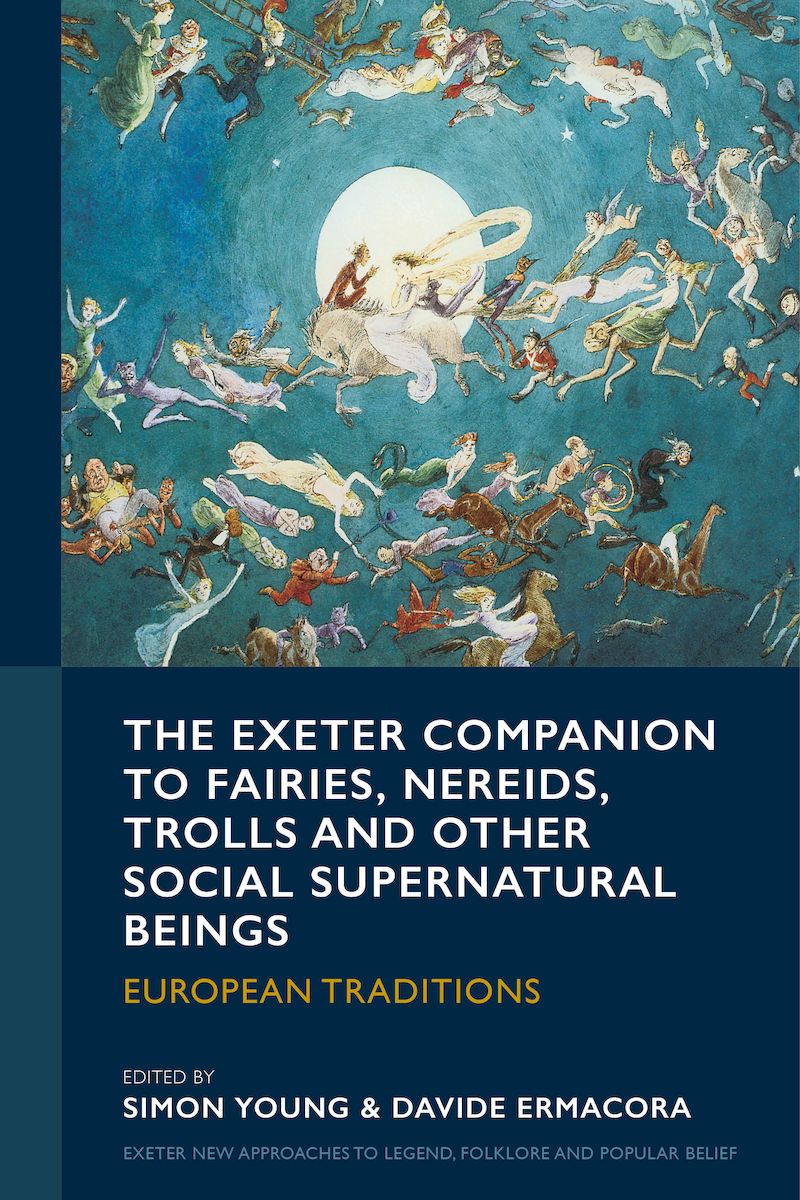 The Exeter Companion to Fairies, Nereids, Trolls and other Social Supernatural Beings
European Traditions


 The Phantom Hitchhiker
Italian Literature, Japanese Lore, and the Transnational Afterlives of a Global Ghost Story