
Die Habsburgermonarchie 1848-1918 Band VII/1
Verfassung und Parlamentarismus: 1. Teilband: Verfassungsrecht, Verfassungswirklichkeit, zentrale Reprasentativkorperschaften
edited by Peter Urbanitsch and Helmut Rumpler

Hardback (Published)
(December 2000)
ISBN: 9783700128694
Price: $160.00
On back order
The previous volume in the series “Die Habsburgermonarchie 1848-1918” dealt with political elites as seen in constitutional questions and the history of parliamentary institutions. The current volume looks at the degree of democratization of this period in the social spheres and processes that were outside constitutional issues and parliamentary sittings. The “politicization of masses” took place in political and cultural environments outside organized politics and was dominated by associations and local organizations primarily held together by the local press. Activists from steering committees of such associations and from editorial offices were responsible for the transformation of the traditional bureaucratic-feudal state to a peoples civil state. Associations, political parties and a large quantity of printed material provided the “school” in which ordinary people learned what was required for political action. Twenty-eight authors from ten different countries have investigated this development in Eastern Central Europe (“Mitteleuropa”), an area socially and culturally highly diverse. About 2,800 associations from all parts of the Habsburg Monarchy have formed the basis for these studies (listed in a separate index at the end of Part 2). In 1910 over 100,000 associations existed in Cisleithania alone. In addition to associations that were purely political, there were many other types of associations, including cultural, student, confessional, singing, sports, and vocational, as well as associations promoting economic progress (all of which could be used for political purposes and often were). As the activities of most of these associations (whose members numbered from a mere dozen to several hundred) were mainly local, the articles in this volume are organized according to region. However, attention has also been given to bodies whose activities covered a much wider area and that represented broad economic, cultural and political interests (including the feminist movement). Even if one considers the unequal levels of development in different areas, which slowed the acceptance of general trends because of local circumstances, some general trends are nevertheless visible throughout the Habsburg Monarchy. Associations changed from being a place for citizens to deliberate political, cultural and economic questions (including emancipation of the underprivileged) to all-encompassing political factions. The ideological, national, and vested interest cohesion of these factions varied in the different parts of the Habsburg Monarchy. As a result, in the years before the First World War, the political landscape in Bohemia and Galicia was quite different from that of the German-speaking Alpine and Danubian areas. The large number of associations played a vital role for increasing political participation, but also mirror the rise (seen in other fields as well) in tendencies of disintegration within the Central European society (or societies) and the rejection of the supra- and trans-national order supported by the Austro-Hungarian authorities.
- Edited by Helmut Rumpler
- Edited by Peter Urbanitsch
Similar Books



 Dis/United States of Vulnerability
Literary and Cultural Transgressions in U.S. Poetry Since the 1960s
Volume 330


 European Drama and Performance Studies
Dramatisations politiques. Théâtre, politique et idéologie au XIXe siècle (1806-1914)
Volume 27


 Modernization, Crises, Cultural Revolutions
Yugoslavia’s 1960s and 1970s through the amateur film lens



 Visual Memory and Oblivion
Monuments and Conflicts in Urban Spaces in Central and Eastern Europe from the Nineteenth Century to the Present Day



 “Tod durch Erschießen”
Generaloberst Nikolaus von Falkenhorst. Wehrmachtsbefehlshaber in Norwegen 1940–1945. Erinnerungen – Verhörprotokolle – Urteilssprüche
Volume 63
 “Zum Siege unserer menschenfreundlichen Prinzipien”
Ungarische Freimaurernetzwerke im „Orient“ 1886-1920




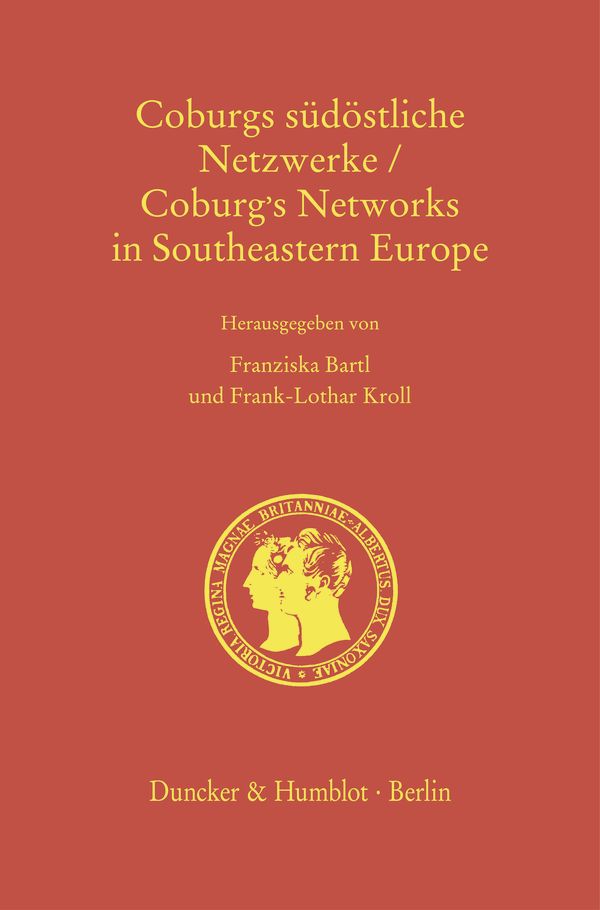 Coburgs südöstliche Netzwerke – Coburg’s Networks in Southeastern Europe
Bulgarien, Rumänien und Ostmitteleuropa im 19. und 20. Jahrhundert. Hrsg. von Franziska Bartl und Frank-Lothar Kroll mit einem Grußwort Seiner Majestät des Königs der Bulgaren Simeon II.
Volume 39


 Dark Like You
Zur medienreflexiven Modernität der Kinder- und Jugendzeitschrift ‚The Brownies’ Book‘ (1920–1921)
Volume 191
 Das Dasein und das isolierte Subjekt
Die Frage der philosophischen Selbstinterpretation des Menschen bei Heidegger