
Dialog uber die Liebe
Amatorius
by Plutarch, edited by Barbara Feichtinger

Paperback (Out of print)
(July 2006)
ISBN: 9783161488115
Price: $27.00
On back order
English summary: Plutarch gives Plato’s philosophy of love a new direction by applying its basic ideas to marital love and by defending the significance of sexuality for personality development and human bonding. His dialogue is structured artistically. It takes place during the festival of Eros in Thespiai, a background plot has the characteristics of a comedy, and the author himself plays a newly-wed young man. This work is presented here with a literary-oriented introduction, the Greek text has been checked carefully, the German translation aims to be readable and is supplemented by detailed notes. Four essays by various authors are included: one on the Eros cult in Thespiai, one on the philosophical aspects, one on the social background of Plutarch’s thoughts on sexuality and marriage, and one on the Christian concept of love. German description: Plutarch gibt der Liebesphilosophie Platons eine neue Wendung: er ubertragt deren Grundgedanken auf die eheliche Liebe, und er verteidigt die Bedeutung der Sexualitat fur Personlichkeitsentwicklung und menschliche Bindung. Sein Dialog ist kunstvoll gebaut. Er findet wahrend des Eros-Festes in Thespiai statt; eine Hintergrundhandlung hat Zuge einer Komodie und der Autor lasst sich selbst als frischverheirateten, verliebten jungen Mann auftreten. Die Schrift wird hier vorgelegt mit einer literarisch orientierten Einfuhrung, kritisch durchgesehenem griechischen Text, einer moglichst lesbaren deutschen Ubersetzung und eingehenden Einzelerklarungen. Vier Essays verschiedener Autoren kommen hinzu: uber den Eros-Kult in Thespiai, uber die philosophischen Aspekte der Schrift, uber sozialgeschichtliche Voraussetzungen der Gedanken uber Sexualitat und Ehe, uber den christlichen Liebesbegriff.
English summary: Plutarch gives Plato’s philosophy of love a new direction by applying its basic ideas to marital love and by defending the significance of sexuality for personality development and human bonding. His dialogue is structured artistically. It takes place during the festival of Eros in Thespiai, a background plot has the characteristics of a comedy, and the author himself plays a newly-wed young man. This work is presented here with a literary-oriented introduction, the Greek text has been checked carefully, the German translation aims to be readable and is supplemented by detailed notes. Four essays by various authors are included: one on the Eros cult in Thespiai, one on the philosophical aspects, one on the social background of Plutarch’s thoughts on sexuality and marriage, and one on the Christian concept of love. German description: Plutarch gibt der Liebesphilosophie Platons eine neue Wendung: er ubertragt deren Grundgedanken auf die eheliche Liebe, und er verteidigt die Bedeutung der Sexualitat fur Personlichkeitsentwicklung und menschliche Bindung. Sein Dialog ist kunstvoll gebaut. Er findet wahrend des Eros-Festes in Thespiai statt; eine Hintergrundhandlung hat Zuge einer Komodie und der Autor lasst sich selbst als frischverheirateten, verliebten jungen Mann auftreten. Die Schrift wird hier vorgelegt mit einer literarisch orientierten Einfuhrung, kritisch durchgesehenem griechischen Text, einer moglichst lesbaren deutschen Ubersetzung und eingehenden Einzelerklarungen. Vier Essays verschiedener Autoren kommen hinzu: uber den Eros-Kult in Thespiai, uber die philosophischen Aspekte der Schrift, uber sozialgeschichtliche Voraussetzungen der Gedanken uber Sexualitat und Ehe, uber den christlichen Liebesbegriff.
- By (author) Plutarch
- Introduction by Herwig Gorgemanns
- Edited by Barbara Feichtinger
- Edited by Fritz Graf
- Edited by Werner G Jeanrond
- Edited by Jan Opsomer
Other Titles in this Series

 SAPERE-Paket, Bande XXII-XXVI
Band XXII: Was ist wahre Freiheit? - Band XXIII: Cosmic Order and Divine Power - Band XXIV: On Prophecy, Dreams and Human Imagination - Band XXV: Pyrrhonian Skepticism in Diogenes Laertius - Band XXVI: Die Sextusspruche und ihre Verwandten


 SAPERE-Paket, Bande XVII-XXI
Band XVII: Polis - Freundschaft - Jenseitsstrafen. Band XVIII: Fur Religionsfreiheit, Recht und Toleranz. Band XIX: Armut - Arbeit - Menschenwurde. Band XX: Uber den Tod. Band XXI: Agyptische Erzahlungen oder Uber die Vorsehung





 Interpreting and Living God’s Law at Qumran
Miqṣat Ma῾aśe Ha-Torah, Some of the Works of the Torah (4QMMT)
 Der apokryphe Briefwechsel zwischen Seneca und Paulus
Zusammen mit dem Brief des Mordechai an Alexander und dem Brief des Annaeus Seneca uber Hochmut und Gotterbilder


Similar Books


 Drunk the Potion, No Whit Charmed
The Doctrine of Pure and Perfect Souls from Iamblichus to Damascius
 Éthique, politique, religions
Superstition (XVIIe - XXIe siècles). Sémantique, histoires et cultures


 La Lettre clandestine
La littérature philosophique clandestine, ses éditeurs et ses éditions
Volume 34
 Libertinage et philosophie à l’époque classique (XVIe-XVIIIe siècle)
Athéisme, Modernité et Sécularisation / Atheism, Modernity and Secularization
Volume 23


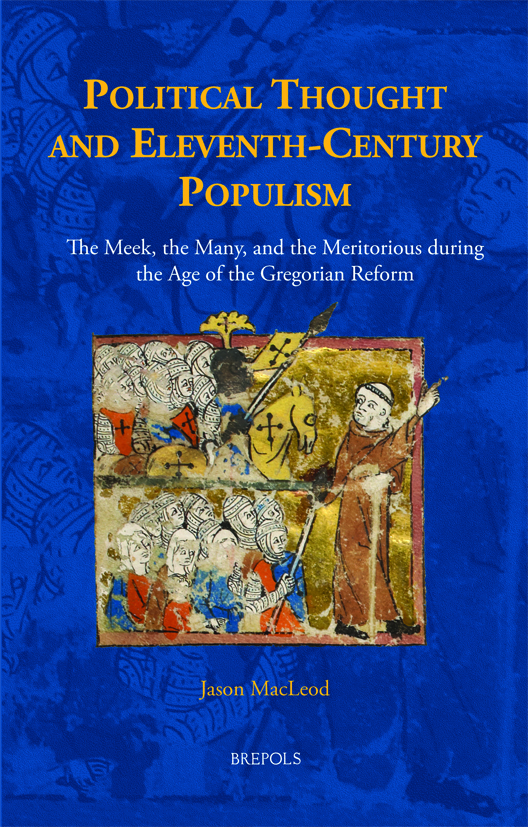 Political Thought and Eleventh-Century Populism
The Meek, the Many, and the Meritorious during the Age of the Gregorian Reform
Volume 38


 The Latin Hermes in Translation
Asclepius, Glosses on Trismegistus, Book of Six Principles of Things, Book of 24 Philosophers
Volume 50



 ‘Emergente Evolution’?
Fallstudien zur philosophischen Rekonstruktion und schopfungstheologischen Rezeption eines naturalistischen Paradigmas
Volume 40
 Al-Ğābirīs Genese und Kritik der Arabischen Vernunft
On Genesis and Critique of Arab Reason by Muḥammed ʿĀbid al-Ğābirī


 Geschichte der Ästhetik und Kunsttheorie
Band 1: Von der Antike bis zum 19. Jahrhundert. 2. aktualisierte Auflage

