
Der Wettergott im Bild
Diachrone Analyse eines altorientalischen Go1ertypus im 3. und 2. Jahrtausend v. Chr. (Teil 1: Text / Teil 2: Katalog, Karten und Tafeln)
by Albert Dietz

German description: Wettergottheiten waren nahezu omniprasent im Alten Orient. Dies liegt besonders an ihrer Bedeutung als Bringer lebensspendenden Regens und Gebieter uber zerstorerische Sturme. In Mesopotamien, Syrien, Anatolien, der Levante und Agypten begegnen sie uns auf Bildwerken und in Texten. Durch Letztere ist uns eine Vielzahl an Wettergottheiten uberliefert: von den bedeutendsten Gottheiten eines Pantheons, uber Aspekt- und Lokalgottheiten. Eine Verbindung der erwahnten Gottheiten mit den Darstellungen in den Bildwerken liegt nahe, doch scheint die Unmenge an schriftlich uberlieferten Gottheiten nicht mit den dargestellten Typen an Wettergottfiguren ubereinzustimmen. Um diese Diskrepanz zu erforschen, werden in der vorliegenden Abhandlung zuerst Austauschtheorien sowie Grundzuge und Eigenheiten altorientalischer Glaubenssysteme besprochen. Darunter spielen besonders die Multiplizitat, Fluiditat und Ubersetzbarkeit von Gottheiten eine wichtige Rolle. Anschlieaend folgt eine umfassende Sammlung aller Wettergottdarstellungen im Alten Orient vom 3. Jahrtausend bis zum Ende des 2. Jahrtausends. Durch die Kontextualisierung und Typologisierung der Belege in jeder behandelten Region liegt hiermit die erste umfassende Analyse der bildlichen Darstellungen von Wettergottfiguren im Alten Orient vor. Aufgrund der umfangreichen Sammlung und statistischen Auswertung kann durch eine diachrone und Regionen ubergreifende Analyse neben einer Untersuchung der internationalen Austauschprozesse auch das Verhaltnis von Gotternamen zu den Gotterdarstellungen diskutiert werden. Ob ein Gotterbild daher einen festen Namen benotigt, wird abschlieaend diskutiert. Anhand der typologischen Ordnung und Auswertung der zahlreichen Belege sowie der Berucksichtigung historischer, sozialer, politischer und kultureller Kontexte konnen in diesem Band bedeutende Beitrage zum Verstandnis altorientalischer Wettergottheiten und ihrer Darstellung im Bild prasentiert werden. English summary: Storm-Gods were almost omnipresent in the Ancient Near East, especially due to their importance as bringers of life-giving rain and rulers over destructive storms. In Mesopotamia, Syria, Anatolia, the Levant, and Egypt, we encounter them in images and texts. Through the latter, a multitude of Storm-Gods are known to us: from the most important deities of a pantheon to aspect deities and local deities. A connection between the deities mentioned and the depictions in the visual record seems obvious, however, the vast number of deities known from texts does not seem to correspond to the types of Storm-God figures depicted. To explore this discrepancy, the present contribution first discusses theories of exchange, as well as basic features and peculiarities of ancient Near Eastern belief systems. Among these, the multiplicity, fluidity, and translatability of deities play a particularly important role. This is followed by a comprehensive collection of all Storm-God representations in the Ancient Near East from the 3rd millennium to the end of the 2nd millennium. By contextualising and typologising the evidence in each region, this is the first comprehensive analysis of the pictorial representations of Storm-God figures in the Ancient Near East. Due to the extensive collection and statistical evaluation, a diachronic and cross-regional analysis makes it possible to discuss the relationship of names of gods to representations of gods in addition to an investigation of international exchange processes. Whether an image of a god needs a fixed name is discussed in the end. This volume makes significant contributions to the understanding of ancient Near Eastern Storm-Gods and their representation in imagery by situating them in historical, social, political, and culture context.
- By (author) Albert Dietz
Other Titles in this Series
 From Pottery to Chronology
The Middle Euphrates Region in Late Bronze Age Syria. Proceedings of the International Workshop in Mainz (Germany), May 5-7, 2012
Volume 1
 Tall Bazi I
Die romerzeitliche Bebauung von Tall Bazi im syrischen Euphrattal. Ein befestigtes einheimisches Heiligtum im Vorfeld der romischen Provinz Syria
Volume 5
 Ancient Near Eastern Temple Inventories in the Third and Second Millennia BCE
Integrating Archaeological, Textual, and Visual Sources.. Proceedings of a conference held at the LMU Centre for Advanced Studies, November 14-15, 2016
Volume 4
 Der Baudekor des zweiten Jahrtausends v. Chr. in Mesopotamien. Formen – Motive – Perzeption
Volume 3
 Die Entwicklung erdbebensicherer Bautechniken in der Frühen und Mittleren Eisenzeit in Ostanatolien
Volume 11


 Eisenzeitliche Palaste in der nordlichen Levante
eprasentation von Herrschaft mit architektonischen Mitteln
Volume 2
Similar Books


 Connecting the Dots: Counting, Writing, and the Beginnings of Civilization
The Secret Lives of Clay Tokens: A Memoir

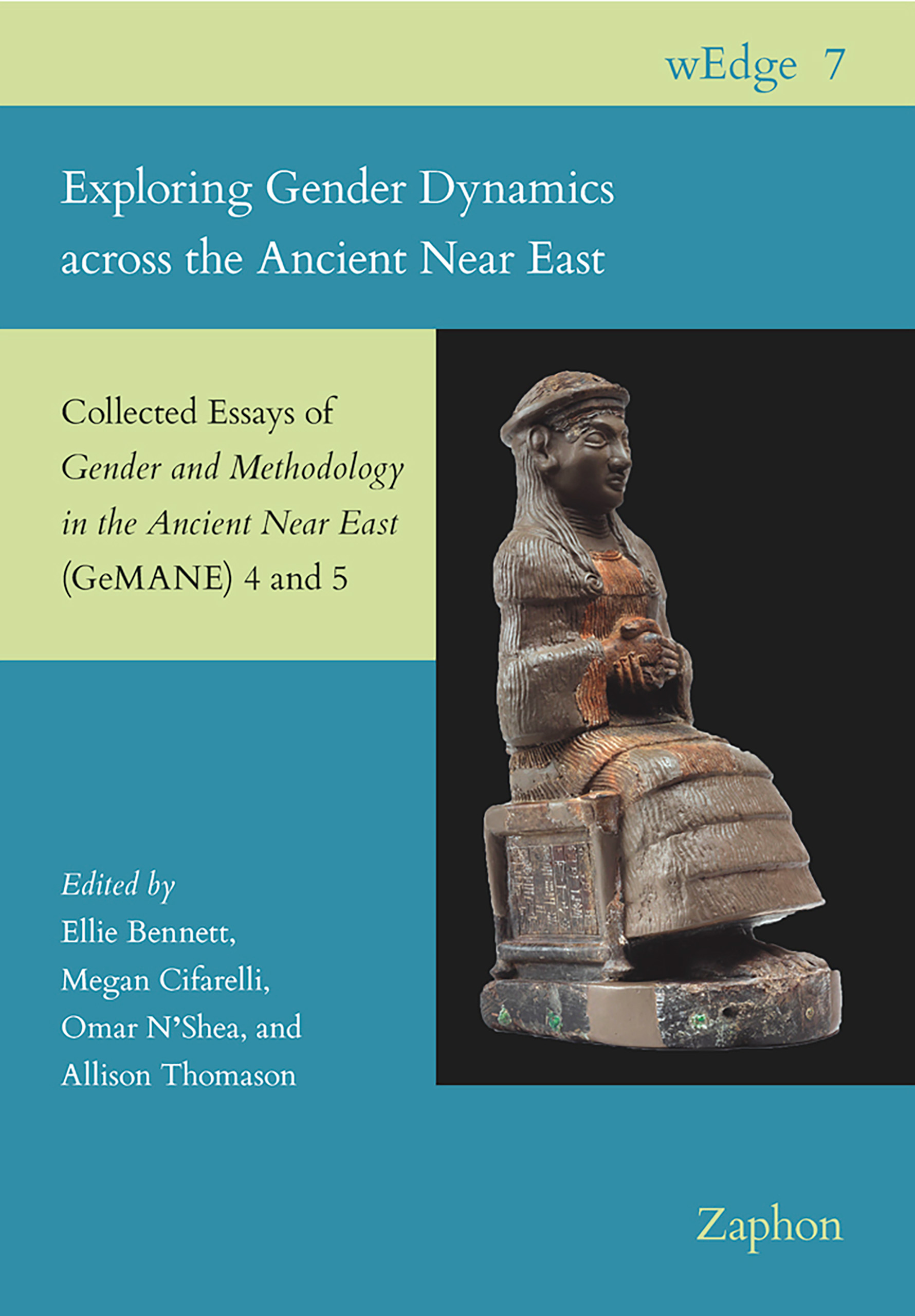 Exploring Gender Dynamics across the Ancient Near East
Collected Essays of Gender and Methodology in the Ancient Near East (GeMANE) 4 and 5
Volume 7


 Ḫattušaš utnē išḫameški
Hittite and Other Ancient Near Eastern Studies Presented to Piotr Taracha on the Occasion of His 65th Birthday

 New Research on Old Collections in Southwest Asian Archaeology
Proceedings of the Workshop Held at the British Museum, London, 31 July – 2 August, 2023
 Old Aramaic Inscriptions and their Contexts
An Epigraphic, Archaeological, and Historical Synthesis
Volume 63

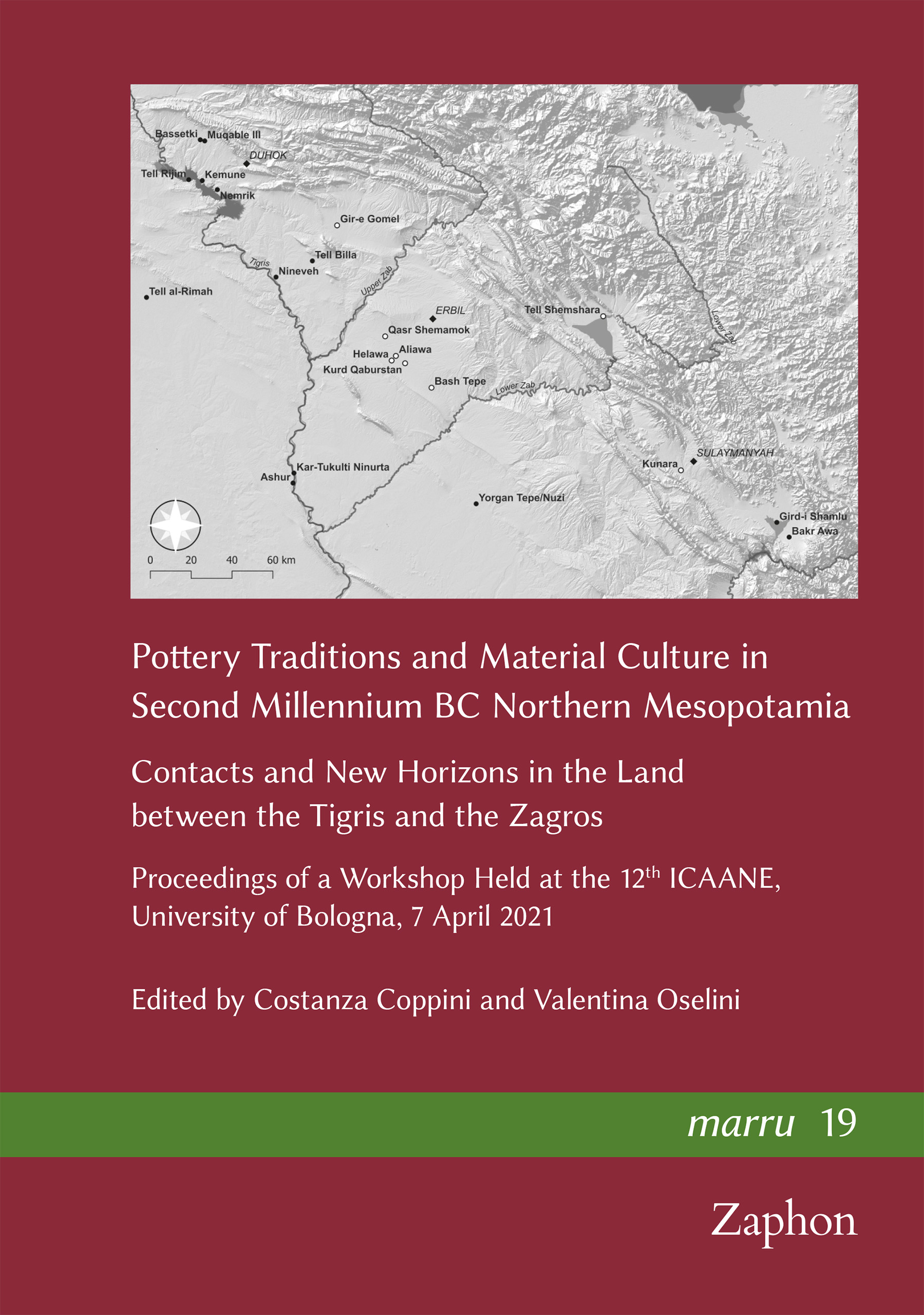 Pottery Traditions and Material Culture in Second Millennium BC Northern Mesopotamia
Contacts and New Horizons in the Land between the Tigris and the Zagros. Proceedings of a Workshop Held at the 12th ICAANE, University of Bologna, 7 April 2021
Volume 19
 Punning in Odd or Elegant Constructions in Jeremiah
The Convergence of Linguistics, Rhetoric, and Textuality in the Hebrew Text of Jeremiah
 Shame in the Worlds of the Hebrew Bible and Akkadian Texts
A Linguistic Study and Its Implications
Volume 33
 Telling Contexts
Archaeological and Textual Studies in Honor of Elizabeth Bloch-Smith and Mark S. Smith
 The Body
Lived, Cultured, Adorned: Essays on Dress and the Body in the Bible and Ancient Near East in Honor of Nili S. Fox
 The Discourse of Rites
Shaping and Reshaping the (Counter-)Priestly Rituals Conducted Outside the Tabernacle
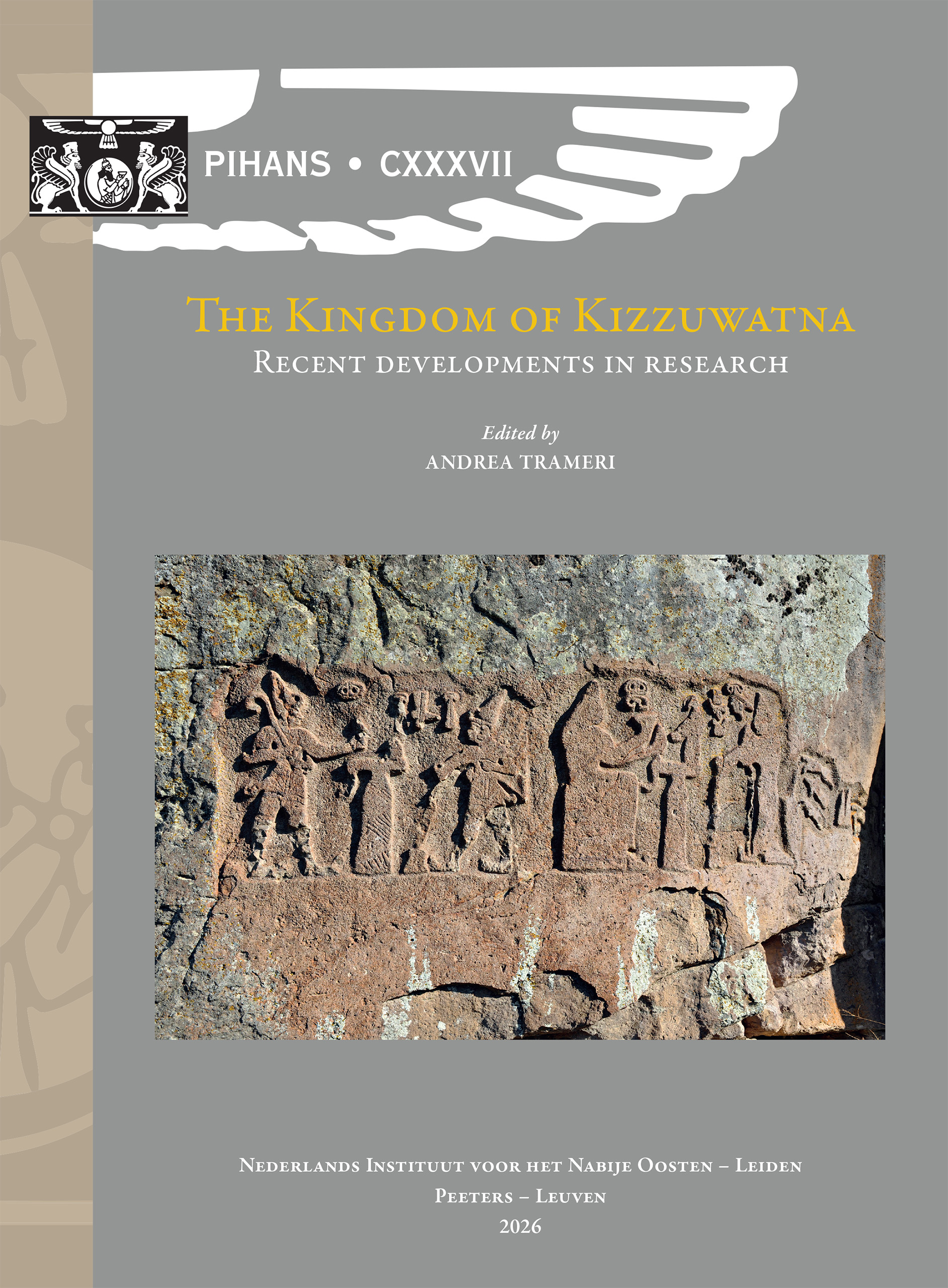 The Kingdom of Kizzuwatna: Recent Developments in Research
Proceedings of the Third NINO Postdoctoral Research Fellow Annual Conference, Leiden, 23rd-25th March 2023
Volume 137


 Die Entwicklung erdbebensicherer Bautechniken in der Frühen und Mittleren Eisenzeit in Ostanatolien
Volume 11
 Die JHWH-Religion und die Vorstellung göttlicher Gesetzgebung
Überschneidungen zwischen der Rechtsentwicklung und der Sphäre der Religion in der Geschichte des antiken Israel und Juda

 Kultur – Kontakt – Kultur
Beiträge anlässlich der 66. Rencontre Assyriologique Internationale in Frankfurt/Main und Mainz, 25.–29. Juli 2022
Volume 35
 Menschenwürde und Menschenrechte im Altem Orient, Israel und Hellas. Band 1
Human Dignity and Human Rights in the Ancient Near East, Ancient Israel, and Hellas. Volume 1
Volume 311
 Ptolemaiou Procheiroi Kanones. Les «Tables Faciles» de Ptolemée. Volume 2a: Tables A3-A13
Édition critique, Transcription
 Sprachwissenschaftliche und kulturhistorische Reflexionen
Festschrift zu Ehren von Jörg Klinger
Volume 31

 Vom Mädchen zur Frau
Weihgaben als Indikatoren rituellen und kommunikativen Handelns von Frauen in griechischen Kulten
Volume 188
 Von der Symmachie zur Arché und zurück
Die Entwicklungsphasen des Ersten Attischen Seebundes (478/7–404 v. Chr.)
