
Das Heiligtum von Gyroulas bei Sangri auf Naxos
Edited by V. Lambrinoudakis Edited by A. Ohnesorg

In 1951, Nikolaos Kontoleon located the remains of an important ancient sanctuary at the site of Gyroula, less than one and a half kilometers south of the village of Sangri, and in 1954 he revealed an all-marble ancient temple, which had later been converted into a Christian basilica. In 1976, his successor in the direction of the excavations of Naxos, Professor Vassilis Lambrinoudakis, organized for the further research and study of the findings in Gyroula an interdisciplinary team of archaeologists and architects, with the participation of scientists from the Technical University of Munich, headed by Professor Gottfried Gruben, the well-known “Mr. Theophilos” to many Naxians. This group worked continuously and systematically until 2000. After exhaustive research and collection of the scattered members of the ancient building in the wider area and documentation of all the material, the team proceeded to the restoration of the ancient temple, the readable by the general public shaping of all the remains of the sanctuary where the temple was located and the construction of a local museum, in which architectural elements and sculptural offerings from the sanctuary were housed in a particularly supervisory way. The many years of study proved that the temple at Gyroula is an extremely important building for the knowledge of ancient architecture in terms of style and architectural type, the construction of the roof, the principle of visual corrections and the management of the interior space in ancient buildings. At the same time, the discovery of a rare in antiquity gathering of the Demi-mother with Apollo in the sanctuary offered a particularly interesting case in the knowledge of the religion of the ancient Greeks. All this new knowledge, made public with preliminary announcements, has already placed Gyroula and Naxos in a particularly high position in the relevant international bibliography. The restoration and promotion of the sanctuary is so successful and interesting for the general public that the archaeological site of Gyroula in Sagri is today, after Portara, by far the most visited archaeological site of Naxos. All this concentrated knowledge, particularly important for science but also for the history of Naxos and its important contribution to classical culture, is now attributed in detail to the scientific world and to the wider international public by the contributors of the work of research and promotion of the ancient sanctuary of Demeter in Gyroula Sagri, in an elegant volume of the basilica and their parts by the hand of professors Manolis Korres and Gottfried Gruben.
- Edited by V. Lambrinoudakis
- Edited by A. Ohnesorg
Similar Books

 Caesar’s Visions and Impact on the Roman Empire
Revisiting the Archaeological and Historical Record of the 40s BC
Volume 2


 Etruscan and Roman Hellenistic Anatomical ex votos
Reassessing Popular Religious Expressions in Central Italy
Volume 8

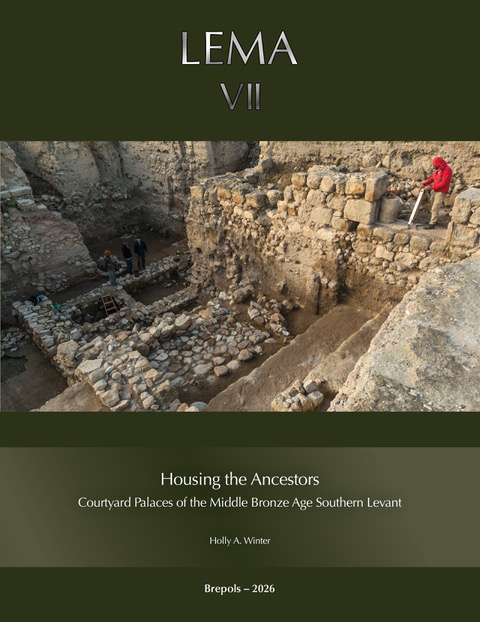

 Invisible Labour in Antiquity
Visualizing Obscure Work in the Ancient Mediterannean and West Asia
Volume 1
 Late Antique villae in the Balkans (3rd–7th c. AD): Current Research Questions and Perspectives
HAEMUS Companion to the Late Antique Balkans 1
Volume 4


 Portraying the Individual in the Roman East
Local–Imperial Entanglements in Sculpture, Mosaics, and Paintings (First–Fourth Centuries AD)
Volume 18

 Small Worlds and Relational Agencies: Local Societies in Early Medieval Iberia
Pequeños mundos y Agencias relacionales: Sociedades locales altomedievales en la Península Ibérica

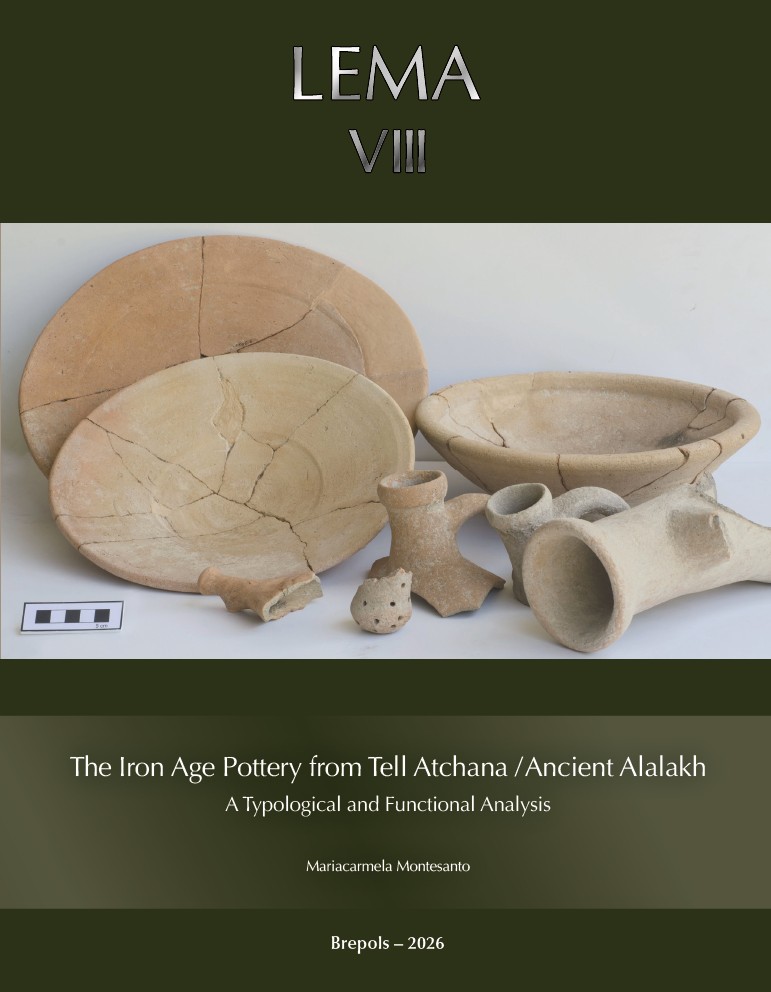 The Iron Age Pottery from Tell Atchana / Ancient Alalakh
A Typological and Functional Analysis
Volume 8

 Writing in the Church of the Nativity in Bethlehem
Inscription and Graffiti in a Multilingual and Multigraphic Perspective
Volume 45


 Atlante tematico di topografia antica 36-2026
Urbanistica e monumenti, porti, Roma. Ricerche sui monti Aurunci
Volume 36
 Cerámica común romana y ciclo haliéutico
Análisis de los contextos de las cetariae de Iulia Traducta

 Nuove scoperte e progressi nelle metodologie di rilievo e analisi dell’arte rupestre post-paleolitica in Italia
New discoveries and progress in the tracing and analysis methodologies of the post-Paleolithic rock art in Italy


 A Dramatic Event in Late Roman Florence
The Anomalous Burial Site Discovered beneath the Uffizi Gallery

 Alexander the Great and the Campaign of Gaugamela
New Research on Topography and Chronology. IAMNI 1 (Italian Archaeological Mission to Northern Iraq)
Volume 53


 Ceramic Finds in Context (Roman to Early Islamic Times)
Final Publications from the Danish-German Jerash Northwest Quarter Project VII
Volume 13