
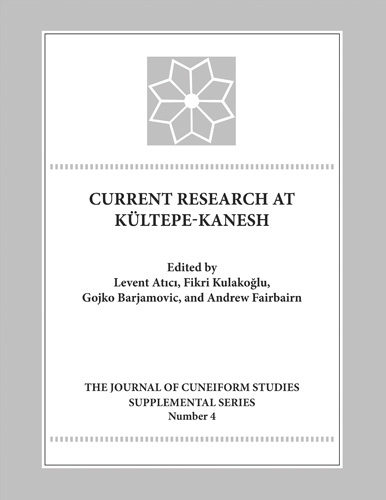
Current Research at Kultepe-Kanesh
An Interdisciplinary and Integrative Approach to Trade Networks, Internationalism, and Identity
Edited by Levent Atici Edited by Fikri Kulakoglu Edited by Gojko Barjamovic Edited by Andrew Fairbairn
Hardback (Published)
(March 2014)
ISBN: 9780897570091
Price: $89.95
On back order
A primary goal of this special JCSS volume is to integrate the work of scholars in archaeology, archaeometry, bioarchaeology, geoarchaeology, and history on the site of Kultepe to develop a new synthetic research paradigm for investigating issues of trade, colonialism, ethnicity, art, identity, and urbanization in the Near East in a
The material remains and the more than 23,500 cuneiform tablets unearthed at the site of Kultepe (ancient Kanesh) shed light on social, political, and economic aspects of the Middle Bronze age (ca. 2000-1700 years BC) in central Anatolia, but also in Upper Mesopotamia. The rich textual record provides ample information on a very sophisticated supraregional market economy, representing one of the best-documented historical cases of long-distance trade in the ancient world. Although the site was first excavated in 1893, followed by intermittent excavations between 1906 and 2005, modern scientific and interdisciplinary excavations have only been undertaken since 2006. The new scientific research at Kultepe-Kanesh has already begun amassing new data and providing us with a unique opportunity to generate new perspectives and to challenge previous models and assumptions about, for example, trade, colonialism, ethnicity, art, religious ideas, identity, and patterns of social, political, and economic organization in the Near East during the Middle Bronze Age. A primary goal of this special volume is to integrate the work of scholars in archaeology, archaeometry, bioarchaeology, geoarchaeology, and history to develop a new synthetic research paradigm for investigating issues of trade, colonialism, ethnicity, art, identity, and urbanization in the Near East in a unified fashion.
Levent Atici is an Associate Professor of Archaeology in the Department of Anthropology at University of Nevada, Las Vegas (UNLV). After receiving his Ph.D. from Harvard University, Atici joined UNLV in 2007 and founded the UNLV Zooarchaeology Laboratory in 2009. His research covers the full spectrum of human-animal interactions from hunting to taming to large-scale, industrial production of animals in specialized pastoralist societies in Southwest Asia. His current research program in Turkey comprises active field work at the Pre-Pottery Neolithic (PPNA) Kortik Tepe, Neolithic Ugurlu Hoyuk, and Early through Late Bronze Age Kaman-Kalehoyuk and Kultepe-Kanesh. Atici has published on Epipalaeolithic forager adaptations, food provisioning systems in early complex societies, and the relationships between food and ethnicity. Atici is committed to advancing zooarchaeology through fostering international collaboration, data sharing, and best practices. Fikri Kulakoglu is Professor of Archaeology in the Department of Near Eastern Archaeology at Ankara University. His career in archaeology spans over thirty years in Turkey during which time he has participated in numerous fieldwork and directed excavations at Saraga Hoyuk and Kalehoyuk in Gaziantep, and surveys in Sanliurfa in southeast Anatolia. Since 2006 he has been the director of the Kultepe Project where he leads a large multinational and interdisciplinary team to excavate the ancient state of Kanesh, the capital of the Old Assyrian Trading Colony period in Anatolia where more than 23,000 tablets have been unearthed. In addition, he has conducted archaeological surveys in the same area, Kayseri Province in central Anatolia, since 2008, aiming to identify major trading settlements and trade routes around Kanesh. In 2010, he co-edited a book, Anatolia’s Prologue: Kultepe Kanesh-Karum, that compiled a large corpus of scholarly work on the cuneiform archives from Kanesh. Gojko Barjamovic is Lecturer on Assyriology at the Department of Near Eastern Languages and Civilizations at Harvard University. His research focuses on ancient economy and states. He also publishes works on the social and intellectual history of the ancient Near East, and he is an epigrapher for the Kultepe excavations in Turkey. He is the author of A Historical Geography of Anatolia in the Old Assyrian Colony Period (Copenhagen 2011) and co-author (with Thomas Hertel and Mogens Trolle Larsen) of Ups and Downs at Kanesh – Observations on Chronology, History and Society in the Old Assyrian Period (Leiden 2012). He is currently co-editing (with Kim Ryholt) two studies of canon and libraries in the ancient world: Libraries Before Alexandria and Canonicity and Identity Formation, and working on two archival studies of cuneiform texts: Old Assyrian Texts in the Yale Babylonian Collection, and The Archive of Kultepe 1994, House I. Andrew Fairbairn is an Australian-based archaeobotanist. Trained at University College London’s Institute of Archaeology, he has published over sixty papers and books on projects in the UK, Hungary, Italy, Turkey, Syria, Jordan, Papua New Guinea, and Australia dating from 50,000 years of age to sites from the early twentieth century. After working for The Museum of London, Cambridge University, and the Australian University, he joined The University of Queensland in Brisbane as Lecturer in 2006 and from January 2014 is studying the ancient development of global plant trade as an Australian Research Council Future Fellow. Fairbairn’s work focuses on seeds, fruits, wood and tubers used by ancient peoples and gives an insight into the ancient diet, economy, and environment of our ancestors.
- Edited by Levent Atici
- Edited by Fikri Kulakoglu
- Edited by Gojko Barjamovic
- Edited by Andrew Fairbairn
Other Titles in this Series



Similar Books






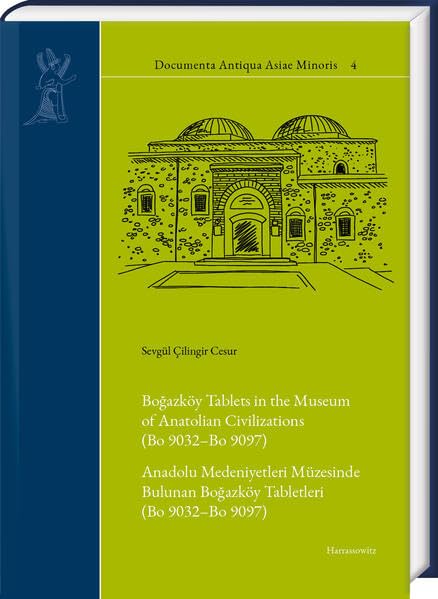 Boğazköy Tablets in the Museum of Anatolian Civilizations (Bo 9032–Bo 9097)
Anadolu Medeniyetleri Müzesinde Bulunan Boğazköy Tabletleri (Bo 9032–Bo 9097)
Volume 4
 Connecting the Dots: Counting, Writing, and the Beginnings of Civilization
The Secret Lives of Clay Tokens: A Memoir

 Curating the Prehistoric Past
Studies on West Asian Archaeology and Beyond in Honour of Yoshihiro Nishiaki

 Exploring Gender Dynamics across the Ancient Near East
Collected Essays of Gender and Methodology in the Ancient Near East (GeMANE) 4 and 5
Volume 7


 Ḫattušaš utnē išḫameški
Hittite and Other Ancient Near Eastern Studies Presented to Piotr Taracha on the Occasion of His 65th Birthday




 Kultur – Kontakt – Kultur
Beiträge anlässlich der 66. Rencontre Assyriologique Internationale in Frankfurt/Main und Mainz, 25.–29. Juli 2022
Volume 35
 Money of Mercenaries in the Cimmerian Bosporus
From the Mithridatic Wars to the Roman-Bosporan War of AD 45-49
Volume 45

 New Research on Old Collections in Southwest Asian Archaeology
Proceedings of the Workshop Held at the British Museum, London, 31 July – 2 August, 2023
 Old Aramaic Inscriptions and their Contexts
An Epigraphic, Archaeological, and Historical Synthesis
Volume 63

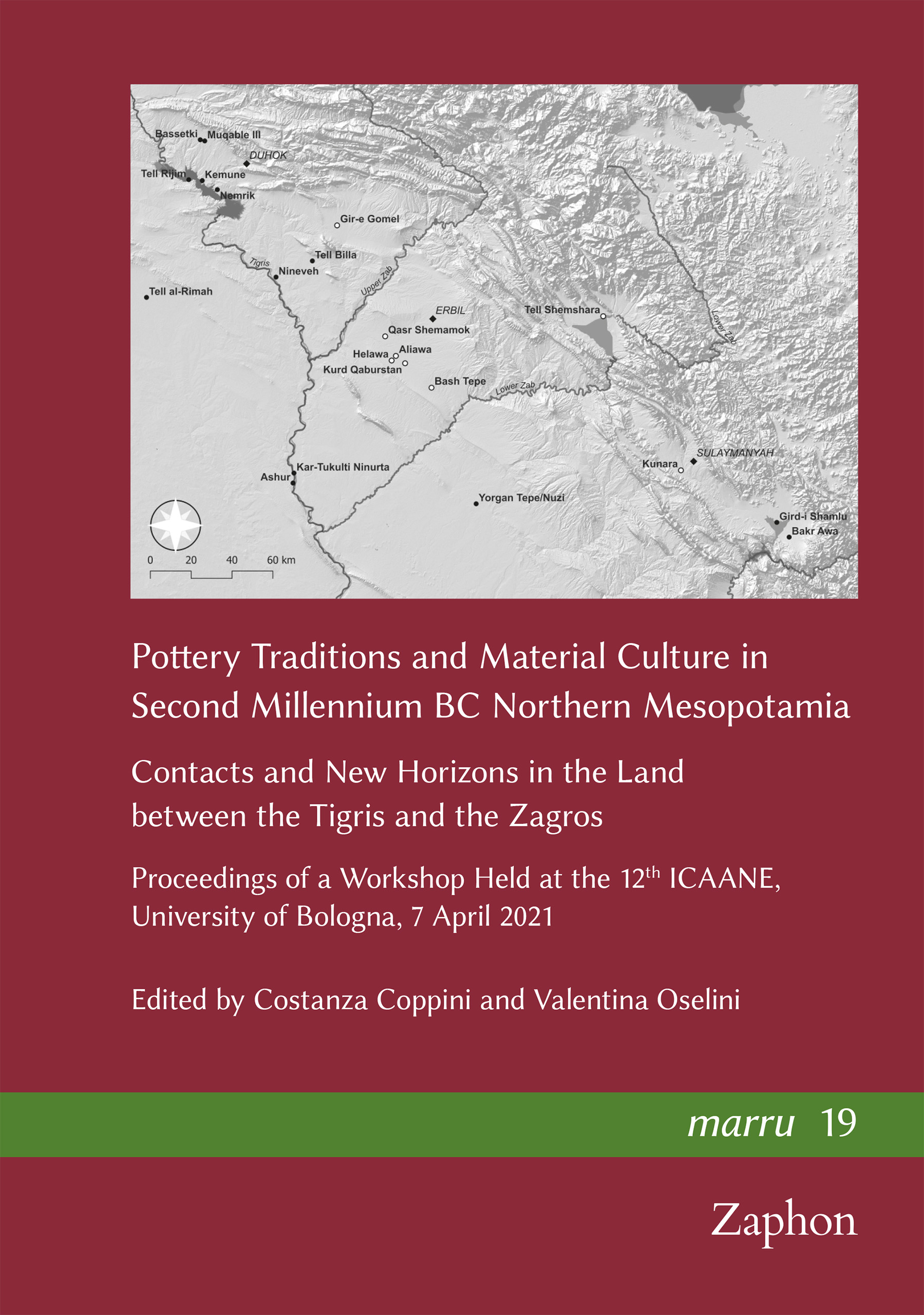 Pottery Traditions and Material Culture in Second Millennium BC Northern Mesopotamia
Contacts and New Horizons in the Land between the Tigris and the Zagros. Proceedings of a Workshop Held at the 12th ICAANE, University of Bologna, 7 April 2021
Volume 19
 Punning in Odd or Elegant Constructions in Jeremiah
The Convergence of Linguistics, Rhetoric, and Textuality in the Hebrew Text of Jeremiah

 Sertorius, the Exiles of the Sullan Regime and the Provinces of the Empire
Legitimacy, Morality and Imperial Discourse in the 70s BCE
 Shame in the Worlds of the Hebrew Bible and Akkadian Texts
A Linguistic Study and Its Implications
Volume 33

 Telling Contexts
Archaeological and Textual Studies in Honor of Elizabeth Bloch-Smith and Mark S. Smith
 The Body
Lived, Cultured, Adorned: Essays on Dress and the Body in the Bible and Ancient Near East in Honor of Nili S. Fox
 The Discourse of Rites
Shaping and Reshaping the (Counter-)Priestly Rituals Conducted Outside the Tabernacle
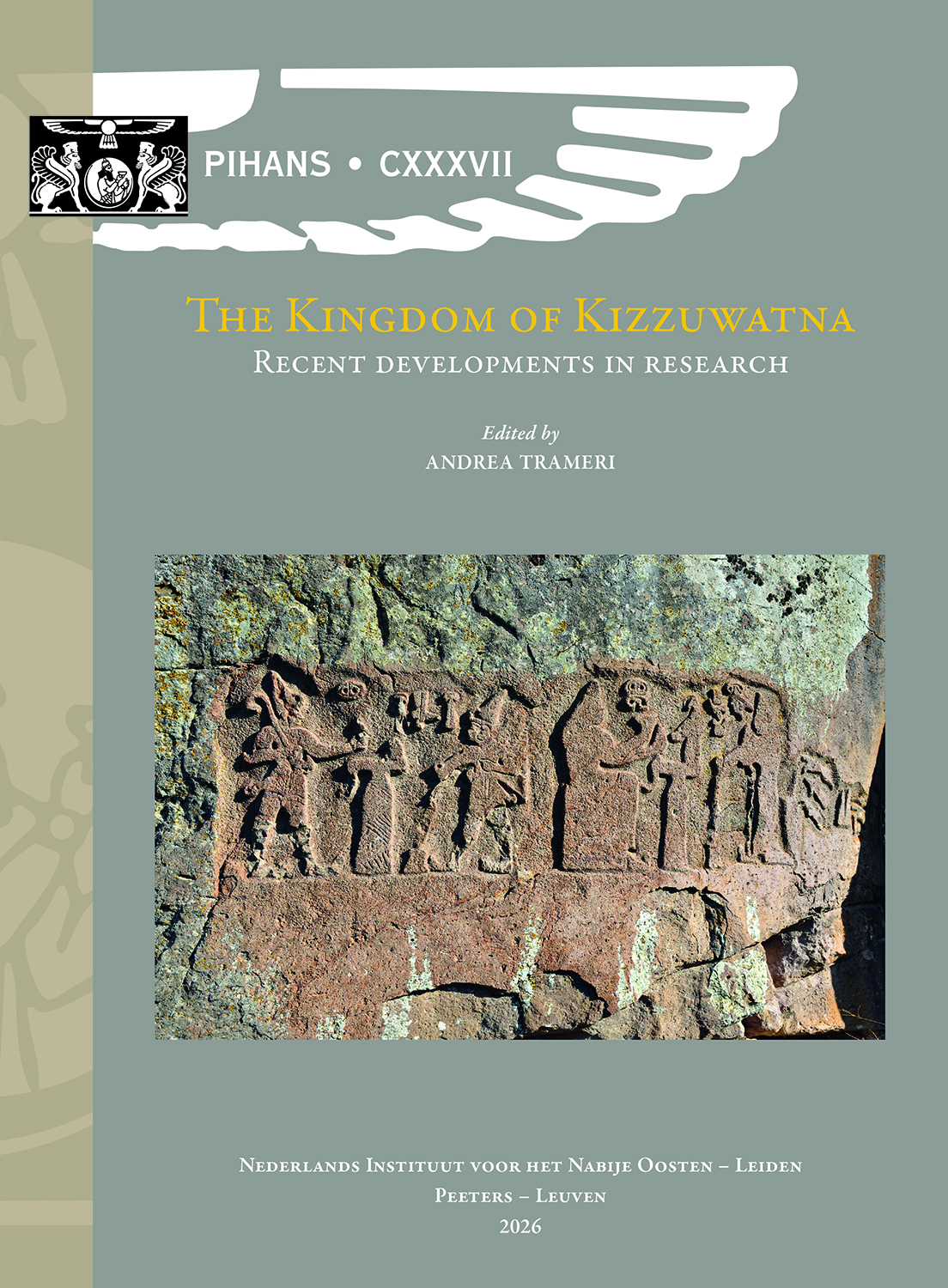 The Kingdom of Kizzuwatna: Recent Developments in Research
Proceedings of the Third NINO Postdoctoral Research Fellow Annual Conference, Leiden, 23rd-25th March 2023
Volume 137
