Contextualization of Sufi Spirituality in Seventeenth- and Eighteenth-Century China
The Role of Liu Zhi (c. 1662-c. 1730)
by David Lee

Paperback (No longer our product)
(July 2016)
ISBN: 9780227176207
5.98 x 9.02 inches
Price: $44.00
In stock
A significant study of the writings of the Chinese Muslim scholar Liu Zhi and his innovative role in contextualising Islamic texts for a Chinese cultural audience. Includes translations of some of his key works.
Liu Zhi (c1662-c1730), a well-known Muslim scholar writing in Chinese, published outstanding theological works, short treatises, and short poems on Islam. While traditional Arabic and Persian Islamic texts used unfamiliar concepts to explain Islam, Liu Zhi translated both text and concepts into Chinese culture. In this erudite volume, David Lee examines how Liu Zhi integrated the basic religious living of the monotheistic Hui Muslims into their pluralistic Chinese culture. Liu Zhi discussed the Prophet Muhammad in Confucian terms, and his work served as a bridge between peoples. This book is an in-depth study of Liu Zhi’s contextualization of Islam within Chinese scholarship that argues his merging of the two never deviated from the basic principles of Islamic belief.
David Lee is Associate Professor of Theology at Evangel Seminary in Hong Kong. He has served as Senior Pastor in the Chinese Church of London.
- By (author) David Lee
This is a brilliant study of the contextualization of Arabic and Persian Sufi Muslim writing for a Chinese audience by one of the most influential Chinese Muslim writers, Liu Zhi (c1662-c1730). David Lee has shown clearly how Liu Zhi translated key Sufi works using Buddhist, Daoist, and Confucianist concepts to encourage the reception of Islam as a fourth recognized tradition alongside the other three.Mark Beaumont, Senior Lecturer in Islam and Mission, London School of TheologyScholars have previously focussed on the innovative nature of Islamic contextualization in seventeenth- and eighteenth-century China. Lee's work goes further, firstly by focussing on: 1) a significant Muslim from the network of scholars in this period, Liu Zhi; 2) his uniquely indigenized use of the Akbarian tradition both for teaching and apologetics; secondly, by combining the use of 1) his own translations with the existing ones; 2) selected Western sources with the previously unknown Chinese secondary sources.strongDavid Emmanuel Singh, OCMS, OxfordDavid Lee's book is a significant contribution to analysing the legacy of Liu Zhi and translating his literature for an international readership. By conceptualizing Liu Zhi's active engagement of Islamic texts within Chinese traditions and contexts in the translation-conversation framework of contextualization, Lee's contribution will not only stimulate scholarly interests in exploring Liu Zhi's work within and beyond the Nanjing Islamic tradition, but will also provide an important theoretical outlook to further study the contextualization of other Islamic texts in the period of Ming-Qing China.Wai-Yip Ho, author of Islam and China's Hong Kong: Ethnic Identity, Muslim Networks and the New Silk RoadDavid Lee's book makes a simple but potentially significant intervention in this field: it argues on the bases of Liu Zhi's less-studied popular didactic writings that Liu was not mainly appealing to an emergent elite Sino-Muslim identity or the concerns of Sufi mysticism, but rather was engaged in a Muslin apologetics for a Chinese audience.Eric Schluessel, Journal of Chinese Religions, Volume 46, Issue 1, 10 May 2018
—
Similar Books
 Cities through Time
Glimpses into Urbanity and Community in Mediaeval to Modern West Asia and Egypt
Volume 1

 Islamic Rituals Beyond the Mosque
Historical Evolution of Prayer and Devotion in Physical Space and Cyberspace
 Ismail Hakki Bursevi’s translation of and commentary on Fusus al-Hikam By Muhyiddin Ibn ‘Arabi
Volumes 1-4

 Qatar’s Societal Security
Towards the Inclusive National Concept of ‘Baladna’ Identity, Migration and External Threats Since 2017


 Beiträge zur Islamischen Kunst und Archäologie
The Arts and Archaeology of Funerary Cultures in Islam
Volume 10.0

 Explorations in Islamic Archaeology
Material Culture, Settlements, and Landscapes from the Mediterranean to Western Asia
Volume 7


 Occasionalism Revisited
New Essays from the Islamic and Western Philosophical Traditions (2nd ed.)
Volume 2
 Proceedings of the Seminar for Arabian Studies Volume 54 2025
Papers from the fifty-seventh meeting of the Seminar for Arabian Studies held at the Institut national d’histoire de l’art, Paris, 27–29 June 2024
 The Logic of al-Fanari
A Study and Annotated Translation of al-Fanari's Commentary on the Isaghuji
Volume 3


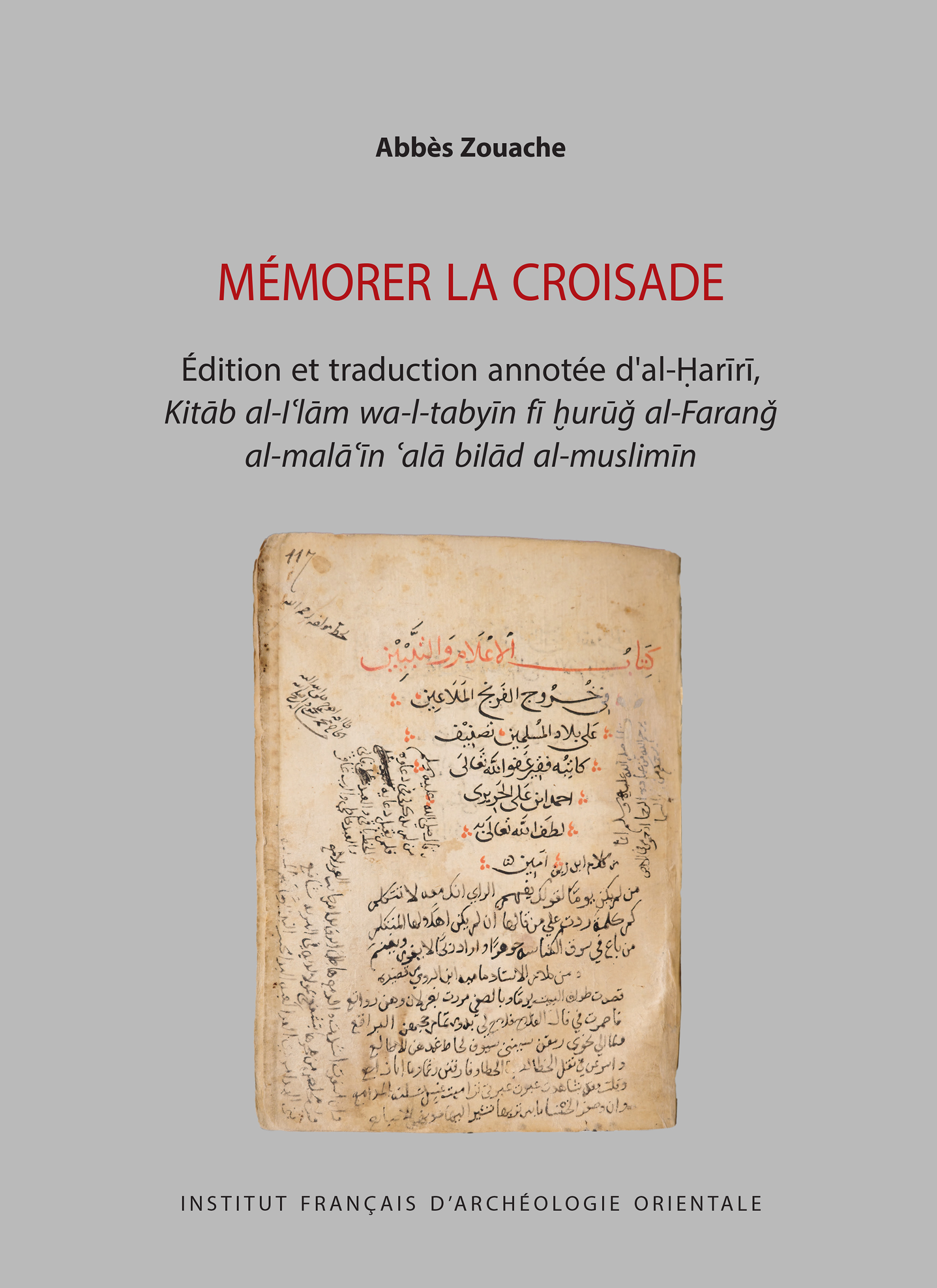 Memorer la croisade
Edition et traduction annotee dal-Hariri, Kitab al-I'lam wa-l-tabyin fi hurug al-Farang al-mala'in 'ala bilad al-muslimin
Volume 64


 Freedom Revisited
A Comparative Theological Approach to the Question of Free Will in Islam
Volume 40


 History of the Oil Industry in the Gulf and the People Who Made it Happen, 1934-1966
Based on Original Documents of Abu Dhabi Petroleum Company
 Navigating Language in the Early Islamic World
Multilingualism and Language Change in the First Centuries of Islam
Volume 2
 Proceedings of the Seminar for Arabian Studies Volume 53 2024
Papers from the fifty-sixth meeting of the Seminar for Arabian Studies held in Aarhus 4–6 August 2023


 The Trucial Coast Political Reports 1963-1966
From Pearls to Oil - at Last. With an Index for vols 1-5
 Zoroastrian Hermeneutics in Late Antiquity
Commentary on the 'Sudgar Nask' of 'Denkard' Book 9
Volume 32