
Commonplace Culture in Western Europe in the Early Modern Period II
Consolidation of God-given Power
edited by P.G. Bossier and K. Banks

This is the second of three volumes from the project ‘Authority and Persuasion: the Role of Commonplaces in Western Europe (c.1450-c.1800)’. The project was launched by the universities of Copenhagen, Durham and Groningen and involved scholars from a range of disciplines who researched the use of commonplaces as a means of persuasion in the early modern world. Commonplaces as a technical term refers to the loci communes collected in late medieval and early modern commonplace books. In the project, however, the notion of commonplace was broadened to include means of persuasion in all kinds of texts as well as the visual arts, theatre, music and other media. This broader notion embraces metaphors, proverbs, figures, and expressions that enjoyed both a history of use in a given society or language community and a wide currency in that society. This is the second volume from the Commonplace Culture series. It analyses the use of commonplaces to bolster power, or sometimes to question it. The volume focuses on the seventeenth century. In the latter part of this period, the status and cognitive scope of the printed commonplace book declined; yet, as the essays in this volume demonstrate, the cognitive practices evidenced in commonplace books continued to enjoy good health. The ‘commonplaces’ analysed by contributors to this volume constitute cultural objects which gained persuasive potential from the exploitation of material bearing the authority of the past, yet they are not commonplaces stricto sensu. The essays in the volume examine not only written texts but also theatre, music, processions, ballets, and royal entries. In particular, the notion of the commonplace is taken into the visual domain, indicating that in the seventeenth century the visual was central to those diverse practices which sought to shore up God-given power through the pre-existing authority of commonplace material. The first volume concerns ‘Reformation, Counter-Reformation and Revolt’, and the third volume deals with ‘Legitimation of Authority’.
This is the second of three volumes from the project ‘Authority and Persuasion: the Role of Commonplaces in Western Europe (c.1450-c.1800)’. The project was launched by the universities of Copenhagen, Durham and Groningen and involved scholars from a range of disciplines who researched the use of commonplaces as a means of persuasion in the early modern world. Commonplaces as a technical term refers to the loci communes collected in late medieval and early modern commonplace books. In the project, however, the notion of commonplace was broadened to include means of persuasion in all kinds of texts as well as the visual arts, theatre, music and other media. This broader notion embraces metaphors, proverbs, figures, and expressions that enjoyed both a history of use in a given society or language community and a wide currency in that society. This is the second volume from the Commonplace Culture series. It analyses the use of commonplaces to bolster power, or sometimes to question it. The volume focuses on the seventeenth century. In the latter part of this period, the status and cognitive scope of the printed commonplace book declined; yet, as the essays in this volume demonstrate, the cognitive practices evidenced in commonplace books continued to enjoy good health. The ‘commonplaces’ analysed by contributors to this volume constitute cultural objects which gained persuasive potential from the exploitation of material bearing the authority of the past, yet they are not commonplaces stricto sensu. The essays in the volume examine not only written texts but also theatre, music, processions, ballets, and royal entries. In particular, the notion of the commonplace is taken into the visual domain, indicating that in the seventeenth century the visual was central to those diverse practices which sought to shore up God-given power through the pre-existing authority of commonplace material. The first volume concerns ‘Reformation, Counter-Reformation and Revolt’, and the third volume deals with ‘Legitimation of Authority’.
- Edited by K Banks
- Edited by PG Bossier
Other Titles in this Series

 Understanding Art in Antwerp
Classicising the Popular, Popularising the Classic (1540-1580)
Volume 45

 Nobilities in Europe in the Twentieth Century
Reconversion Strategies, Memory Culture, and Elite Formation
Volume 50


 Language and Cultural Change
Aspects of the Study and Use of Language in the Later Middle Ages and the Renaissance
Volume 24
 Invisible Hands?
The Role and Status of the Painter's Journeyman in the Low Countries c.1450 - c.1650
Volume 23


 Transnationality, Internationalism and Nationhood
European Avant-Garde in the First Half of the Twentieth Century
Volume 48

 Europa: Charming Zeus … and Numerous Others!
International Political Economy of EU Accession
Volume 29


 Form and Style in Journalism
European Newspapers and the Representation of News, 1880-2005
Volume 26


Similar Books



 Dis/United States of Vulnerability
Literary and Cultural Transgressions in U.S. Poetry Since the 1960s
Volume 330


 European Drama and Performance Studies
Dramatisations politiques. Théâtre, politique et idéologie au XIXe siècle (1806-1914)
Volume 27


 Modernization, Crises, Cultural Revolutions
Yugoslavia’s 1960s and 1970s through the amateur film lens



 Visual Memory and Oblivion
Monuments and Conflicts in Urban Spaces in Central and Eastern Europe from the Nineteenth Century to the Present Day



 “Tod durch Erschießen”
Generaloberst Nikolaus von Falkenhorst. Wehrmachtsbefehlshaber in Norwegen 1940–1945. Erinnerungen – Verhörprotokolle – Urteilssprüche
Volume 63
 “Zum Siege unserer menschenfreundlichen Prinzipien”
Ungarische Freimaurernetzwerke im „Orient“ 1886-1920


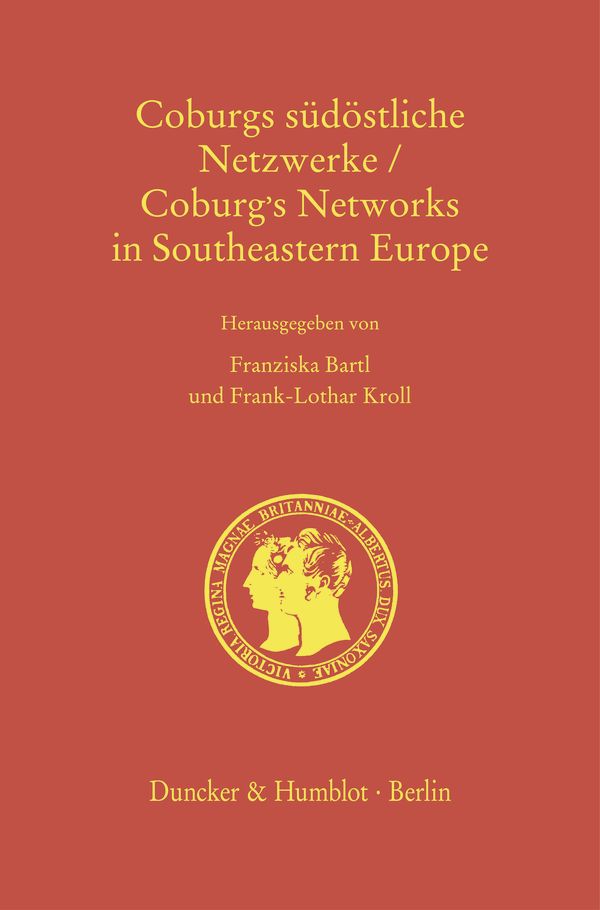 Coburgs südöstliche Netzwerke – Coburg’s Networks in Southeastern Europe
Bulgarien, Rumänien und Ostmitteleuropa im 19. und 20. Jahrhundert. Hrsg. von Franziska Bartl und Frank-Lothar Kroll mit einem Grußwort Seiner Majestät des Königs der Bulgaren Simeon II.
Volume 39


 Dark Like You
Zur medienreflexiven Modernität der Kinder- und Jugendzeitschrift ‚The Brownies’ Book‘ (1920–1921)
Volume 191
 Das Generalgouvernement Belgien im Ersten Weltkrieg 1914-17–1918
Die Erinnerungen des Generalobersten Ludwig Freiherrn von Falkenhausen
Volume 64
 Das Werden einer Universität
Die Protokolle des Akademischen Senats der Hamburgischen Universität 1919–1921