Between Scroll and Scripture
Studies in Septuagint, Biblical Greek, and Papyri
Edited by Eberhard Bons Edited by Daniela Scialabba Edited by Antonella Bellantuono

Paperback (Published)
(February 2026)
ISBN: 9783161563874
6.1 x 9.13 inches
Price: $141.00
In stock
The contributors aim to enhance the understanding of the language of the Septuagint and biblical Greek in general. Taking into account the evolution of the research landscape in Septuagint studies, they show how specific linguistic features can be explained against the background of Hellenistic literature and papyri of Egyptian origin.
English summary: The articles of this volume aim to contribute to a better understanding of the language of the Septuagint and biblical Greek in general. A large amount of the specific linguistic features of the Septuagint can be explained against the background of the vocabulary and stylistic phenomena of Hellenistic literature and contemporary papyri. Moreover, numerous linguistic features of the Septuagint also occur in the New Testament, in the Apostolic Fathers and in the literature of ancient Christianity. The contributors to the volume consider both the Semitic legacy of these literary collections and their Greek background in the widest sense, including inscriptions and spoken Greek as reflected in papyri. The articles address four major topics: the vocabulary of the Septuagint and the New Testament and its linguistic background; the papyri and their importance for biblical scholarship; neologisms and Hapax legomena; and problems related to the interpretation of difficult passages in biblical and non-biblical Jewish literature. The contributors take into account recent developments in the research landscape, including studies of the Dead Sea Scrolls and the growing attention to the Septuagint as a version of the Bible to be studied in its own right. German description: Die Artikel dieses Bandes wollen zu einem besseren Verstandnis der Sprache der Septuaginta und des biblischen Griechisch insgesamt beitragen. Zahlreiche sprachliche Merkmale der Septuaginta lassen sich besser auf dem Hintergrund des Wortschatzes und der stilistischen Phanomene der zeitgenossischen Papyri und der hellenistischen Literatur erklaren. Solche sprachliche Charakteristika finden sich auch im Neuen Testament, in den Apostolischen Vatern und in der Literatur des antiken Christentums. Die Beitrage berucksichtigen sowohl den semitischen Hintergrund dieser literarischen Corpora als auch ihr griechisches Umfeld im weitesten Sinne, einschliesslich der Inschriften und der gesprochenen Sprache, wie sie sich in Papyri agyptischer Herkunft widerspiegelt. Die Artikel behandeln vier Hauptthemen: die Terminologie der Septuaginta und des Neuen Testaments und ihr sprachlicher Hintergrund; die Papyri und ihre Bedeutung fur die biblische Forschung; Neologismen und Hapaxlegomena; Probleme bei der Interpretation schwieriger Passagen in biblischer und nichtbiblischer judischer Literatur. Die Artikel tragen den jungsten Entwicklungen in der Forschungslandschaft Rechnung, vor allem der Rolle, die die Texte aus Qumran in der Bibelwissenschaft spielen, aber auch der zunehmenden Aufmerksamkeit, die der Septuaginta als eigenstandiger Bibelversion entgegengebracht wird.
First Part: The Specific Vocabulary of the Septuagint and the New Testament and Its Linguistic Background
Antonella Bellantuono: A Self-Sufficient God. Investigation into the Meaning of the Epithet ἀπροσδεής (1 Macc 12:9; 2 Macc 14:35; 3 Macc 2:9) - Eberhard Bons: Visiting the Sick. The Specific Use of the Verb ἐπισκέπτομαι in Biblical and Non-Biblical Literature - Dorota Hartman: Translating Anger in the Bible. The Case of παροξύνω - Christoph Kugelmeier: Ἰσοδυναμέω again. Observations on a Key Concept of Translation Theory in the Prologue to the Book of Ben Sira - Michaël van der Meer: Perseverance in the Septuagint. The Semantic Fields of ἰσχύω and ἀνδρίζομαι in the Greek Bible and Contemporary Documents - Nathalie Siffer: L'usage des hapax bibliques θεομαχέω et θεομάχος à la lumière de la littérature grecque antique
Second Part: Studies in Papyri, Neologisms and Hapaxlegomena
Ralph Brucker: Papyri as Textual Witnesses of the Septuagint Psalms. Overview and Preliminary Checklist - Juan Chapa: Some Notes on P.Oxy. IV 656 - Patrick Pouchelle: La relation entre יכח et ἐλέγχω dans le Pentateuque. La construction d'une correspondance à la lumière de quelques papyri hellénistiques
Third Part: Neologisms and Hapaxlegomena
Rosario Pierri: Neologisms in Antiquity and in the Septuagint - Marco Settembrini: "Who Has Heard of Such a Thing?" (Is 66:8). Hapax legomena in Isaiah 56-66
Forth Part: Difficult Verses or Expressions in Biblical and Non-Biblical Jewish Literature
Miriam Carminati: The Rejoicing Wisdom in Prov 8:30-31. A Comparison of the Usage of the Hebrew Root śḥq and the Greek Verb εὐφραίνω in Prov 8:30-31 - Flavio Dalla Vecchia: "J'étais auprès de lui en plein accord" (Pr 8,30a). Sagesse et Créateur/création - Giulia Leonardi: Ruth as γυνὴδυνάμεως. An Investigation of the Different Conceptions of Virtue between the Jewish Origins of the Narrative and Its Christian Reception - Adrian Schenker: Messager du grand dessein - titre messianique ancien? Critique textuelle d'Isaïe 9:5-6 - Daniela Scialabba: Aseneth, a Woman Who Becomes 'City of Refuge' for Many. Remarks on the Female Protagonist of the Novel 'Joseph and Aseneth' - Romina Vergari: "ψυχὴ εὐλογουμένη πᾶσα ἁπλῆ, ἀνὴρ δὲ θυμώδης οὐκ εὐσχήμων" (Prov 11:25). "A blessed soul is fully simple; an immoderate man is indecorous"
- Edited by Eberhard Bons
- Edited by Daniela Scialabba
- Edited by Antonella Bellantuono
Other Titles in this Series

 John among the Other Gospels
The Reception of the Fourth Gospel in the Extra-Canonical Gospels
Volume 347


 Christusbeziehung und Christuserkenntnis im Johannesevangelium
Die narrative Entwicklung der Jüngerinnen und Jünger und ihre hermeneutischen Voraussetzungen im vierten Evangelium
 Die Wundererzählungen im Markusevangelium
Eine narratologische Analyse zur Erschließung eines soteriologischen Erzählprinzips


 Angels Associated with Israel in the Dead Sea Scrolls
Angelology and Sectarian Identity at Qumran
Volume 509
 Aspekte der Seelsorge in den paulinischen Gemeinden
Eine exegetische Untersuchung anhand des 1. Thessalonicherbriefes
Volume 443
 The Divine Voice in Paul’s Letters
The Use of Scripture as Theopoiesis and Paul’s Characterization of God

 Renaming Abraham’s Children
Election, Ethnicity, and the Interpretation of Scripture in Romans 9
Volume 421


 Die heiligen Propheten, eure Apostel und ich
Metatextuelle Studien zum zweiten Petrusbrief
Volume 300
 Animals in the Apocryphal Acts of the Apostles
The Wild Kingdom of Early Christian Literature
Volume 247
 Christologie und Existenz im Kolosserbrief
Exegetische und semantische Untersuchungen zur Intention des Kolosserbriefes
Volume 191
 Diakonia im Neuen Testament
Studien zur Semantik unter besonderer Berucksichtigung der Rolle von Frauen
Volume 226


Similar Books
 ‘For You I Study, For You I Work, For You I Live, For You I Am Ready To Even Give My Life’
Essays in Honour of Francis (Frank) J Moloney, SDB




 Ars Prophetica
Theology in the Poetry of Twentieth-Century Hebrew Poets Avraham Halfi, Shin Shalom, Amir Gilboa, and T. Carmi
 As Messianism Turns to Heresy
The Regenstein Chair Lectures On Lurianic Kabbalah and Shabbatai Tzevi at Hebrew Union College - Cincinnati
 Athanasius of Alexandria, Epistula ad episcopos Aegypti et Libyae
Old Slavonic Version and English Translation
Volume 261


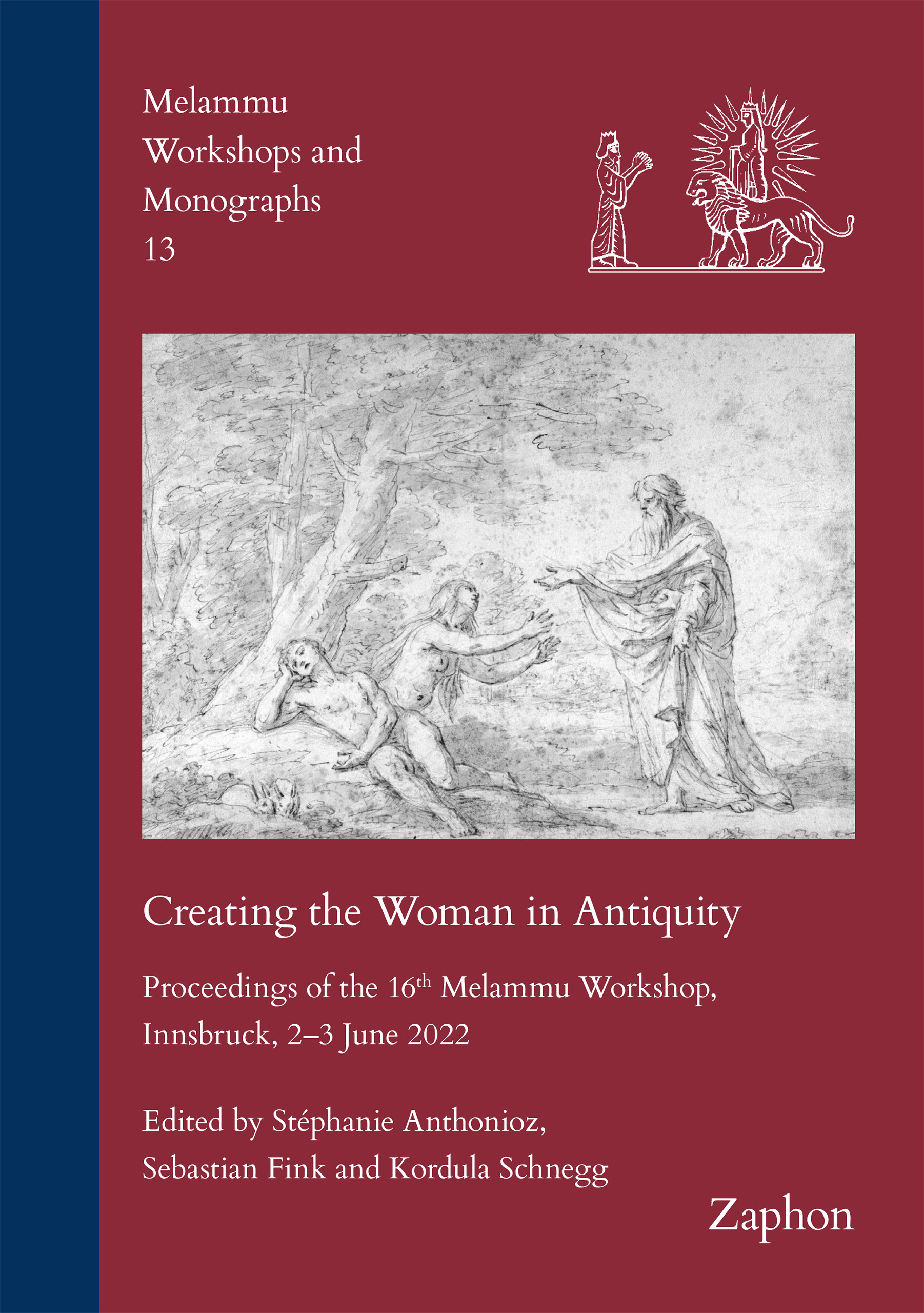 Creating the Woman in Antiquity
Proceedings of the 16th Melammu Workshop, Innsbruck, 2–3 June 2022
Volume 13
 Cyril of Alexandria’s Christological Exegesis
Explorations of Partitive Exegesis in the Dialogues on the Trinity
Volume 70
 Des mots aux actes
Traduction épistémique et littéraire. Nouvelles tendances en histoire et didactique
Volume 15


 Drunk the Potion, No Whit Charmed
The Doctrine of Pure and Perfect Souls from Iamblichus to Damascius


 Epiphanies of the Divine in the Septuagint and the New Testament
Fifth International Symposium of the Corpus Judaeo-Hellenisticum Novi Testamenti (CJHNT), 14-17 May 2015, Nottingham