
A Paul Rotha Reader
Edited by Duncan Petrie Edited by Robert Kruger

Hardback (Published)
(December 1999)
ISBN: 9780859896269
6.14 x 9.21 inches
Price: $112.00
On back order
Paul Rotha was one of the major figures of the British Documentary Movement, second only to John Grierson. He was also a prolific writer. This volume brings together an edited collection of some of his most important writings and addresses a variety of topics.
Paul Rotha was one of the major figures of the British Documentary Movement, second only to John Grierson. He was also a prolific writer, beginning with his celebrated book The Film Till Now, published in 1930. This volume brings together an edited collection of some of his most important writings and addresses a variety of topics including the theoretical basis of cinema, the emergence of an intellectual film culture in Britain, the state of the British film industry and his own experience of directing and producing films. A Paul Rotha Reader marks a major reappraisal of Rotha’s significance as a theorist, critic and advocate for cinema as the most important form of mass communication in the modern world. It will be essential reading for anyone seriously interested in British cinema history.
- Edited by Duncan Petrie
- Edited by Robert Kruger
"Rotha's writing itself seems incredibly fresh and vibrant. A no-nonsense, clearly written personal view of filmmaking, the book is a pleasure to read and triggers off many a train of thought about the nature of documentary filmmaking...As a starting-point for discussion about the thinking behind documentary and the effect it can have on the viewer, it is a highly stimulating collection...The introductory chapters pull into focus Rotha's aims and intentions which remind the reader what documentary has the potential to do. To make us think." (Journal of Popular British Cinema, Vol. 4, 2001)
—
"Rotha's writing itself seems incredibly fresh and vibrant. A no-nonsense, clearly written personal view of filmmaking, the book is a pleasure to read and triggers off many a train of thought about the nature of documentary filmmaking . . . As a starting-point for discussion about the thinking behind documentary and the effect it can have on the viewer, it is a highly stimulating collection . . . The introductory chapters pull into focus Rotha's aims and intentions which remind the reader what documentary has the potential to do. To make us think." (Journal of Popular British Cinema, Vol. 4, 2001)
—
Other Titles in this Series




Similar Books


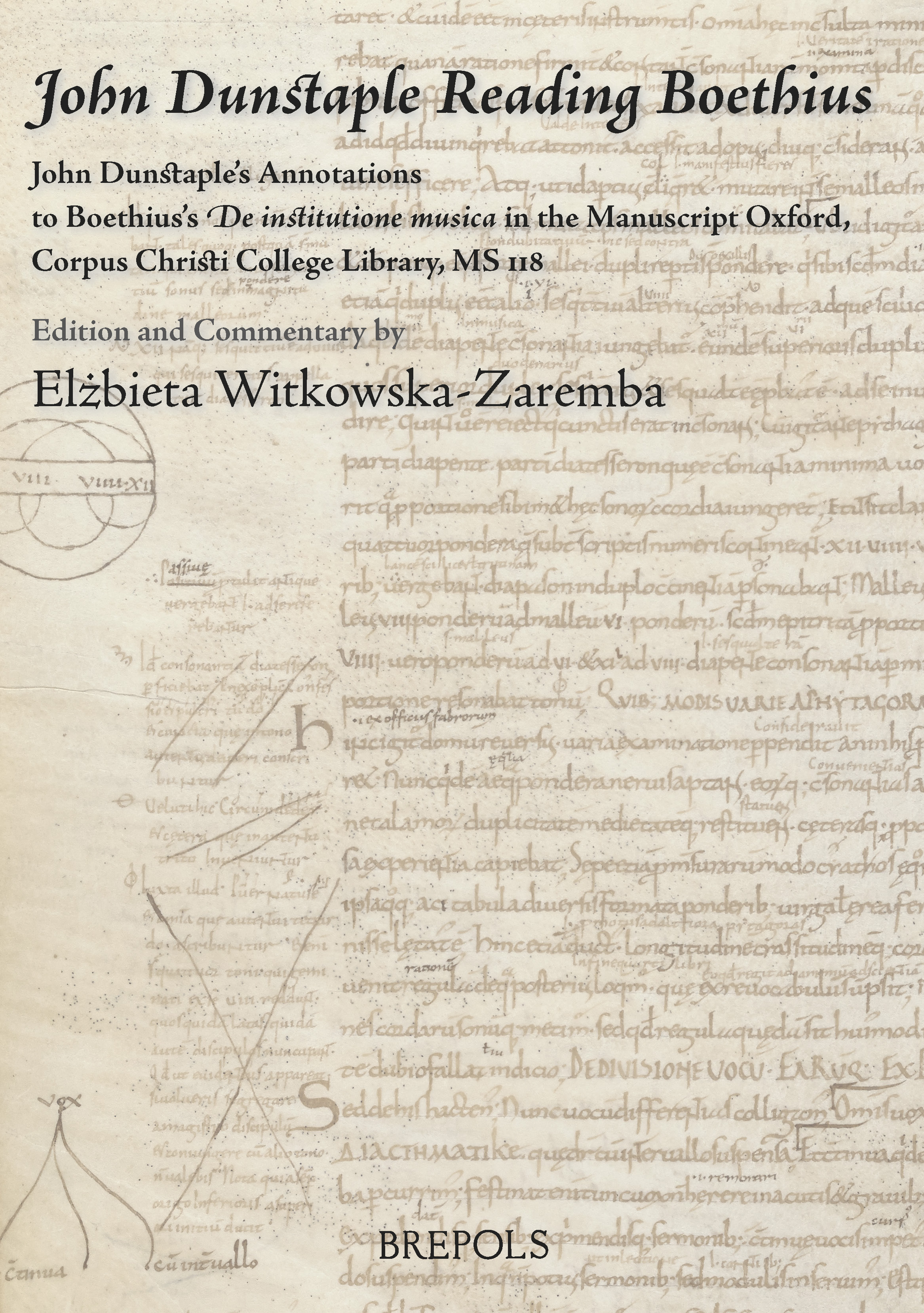 John Dunstaple Reading Boethius
John Dunstaple’s Annotations to Boethius’s “De institutione musica” in the Manuscript Oxford, Corpus Christi College Library, MS 118
 Music and Colonialism in Fascist Italy
Identity, Propaganda, and Ethnographic Representation
Volume 13





 Jüdische Musikerziehung im Preußen des 19. Jahrhunderts
Gesangunterricht an jüdischen Reformschulen als Facette bürgerlicher Akkulturation
Volume 21
 Künstlervertragsmodelle in der Musikwirtschaft
Rechtliche Grenzen der künstlerbezogenen Nebenrechteverwertung im Erlös-, Vermittlungs-, Options- und Leistungsmodell


