
A History of the Hadiyya in Southern Ethiopia
Translated from German by Geraldine Krause
by Ulrich Braukamper, translated by Geraldine Krause

Hardback (Published)
(October 2012)
ISBN: 9783447068048
6.65 x 9.45 inches
Price: $109.00
On back order
The Hadiyya are an ethnic group of 1.5 million people in central-southern Ethiopia. Linguistically they belong to the Highland East Cushitic cluster. In Ethiopian and Arabic chronicles between the 13th and the 17th centuries they were mentioned as representatives of a powerful Muslim state which continuously challenged the hegemony of the Christian Ethiopian Empire in that region.
The Hadiyya are an ethnic group of 1.5 million people in central-southern Ethiopia. Linguistically they belong to the Highland East Cushitic cluster. In Ethiopian and Arabic chronicles between the 13th and the 17th centuries they were mentioned as representatives of a powerful Muslim state which continuously challenged the hegemony of the Christian Ethiopian Empire in that region. Following the expansion of the Oromo from the 16th century onwards the Hadiyya were territorially fragmented and adopted different ethnic identities, for example, of Gurage, Allaaba, Sidama and Oromo. In their historical traditions they however preserved the memory of a common origin, the Hadiyya state. As this becomes most evident among the people who have maintained the ethnonym Hadiyya to this day, Ulrich Braukamper focused his study of the Hadiyya in this area. Because it was taking place in an illiterate culture, the reconstruction of history until the conquest of the area by the Ethiopian Empire in the second half of the 19th century had to be based on oral traditions. The results of this event were deep-rooted, whereas the brief phase of Italian colonialism (1936-41) remained peripheral. Braukamper’s chronological representation ends with the Ethiopian Revolution of 1974, and it is presently complemented by an ethnographic monograph of the Hadiyya proper. The revised and translated edition of the book published in 1980 was done on the explicit request of members of the Hadiyya people.
- By (author) Ulrich Braukamper
- Translated by Geraldine Krause
Other Titles in this Series
 Flexibel aus Tradition / Burji in Athiopien und Kenia
Unter Verwendung der Aufzeichnungen von Helmut Straube / With explanation of some cultural items in English
Volume 71
 Faith at the Crossroads
Religious Syncretism and dispute settlement in Northern Ethiopia: A study of Sufi Shrine in North Eastern Ethiopia
Volume 82


 The Nafka Documents
The despatches, memoranda, reports and correspondence describing and explaining the Stories of the Feudal Societies of the Red Sea Littoral from the Christian-Muslim Wars of the Sixteenth Century to the Establishment 1885-1901 of the Italian Colony o
Volume 53
 Secundus Taciturnus
Die arabischen, athiopischen und syrischen Textzeugen einer didaktischen Novelle aus der romischen Kaiserzeit Mit einem Beitrag von Stefan Weninger zur Ubersetzungssprache der athiopischen Version
Volume 81

 Research in Ethiopian Studies
Selected papers of the 16th International Conference of Ethiopian Studies, Trondheim July 2007
Volume 72


 From Process to Procedure. Elders’ Mediation and Formality in Central Ethiopia
Elders' Mediation and Formality in Central Ethiopia
Volume 75

 Lebendige Uberlieferung
Geschichte und Erinnerung der muslimischen Silt'e Athiopiens With an English Summary
Volume 74
 Martyrium Arethae Arabice. Le versioni arabe del Martirio di Areta (BHG 166)
Edizione critica e traduzione annotata. A cura di Paolo La Spisa. Presentazione di Alessandro Bausi
Volume 86

 Recueil des inscriptions de l’Ethiopie des periodes pre-axoumite et axoumite
Tome III - Traductions et commentaires. B. Les inscriptions semitiques par Abraham J. Drewes
Volume 85
 Deutsch-Tigrinisches Worterbuch
Bearbeitet von Freweyni Habtemariam, Mussie Tesfagiyorgis,Tedros Hagos und Tesfay Tewolde Yohannes
Volume 78


Similar Books


 Cities through Time
Glimpses into Urbanity and Community in Mediaeval to Modern West Asia and Egypt
Volume 1
 Cuneiform Artefacts from Archaeological Contexts: New Research on Ancient Iraq
Proceedings of a Conference Held at the Bavarian Academy of Sciences and Humanities, July 4–5, 2024
Volume 2
 Global Gulf
Geo-Economic, Geo-Political, and Geo-Technological Transformation in Saudi Arabia, the United Arab Emirates, and Qatar
 Ismail Hakki Bursevi’s translation of and commentary on Fusus al-Hikam By Muhyiddin Ibn ‘Arabi
Volumes 1-4

 Monastic Manuscripts from the Eastern Mediterranean (Sinai, Jerusalem, Antioch)
Production, Use, and Contexts
 Music and Colonialism in Fascist Italy
Identity, Propaganda, and Ethnographic Representation
Volume 13

 Qatar’s Societal Security
Towards the Inclusive National Concept of ‘Baladna’ Identity, Migration and External Threats Since 2017

 The Biblical Tale of Judah and Tamar in Fourteenth-Century Iran
A Judeo-Persian Versified Account by Shāhīn with Scholarly Edition, Annotated Translation and Persian Transliteration
Volume 94, 951
 The Discourse of Rites
Shaping and Reshaping the (Counter-)Priestly Rituals Conducted Outside the Tabernacle


 Writing of Women as Cultural Resistance
Deconstructing Memory Legacies in the Afro-Luso-Brazilian Atlantic

 »Ein elend-schönes Land«
Gattung und Gedächtnis in Lea Goldbergs hebräischer Literatur. Aus dem Hebräischen von Rainer Wenzel
 Meine arabischen Freunde
Geschichten aus dem Maghreb für Aufklärung - gegen Islamismus und Unfreiheit

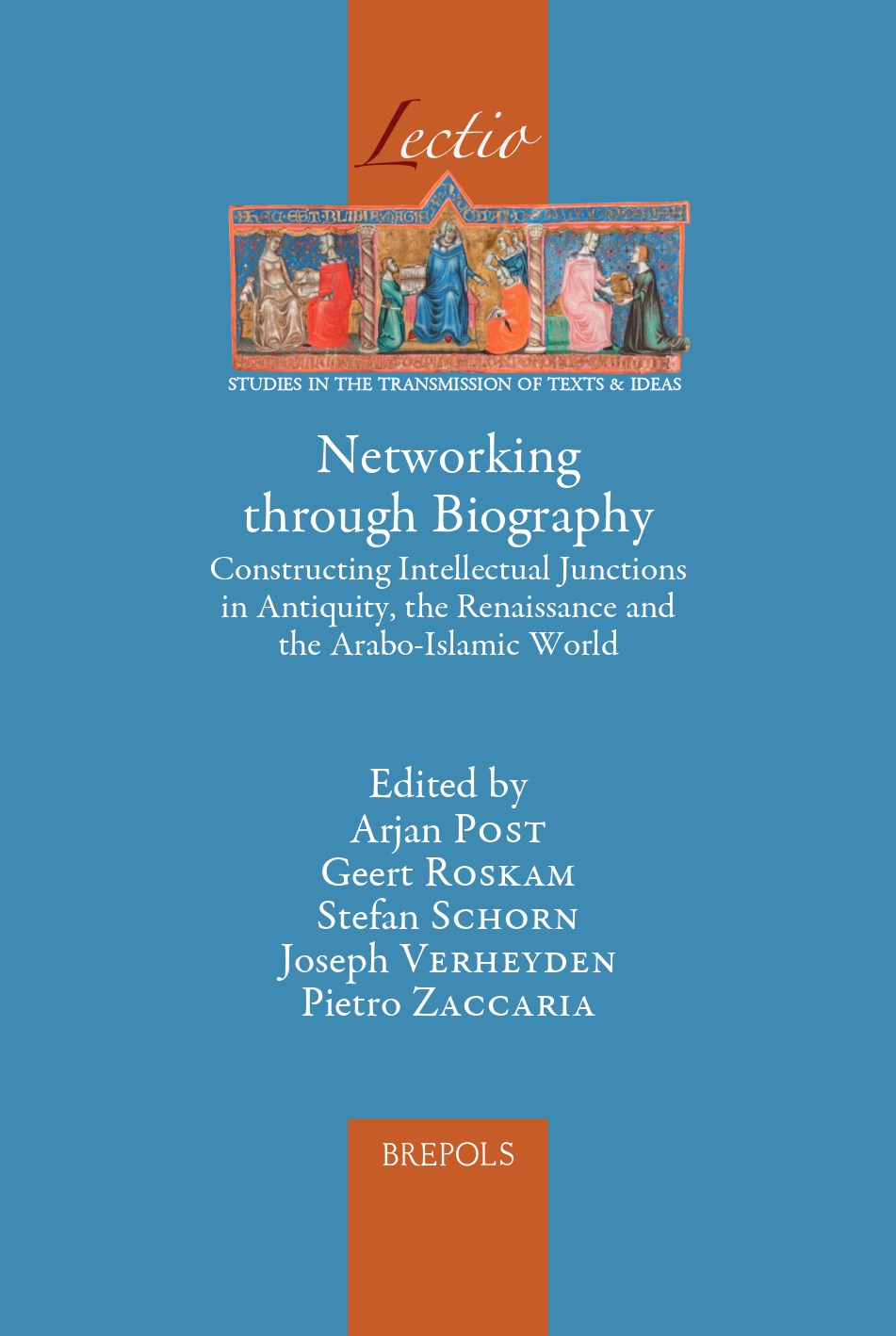 Networking through Biography
Constructing Intellectual Junctions in Antiquity, the Renaissance and the Arabo-Islamic World
Volume 19


 Beiträge zur Islamischen Kunst und Archäologie
The Arts and Archaeology of Funerary Cultures in Islam
Volume 10.0
 Boğazköy Tablets in the Museum of Anatolian Civilisations (Bo 95–Bo 3993)
Anadolu Medeniyetleri Müzesinde Bulunan Boğazköy Tabletleri (Bo 95–Bo 3993)
Volume 3


 Discerning Religious Truth
A Didactic Exposition of the Logic and Epistemology of the Islamic Sciences
Volume 1


 Explorations in Islamic Archaeology
Material Culture, Settlements, and Landscapes from the Mediterranean to Western Asia
Volume 7


 Life on the Farm in Late Medieval Jerusalem
The Village of Beit Mazmil, its Occupants and their Industry over Five Centuries