
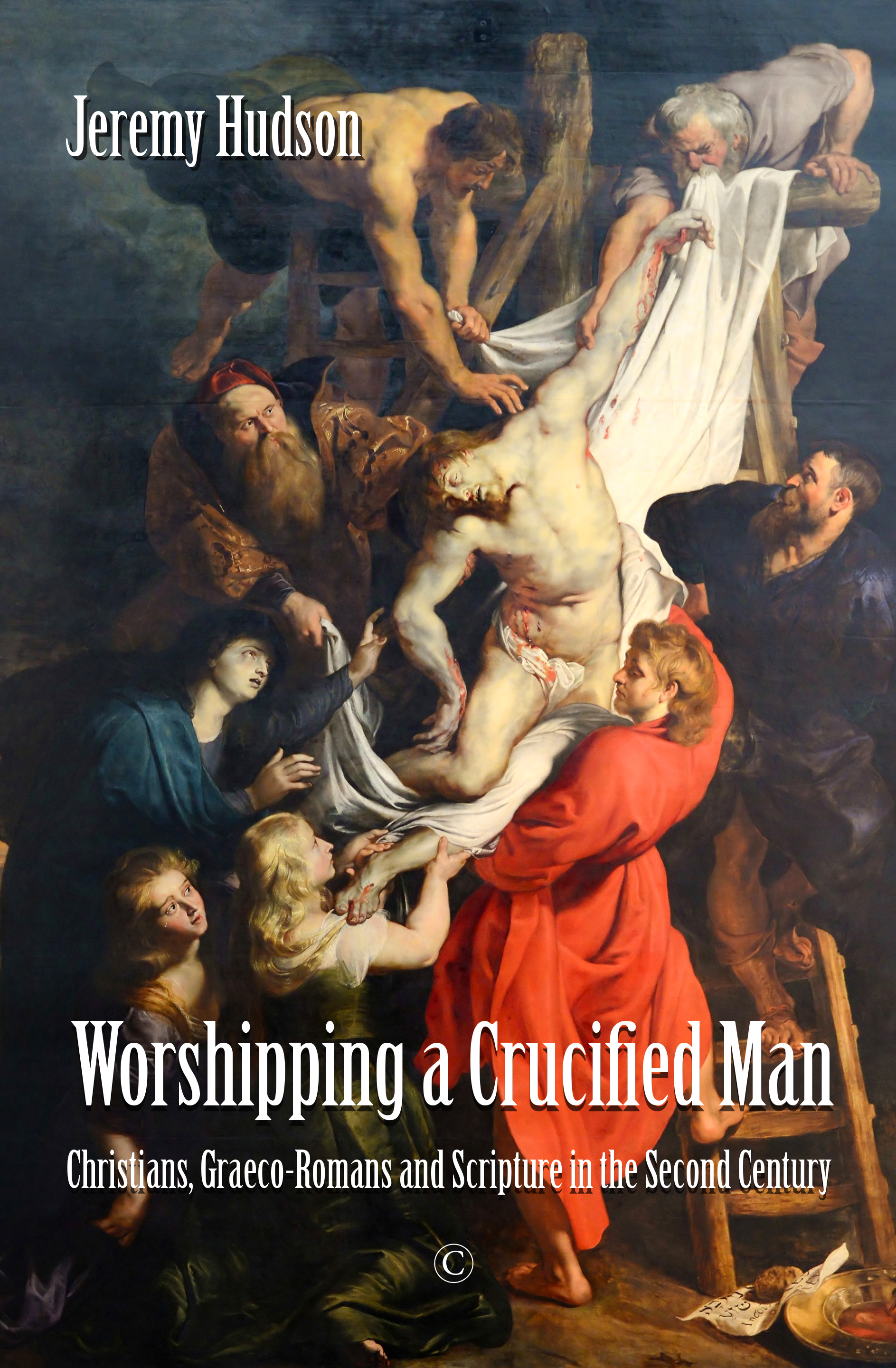
Worshipping a Crucified Man
Christians, Graeco-Romans and Scripture in the Second Century
by Jeremy Hudson
Paperback (No longer our product)
(August 2021)
ISBN: 9780227177358
6.1 x 9.17 inches
Price: $41.00
In stock
Hardback (No longer our product)
(August 2021)
ISBN: 9780227177341
6.1 x 9.17 inches
Price: $115.00
On back order
A landmark evaluation of the use of the Jewish scriptures by early Christian writers such as Justin Martyr, Tatian and Theophilus of Antioch.
By the mid-second century Christian writers were engaging in debates with educated audiences from non-Jewish Graeco-Roman cultural backgrounds. A remarkable feature of some of the texts from this period is how extensively they refer to the Jewish scriptures, even though those scriptures were unfamiliar to non-Jewish Graeco-Romans. In Worshipping a Crucified Man, Jeremy Hudson explores for the first time why this should have been so by examining three works by Christian converts originally educated in Graeco-Roman traditions: Justin Martyr’s First Apology, Tatian’s Oratio and Theophilus of Antioch’s Ad Autolycum. Hudson considers their literary strategies, their use of quotations and allusions and how they present the Jewish scriptures; all against the background of the Graeco-Roman literary culture familiar to both authors and audiences. The scriptures are presented as a critically defining feature of Christianity, instrumental in shaping the way the new religion presented itself, as it strove to engage with, and challenge, the cultural traditions of the Graeco-Roman world.
Dr. Jeremy Hudson studied History at Christ’s College, Cambridge. After working for some years in personnel and finance he took an MA (with Distinction) in Biblical Studies at King’s College, London and then a PhD at Wolfson College, Cambridge.
- By (author) Jeremy Hudson
"It may seem irrational that, in their arguments for the superiority of their religion, Christian intellectuals would appeal to the writings of the oft-despised Jews rather than the agreed canonical authorities of the Greek philosophical tradition. Jeremy Hudson's innovative and careful analysis of three such intellectuals and of their different strategies and reading methods offers important new insights into a significant moment in the development of early Christian thought and of the uses of Scripture - essential reading for all students of early Christianity." Judith M. Lieu, Lady Margaret's Professor Emerita, University of Cambridge "In this innovative book, Jeremy Hudson shows how some Christian apologists used the Jewish scriptures in such a way as to accommodate their ostensibly pagan audience, as well as presenting them as a rival body of texts, thought worthy of displacing pagan literary culture. The case is presented clearly, but in a nuanced manner, reflecting current scholarship on such subjects as biblical hermeneutics and ancient Christian identity." Dr James Carleton Paget, Reader in Early Christianity and Ancient Judaism, University of Cambridge "Jeremy Hudson's carefully crafted, highly detailed and well written study forces us to look anew at the texts and ideas of early Christian Apologists, with which we may have become all too familiar. He forcefully demonstrates that Christianity confronted Graeco-Roman society with a belief that seemed to lack any reason or sensibility. Once explained against the background of the tradition from which it emerged, however, it assumed a power that totally transformed that society." Josef Lossl, Professor of Religious Studies and Theology, Cardiff University "Jeremy Hudson describes his quietly original book as a study of how three second-century Christian apologists used the Jewish scriptures to argue for the superiority of Christianity to an implied audience of non-Jewish, non-Christian educated Graeco-Romans. It certainly is that, but at least this reader also found it an intriguing case study in the slippery and ill-defined category of "scriptures" among early Christ believers. Hudson shows that the nature, contents, and function of the Jewish scriptures differed among these Christian intellectuals, and he thereby undermines what we might think we know." David Brakke, in The Journal of Religion, Vol 102, No 4, October 2022
—
Similar Books
 ‘For You I Study, For You I Work, For You I Live, For You I Am Ready To Even Give My Life’
Essays in Honour of Francis (Frank) J Moloney, SDB

 A Connecting Polemic in the Medieval Mediterranean
The Correspondence of Leo III and ʿUmar II
Volume 6





 Ars Prophetica
Theology in the Poetry of Twentieth-Century Hebrew Poets Avraham Halfi, Shin Shalom, Amir Gilboa, and T. Carmi
 As Messianism Turns to Heresy
The Regenstein Chair Lectures On Lurianic Kabbalah and Shabbatai Tzevi at Hebrew Union College - Cincinnati



 Creating the Woman in Antiquity
Proceedings of the 16th Melammu Workshop, Innsbruck, 2–3 June 2022
Volume 13
 Cultic Kisses
Fruitful Encounters Between Deities and Humans. Festschrift for Angelika Berlejung on the Occasion of Her 65th Birthday
 De/colonizing Theologies
Glocal Histories, Contemporary Challenges, Theoretical Reflections
Volume 4
 Drunk the Potion, No Whit Charmed
The Doctrine of Pure and Perfect Souls from Iamblichus to Damascius




 Extracanonical Traditions and the Holy Land
Texts, Rituals, and Material Culture in Late Antique Palestine
 Fear, Fear of God, God-Fearers
Philological and Historical Perspectives on the World of Ancient Judaism and Christianity


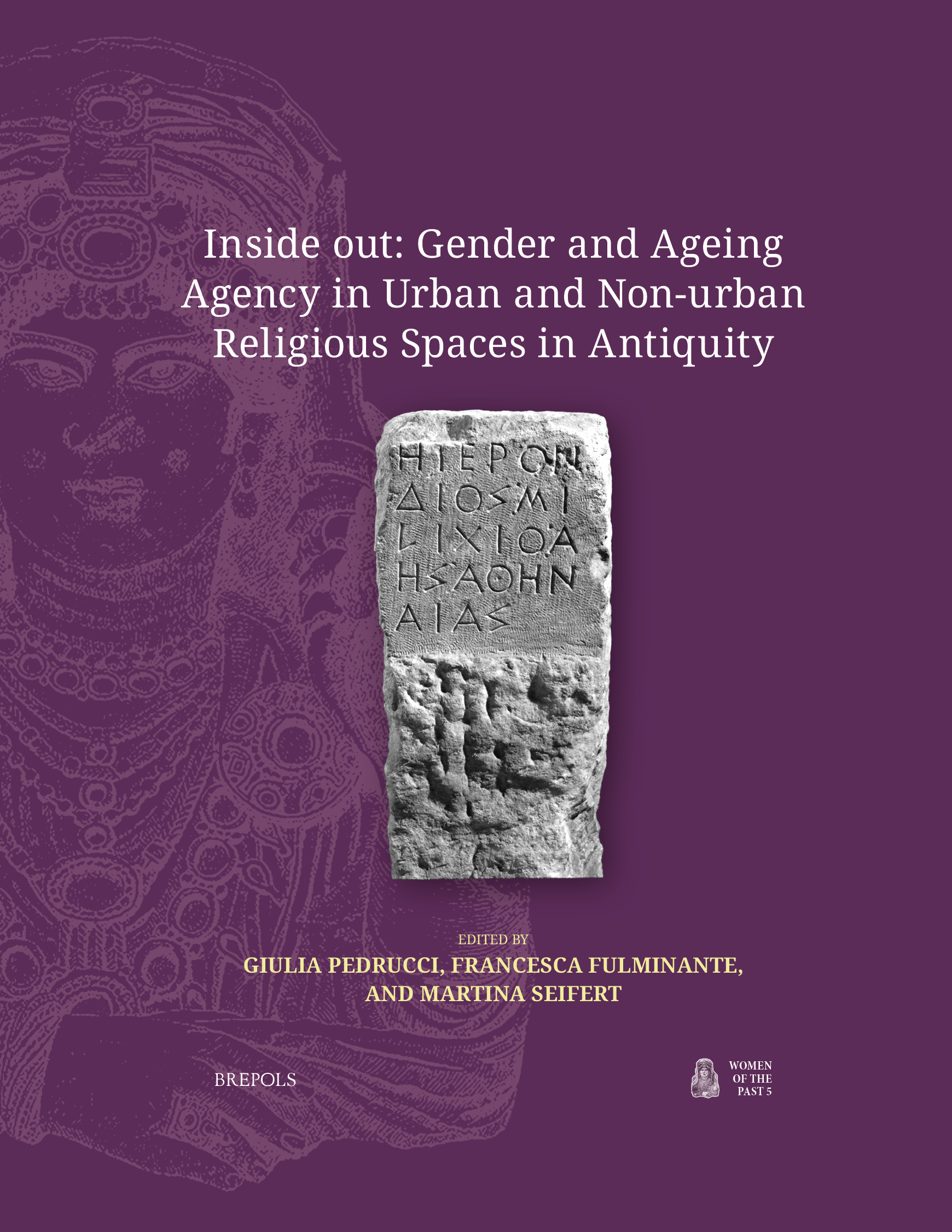
 Gender and Iconography in Antiquity
Femininities, Masculinities, Ambiguities, and Beyond in the Ancient Levant, Near East, and Mediterranean


 Hoghe minne es deen vor dander
Essays on the Christian Mystical Tradition in Honour of Rob Faesen SJ
Volume 122

 International Comparison and Transfer in Religious Education
The Projects “RE at Schools in Europe” and “International Knowledge Transfer” in Dialogue
 Isaiah in the Fourth Gospel
Use of the Citations of Isaiah in John’s Gospel in Comparison to the Synoptics and Other Places in the New Testament