
Versöhnung
Theorie und Empirie
Contributions by Jürgen Rüttgers Contributions by Peter Geiss Contributions by Michael Rohrschneider Contributions by Takemitsu Morikawa Contributions by Francesco Ferrari Contributions by Mirjam Erdinc Contributions by Hüseyin I. Cicek Contributions by Moshe Zimmermann Contributions by Mathias Schmoeckel Contributions by Winfried Schmitz Contributions by Esther Meininghaus Contributions by Esther Gardei Contributions by Hans-Georg Soeffner Contributions by Michael Schulz Contributions by Ishayahu Landa Edited by Esther Gardei Edited by Michael Schulz Edited by Hans-Georg Soeffner
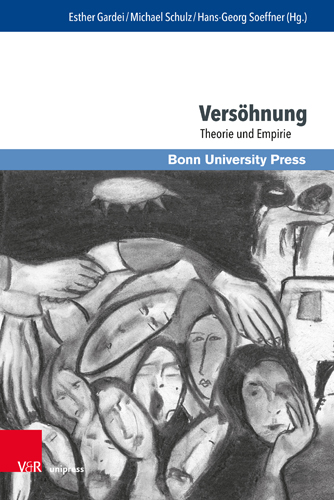
Hardback (Published)
(June 2023)
ISBN: 9783847115885
6.34 x 9.33 inches
Price: $74.00
In stock
Covid-19, Klimawandel, Populismus oder Digitalisierung und zuletzt der Ukraine-Krieg machten die Frage nach der Moglichkeit und Unmoglichkeit von Versohnung zu einem der relevantesten Themen unserer Zeit.
Covid-19, climate change, populism or digitalization and most recently the Ukraine war made the question of the possibility and impossibility of reconciliation one of the most relevant topics of our time.The book deals with the outstanding social significance of reconciliation from an interdisciplinary perspective. The researchers compare and discuss the understanding of reconciliation in theology, philosophy, law and social sciences, in history and art history. In addition, reconciliation processes and also the limits of reconciliation are examined on the basis of case studies. The contributions aim at answering the following questions: Which conceptual equivalents are used in other cultures and religions instead of the Christian or the secularized, political, ‘Western’ concept of reconciliation? How, when and why is ‘reconciliation’ – after a ceasefire or a first public commitment to peace – achieved in different cultures? What is the ‘added value’ of reconciliation over a peace agreement? Can lasting reconciliation occur at the end of conflict transformation processes? The questions will be discussed in the series against the background of the tension between reconciliation and irreconcilability.
- Contributions by Jürgen Rüttgers
- Contributions by Peter Geiss
- Contributions by Michael Rohrschneider
- Contributions by Takemitsu Morikawa
- Contributions by Francesco Ferrari
- Contributions by Mirjam Erdinc
- Contributions by Hüseyin I. Cicek
- Contributions by Moshe Zimmermann
- Contributions by Mathias Schmoeckel
- Contributions by Winfried Schmitz
- Contributions by Esther Meininghaus
- Contributions by Esther Gardei
- Contributions by Hans-Georg Soeffner
- Contributions by Michael Schulz
- Contributions by Ishayahu Landa
- Edited by Esther Gardei
- Edited by Michael Schulz
- Edited by Hans-Georg Soeffner
Other Titles in this Series

Similar Books


 As Messianism Turns to Heresy
The Regenstein Chair Lectures On Lurianic Kabbalah and Shabbatai Tzevi at Hebrew Union College - Cincinnati

 Beyond Sovereign Courts
Agents and Practices in Early Modern Spanish and Habsburg Diplomacy
Volume 3



 Drunk the Potion, No Whit Charmed
The Doctrine of Pure and Perfect Souls from Iamblichus to Damascius


 Éthique, politique, religions
Superstition (XVIIe - XXIe siècles). Sémantique, histoires et cultures


 Food Security under Armed Conflict
Global Knowledge Landscape and Public Attention to Social, Economic, and Humanitarian Dimensions


 Innovationes Lovanienses: Arts, Law and Theology at the University of Louvain (1425–1797)
Studium Lovaniense: Learning across Borders, 2
Volume 18
 La Lettre clandestine
La littérature philosophique clandestine, ses éditeurs et ses éditions
Volume 34

 Libertinage et philosophie à l’époque classique (XVIe-XVIIIe siècle)
Athéisme, Modernité et Sécularisation / Atheism, Modernity and Secularization
Volume 23


 Myths and Tales of the Inughuit
Erik Holtved's Polar Eskimo Texts Revised and Re-translated into Danish and English
Volume 475, 12


 Political Thought and Eleventh-Century Populism
The Meek, the Many, and the Meritorious during the Age of the Gregorian Reform
Volume 38