
Learning to be Noble in the Middle Ages
Moral Education in North-Western Europe
By (author) Claudia Wittig

Hardback (Published)
(August 2022)
ISBN: 9782503595009
6.1 x 9.17 inches
Price: $107.00
In stock
This book explores for the first time the moral education of the Western European nobility in the high Middle Ages. The medieval nobility created and utilized values and ideals such as chivalry and courtliness to legitimize their exalted position in society, and these values were largely the same across Europe. Noble codes of conduct communicated these ideals in everyday interactions and symbolic acts at court that formed the basis of European courtly society. This book asks how noble men and women were taught about morality and good conduct and how the values of their society were disseminated. While a major part of moral education took place in person, this period also produced a growing corpus of writing on the subject, in both Latin and the vernacular languages, addressing audiences that encompassed the lay elites from kings to the knightly class, men as well as women. Participation in this teaching became a distinguishing feature of the nobility, who actively promoted their moral superiority through their self-fashioning as they evolved into a social class. This book brings together analyses of several major European didactic texts and miscellanies, examining the way nobles learned about norms and values. Investigating the didactic writings of the Middle Ages helps us to better understand the role of moral education in the formation of class, gender, and social identities, and its long-term contribution to a shared European aristocratic culture.
This book explores for the first time the moral education of the Western European nobility in the high Middle Ages. The medieval nobility created and utilized values and ideals such as chivalry and courtliness to legitimize their exalted position in society, and these values were largely the same across Europe. Noble codes of conduct communicated these ideals in everyday interactions and symbolic acts at court that formed the basis of European courtly society. This book asks how noble men and women were taught about morality and good conduct and how the values of their society were disseminated. While a major part of moral education took place in person, this period also produced a growing corpus of writing on the subject, in both Latin and the vernacular languages, addressing audiences that encompassed the lay elites from kings to the knightly class, men as well as women. Participation in this teaching became a distinguishing feature of the nobility, who actively promoted their moral superiority through their self-fashioning as they evolved into a social class. This book brings together analyses of several major European didactic texts and miscellanies, examining the way nobles learned about norms and values. Investigating the didactic writings of the Middle Ages helps us to better understand the role of moral education in the formation of class, gender, and social identities, and its long-term contribution to a shared European aristocratic culture.
- By (author) Claudia Wittig
Other Titles in this Series


 Public Declamations
Essays on Medieval Rhetoric, Education, and Letters in Honour of Martin Camargo
Volume 27
 Medieval Art at the Intersection of Visuality and Material Culture
Studies in the 'Semantics of Vision'
Volume 32


 Law and Theology in Twelfth-Century England
The Works of Master Vacarius (c. 1115/20 - c. 1200)
Volume 10


 Sapientia et eloquentia
Meaning and Function in Liturgical Poetry, Music, Drama, and Biblical Commentary in the Middle Ages
Volume 11

 The Classics in the Medieval and Renaissance Classroom
The Role of Ancient Texts in the Arts Curriculum as Revealed by Surviving Manuscripts and Early Printed Books
Volume 20
 Medieval Thought Experiments
Poetry, Hypothesis, and Experience in the European Middle Ages
Volume 31


 Fictions of the Inner Life
Religious Literature and Formation of the Self in the Eleventh and Twelfth Centuries
Volume 4
Similar Books
 «Solazoxa festa, stradolze e stracomplia»
Festschrift für Raymund Wilhelm zum 65. Geburtstag mit Beiträgen zu Diskurstraditionen und mittelalterlicher Philologie
Volume 249
 A Collaborative Tapestry in Honour of Shirley Ann Brown / Une fresque brodée en l’honneur de Shirley Ann Brown
The Bayeux Tapestry Seen by her Colleagues and Friends / La Tapisserie de Bayeux vue par ses collègues et amis




 As Messianism Turns to Heresy
The Regenstein Chair Lectures On Lurianic Kabbalah and Shabbatai Tzevi at Hebrew Union College - Cincinnati
 Behind the Scenes of Medieval Roofs
An Overview of the Roofing Systems of Italian Churches
Volume 90
 Between Bones and Beliefs
Human-Bird Relations in Central and Northern Europe in the First Millennium AD
Volume 4

 Beyond Sovereign Courts
Agents and Practices in Early Modern Spanish and Habsburg Diplomacy
Volume 3

 Cahiers de recherches médiévales et humanistes – Journal of Medieval and Humanistic Studies
Volume 51


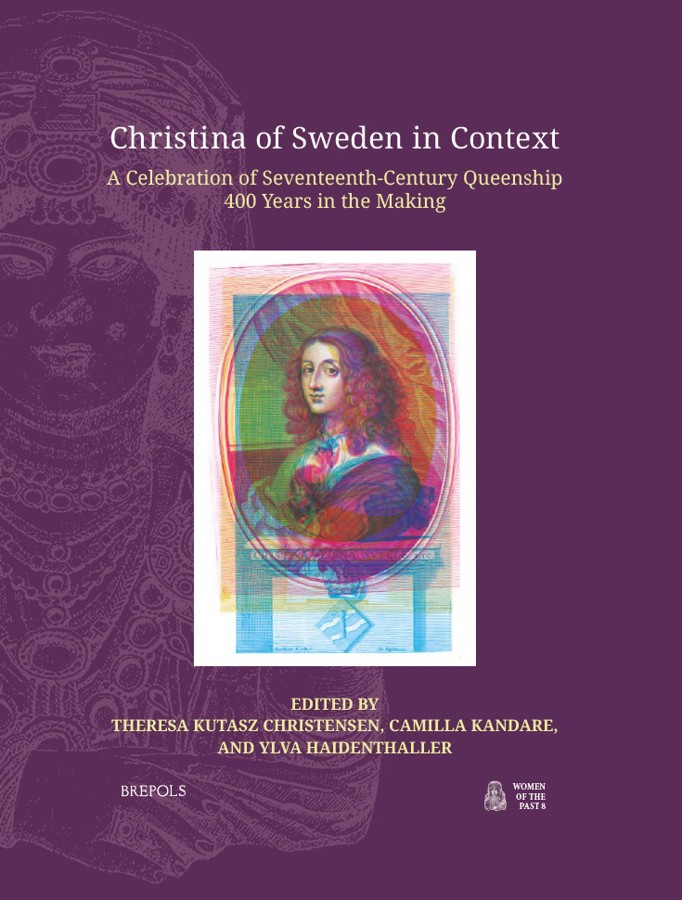 Christina of Sweden in Context
A Celebration of Seventeenth-Century Queenship 400 Years in the Making






 Engaged Languages and Literatures / Langues et Littératures engagées
Critical Views / Regards Critiques



 Food Security under Armed Conflict
Global Knowledge Landscape and Public Attention to Social, Economic, and Humanitarian Dimensions


 Innovation and Medieval Communities
The Circulation of Ideas and Practices in and out of the Town (1200-1500)
Volume 63
 Innovationes Lovanienses: Arts, Law and Theology at the University of Louvain (1425–1797)
Studium Lovaniense: Learning across Borders, 2
Volume 18
 John Dunstaple Reading Boethius
John Dunstaple’s Annotations to Boethius’s “De institutione musica” in the Manuscript Oxford, Corpus Christi College Library, MS 118