
Frauennamen im Rigveda und im Avesta
Studien zur Onomastik des altesten Indischen und Iranischen
by Ulla Remmer

Altogether some sixty names of women and female figures are attested in the Indian Rigveda and the Iranian Avesta, including relatives of the religious founder Zoroaster. What do these – linguistically often obscure – word forms of these two closely related languages tell us about the naming of women? And how can they contribute to our knowledge of the social position of women in prehistoric Indo-European society? A general survey of Old Indo-Iranian onomastics is followed by individual analyses of the meaning, attestation and etymology of the different name forms. Names of real people are distinguished from those of mythological figures, since in mythology expressive names that refer to personal characteristics are more common. New interpretations are offered for a few names whose etymology has as yet not been satisfactorily explained. In other cases the focus is on the context in which the names occur. The work is comparatively based, and often solutions are found in another branch of the language or in male names. The small number of female names turns out to be onomastically significant. In addition, the female names help to explain contested masculine forms. The various individual results suggest that the naming of women and girls followed pragmatic considerations: women, for instance, frequently bore names derived from their husbands’ names or those of their families of origin, or they bore shortened names. Also the names of female mythological figures can often be interpreted as matrimonial names, derived from the name of their mythological partner.
- By (author) Ulla Remmer
Other Titles in this Series
 Multilingualism and History of Knowledge, Volume I
Buddhism among the Iranian Peoples of Central Asia
Volume 11
 Multilingualism and History of Knowledge, Volume II
Linguistic Developments along the Silkroad: Archaism and Innovation in Tocharian
Volume 12
 Iranisches Personennamenbuch Band VII/Faszikel 2
Iranische Personennamen in der Hebraischen Bibel
Volume 14
 Iranisches Personennamenbuch Band II/Faszikel 5
Personennamen in Parthischen Epigraphischen Quellen
Volume 15

Similar Books


 Des mots aux actes
Traduction épistémique et littéraire. Nouvelles tendances en histoire et didactique
Volume 15


 Punning in Odd or Elegant Constructions in Jeremiah
The Convergence of Linguistics, Rhetoric, and Textuality in the Hebrew Text of Jeremiah


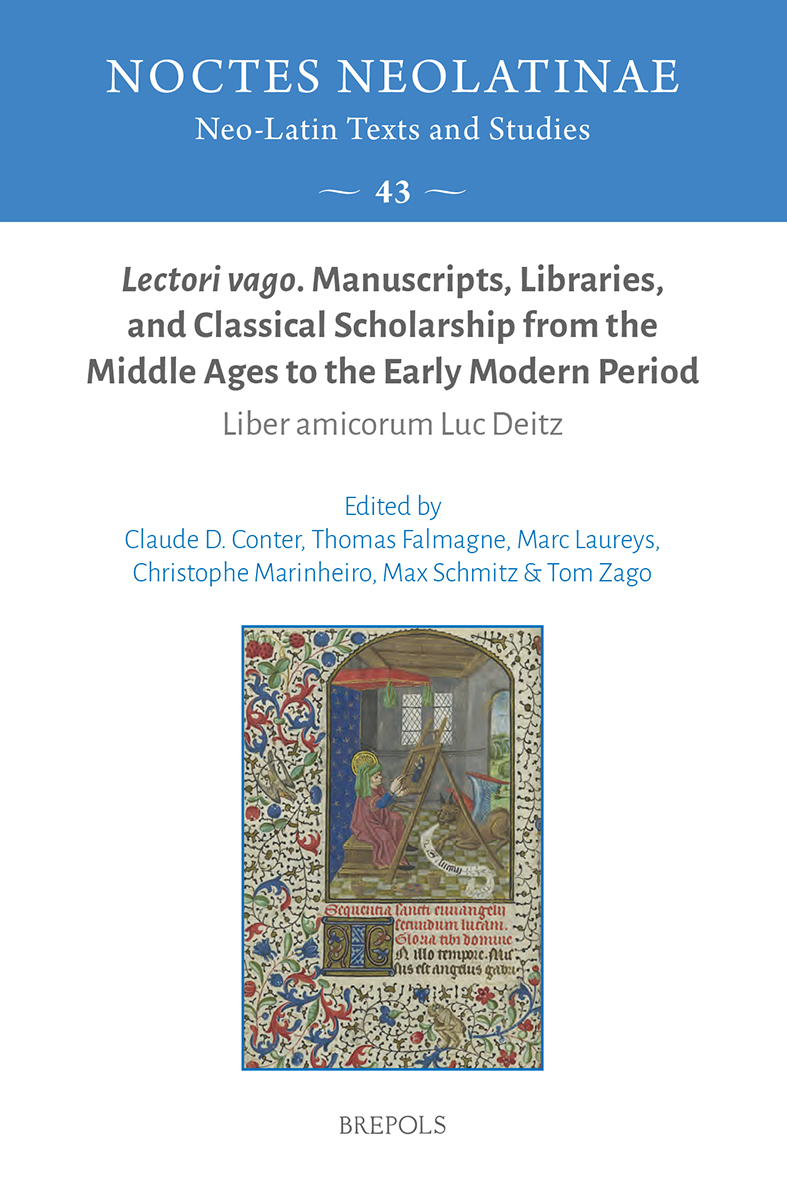 Lectori vago. Manuscripts, Libraries, and Classical Scholarship from the Middle Ages to the Early Modern Period
Liber amicorum Luc Deitz
Volume 43



 Ein Schatzhaus indischer Erzählkunst –– Die Erzählliteratur der Jainas
Band 2: Ein „Lesebuch“ originalsprachlicher Texte zur jainistischen „Universalgeschichte“ samt eines Jaina-Māhārāṣṭrī-Wörterbuchs zu allen Text- und Lesestücken.


