
Mesopotamian Chronology of the 2nd Millennium B.C.
An Introduction to the Textual Evidence and Related Chronological Issues
by Regine Pruzsinszky

English summary: Around the middle of the 2nd millennium B.C., after the end of the first Babylonian dynasty, there is a chronological gap in all of our information from Mesopotamia, the Dark Age, which makes it impossible to establish the absolute chronology of the earlier half of the millennium and before. Only relative dates can be provided prior to c.1430/1420 B.C. The central problem of Mesopotamian chronology is the dating of the first Babylonian dynasty. Attempts have been made to compute an absolute date for this dynasty by means of the “Venus Tablet” written, it would seem, during the reign of the Old Babylonian King Ammisaduqa. But the data in the table is difficult to interpret and has resulted in three chronologies, the high, the middle and the low. This “introduction” to the chronology of 2nd millennium Mesopotamia includes the topics which form the basis for chronological discussions, such as the dating methods and calendars of Mesopotamia, relevant sources for Mesopotamian chronology and natural science information. Each chronological topic is discussed in a separate chapter. The topics, hence chapters, are arranged alphabetically, not in order of importance: the chronological importance of each topic is considered in a summary at the end of each chapter. Chapter 1 starts with an overview of the problems of 2nd millennium Mesopotamian chronology. Throughout the book previous research in the individual topics is reviewed at some length with constant reference to the relevant publications and related topics. This book is not an argument for any of the currently proposed chronologies, but an extensive and critical review of existing studies. It is hoped that it will offer insights into the current state of chronological research in Ancient Near Eastern studies and will stimulate further research. German description: Mit dem Ende der ersten Dynastie von Babylon gegen die Mitte des 2. Jts. v. Chr. beginnt das so genannte “Dunkle Zeitalter”. Es ist durch eine Lucke in der gesamten Dokumentation von Mesopotamien bedingt und macht es uns unmoglich absolut chronologische Daten fur die die erste Halfte des 2. Jts. und die Zeit davor zu liefern: alle Daten vor ca. 1430/20 v. Chr. sind relativ. Zahlreiche Versuche die erste Dynastie von Babylon absolut zu datieren wurden anhand der Auswertung der auf der “Venus Tafel” vermerkten astronomischen Beobachtungen aus der Zeit des altbabylonischen Herrschers Ammisaduqa unternommen, die zu einer langen, mittleren bzw. kurzen Chronologie fuhrten. Vorliegende Einleitung zur Chronologie Mesopotamiens im 2. Jt. behandelt die Themenbereiche astronomische Daten, Kalender, keilschriftliche Quellen mit chronologischen Informationen und naturwissenschaftliche Methoden. Diese bilden mit Einbindung fruherer Forschungsergebnisse und zahlreicher Querverweise die Basis fur die Chronologie-Diskussion. Mit der alphabetischen Reihenfolge der Themenbereiche will die Einleitung gezielt einer thematischen Gewichtung entgegenwirken; der chronologische Wert der einzelnen Bereiche wird zusammenfassend am Ende der Kapitel erlautert. Kapitel 1 enthalt einen Uberblick uber die Probleme der mesopotamischen Chronologie des 2. Jts. Mit der ausgiebigen und kritischen Diskussion chronologischer Studien enthalt sich diese Einleitung bewusst einer Positionierung fur eine bestimmte Chronologie, die darauf abzielt den aktuellen Stand der Forschung umfassend und verstandlich zu prasentieren und weiterfuhrende Forschung zu stimulieren
- By (author) Regine Pruzsinsky
Other Titles in this Series


 Sea Peoples’ Up-to-Date
New Research on Transformation in the Eastern Mediterranean in 13th-11th Centuries BCE
Volume 81
Similar Books






 Boğazköy Tablets in the Museum of Anatolian Civilizations (Bo 9032–Bo 9097)
Anadolu Medeniyetleri Müzesinde Bulunan Boğazköy Tabletleri (Bo 9032–Bo 9097)
Volume 4
 Connecting the Dots: Counting, Writing, and the Beginnings of Civilization
The Secret Lives of Clay Tokens: A Memoir

 Curating the Prehistoric Past
Studies on West Asian Archaeology and Beyond in Honour of Yoshihiro Nishiaki

 Exploring Gender Dynamics across the Ancient Near East
Collected Essays of Gender and Methodology in the Ancient Near East (GeMANE) 4 and 5
Volume 7


 Ḫattušaš utnē išḫameški
Hittite and Other Ancient Near Eastern Studies Presented to Piotr Taracha on the Occasion of His 65th Birthday



 Kultur – Kontakt – Kultur
Beiträge anlässlich der 66. Rencontre Assyriologique Internationale in Frankfurt/Main und Mainz, 25.–29. Juli 2022
Volume 35
 Money of Mercenaries in the Cimmerian Bosporus
From the Mithridatic Wars to the Roman-Bosporan War of AD 45-49
Volume 45

 New Research on Old Collections in Southwest Asian Archaeology
Proceedings of the Workshop Held at the British Museum, London, 31 July – 2 August, 2023
 Old Aramaic Inscriptions and their Contexts
An Epigraphic, Archaeological, and Historical Synthesis
Volume 63

 Politics, Peoples, and Polities in the Ancient Near East
Proceedings of the 69th Rencontre Assyriologique Internationale, Helsinki
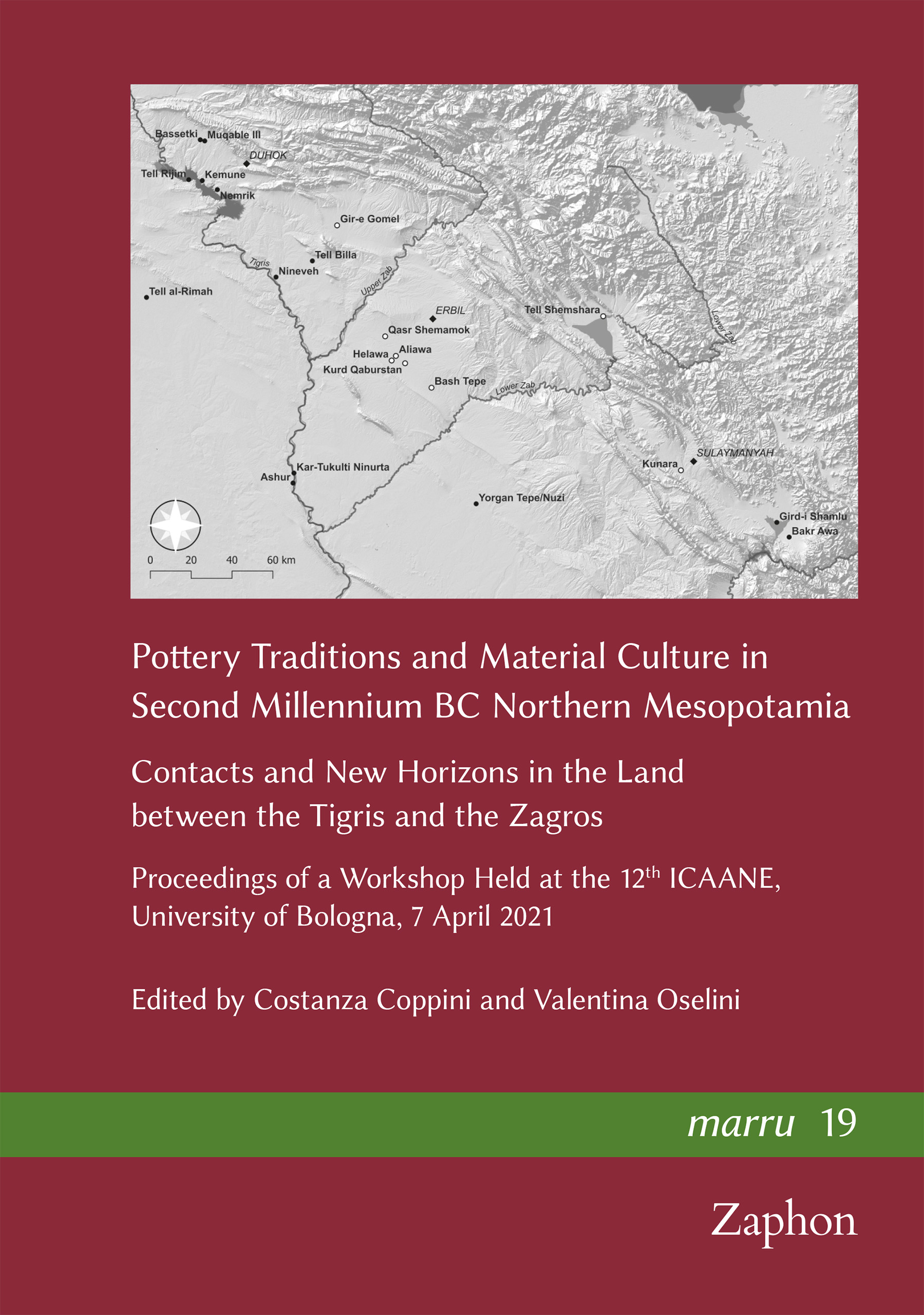 Pottery Traditions and Material Culture in Second Millennium BC Northern Mesopotamia
Contacts and New Horizons in the Land between the Tigris and the Zagros. Proceedings of a Workshop Held at the 12th ICAANE, University of Bologna, 7 April 2021
Volume 19
 Punning in Odd or Elegant Constructions in Jeremiah
The Convergence of Linguistics, Rhetoric, and Textuality in the Hebrew Text of Jeremiah

 Sertorius, the Exiles of the Sullan Regime and the Provinces of the Empire
Legitimacy, Morality and Imperial Discourse in the 70s BCE
 Shame in the Worlds of the Hebrew Bible and Akkadian Texts
A Linguistic Study and Its Implications
Volume 33

 Telling Contexts
Archaeological and Textual Studies in Honor of Elizabeth Bloch-Smith and Mark S. Smith
 The Body
Lived, Cultured, Adorned: Essays on Dress and the Body in the Bible and Ancient Near East in Honor of Nili S. Fox
 The Discourse of Rites
Shaping and Reshaping the (Counter-)Priestly Rituals Conducted Outside the Tabernacle
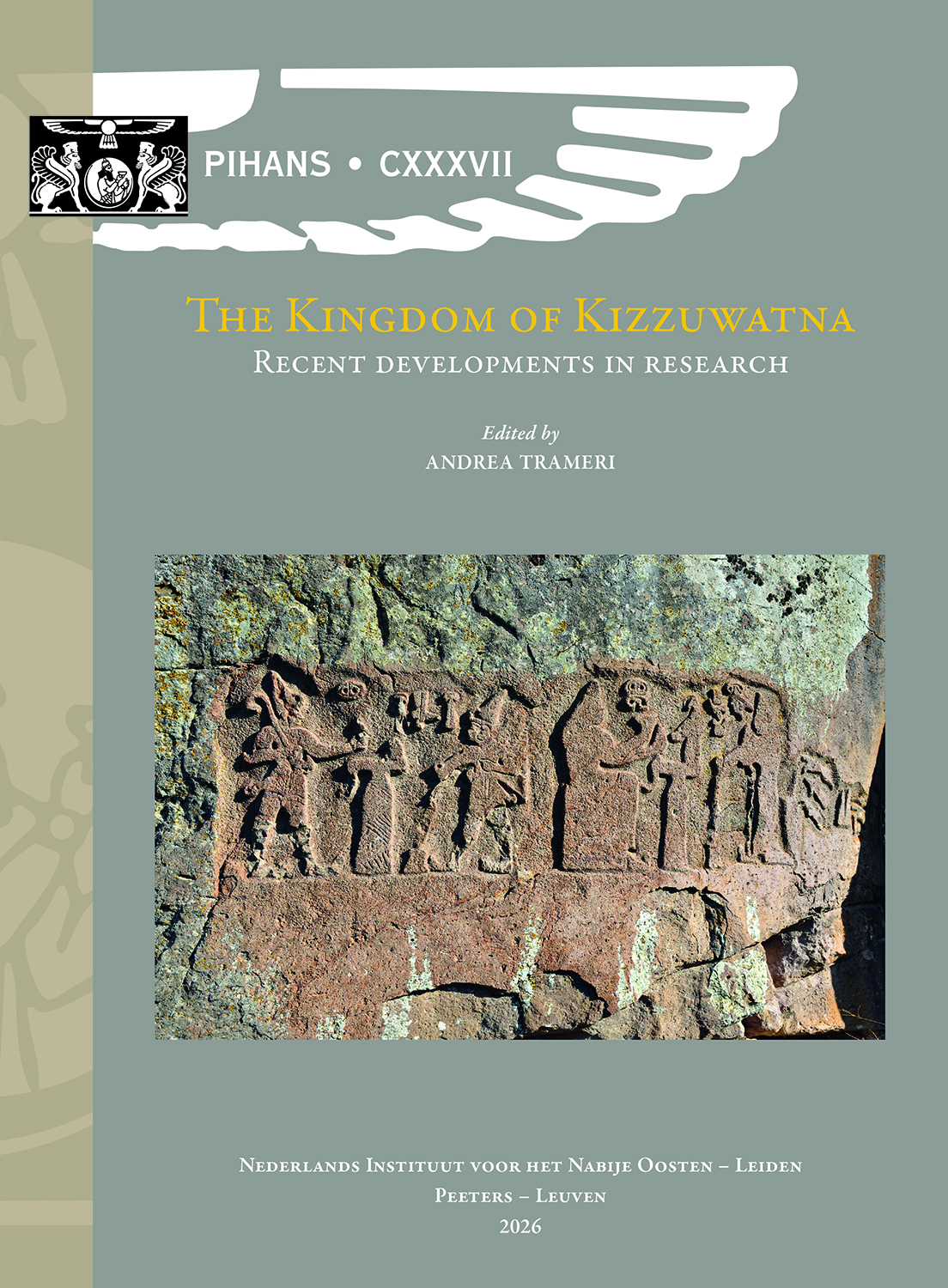 The Kingdom of Kizzuwatna: Recent Developments in Research
Proceedings of the Third NINO Postdoctoral Research Fellow Annual Conference, Leiden, 23rd-25th March 2023
Volume 137