
Sea Peoples’ Up-to-Date
New Research on Transformation in the Eastern Mediterranean in 13th-11th Centuries BCE
edited by Peter M. Fischer and Teresa Burge

Paperback (Published)
(May 2017)
ISBN: 9783700179634
9.21 x 12.05 inches
Price: $165.00
In stock
This volume presents the outcomes of the European Science Foundation workshop “Sea Peoples” Up-to-Date. New Research on Transformations in the Eastern Mediterranean in the 13th-11th Centuries BCE, which took place in November 2014 at the Austrian Academy of Sciences in Vienna. It offers up-to-date research on the Sea Peoples phenomenon during the so-called “crisis years” at the end of the Bronze Age. This period encompasses dramatic changes in the political and cultural landscape of mainly the Eastern Mediterranean around 1200 BCE and most of the 12th century BCE. In geographical terms, these changes are noticeable in a vast area stretching from the Italian peninsula over the Balkans, the Aegean, Anatolia and Cyprus, to the Levant and Egypt. The term “Sea Peoples phenomenon” should be considered as an encompassing term, which – in addition to the written records on hostile activities of various ethnic groups in the Eastern Mediterranean – is synonymous with the effect of this turbulent period as reflected in the material remains. As a consequence, these events ended the Late Bronze Age, the first period of “internationalism” in human history. The papers are presented in five sections: “Overviews: From Italy to the Levant”; “Climate and Radiocarbon”; “Theoretical Approaches on Destruction, Migration and Transformation of Cultures”; “Case Studies: Cyprus, Cilicia and the Northern and Southern Levant”; and “Material Studies”. The reader of this volume gains insights into very complex changes during this period. It will become clear that these changes manifest themselves over decades and not years, and include numerous underlying factors: One single wave of migration, one general military campaign and other simple explanations should be dismissed. The breakdown of Late Bronze Age societies and the transformative processes that followed in its wake occurred in a vast area but they are mirrored in differing ways at local level.
This volume presents the outcomes of the European Science Foundation workshop “Sea Peoples” Up-to-Date. New Research on Transformations in the Eastern Mediterranean in the 13th-11th Centuries BCE, which took place in November 2014 at the Austrian Academy of Sciences in Vienna. It offers up-to-date research on the Sea Peoples phenomenon during the so-called “crisis years” at the end of the Bronze Age. This period encompasses dramatic changes in the political and cultural landscape of mainly the Eastern Mediterranean around 1200 BCE and most of the 12th century BCE. In geographical terms, these changes are noticeable in a vast area stretching from the Italian peninsula over the Balkans, the Aegean, Anatolia and Cyprus, to the Levant and Egypt. The term “Sea Peoples phenomenon” should be considered as an encompassing term, which – in addition to the written records on hostile activities of various ethnic groups in the Eastern Mediterranean – is synonymous with the effect of this turbulent period as reflected in the material remains. As a consequence, these events ended the Late Bronze Age, the first period of “internationalism” in human history. The papers are presented in five sections: “Overviews: From Italy to the Levant”; “Climate and Radiocarbon”; “Theoretical Approaches on Destruction, Migration and Transformation of Cultures”; “Case Studies: Cyprus, Cilicia and the Northern and Southern Levant”; and “Material Studies”. The reader of this volume gains insights into very complex changes during this period. It will become clear that these changes manifest themselves over decades and not years, and include numerous underlying factors: One single wave of migration, one general military campaign and other simple explanations should be dismissed. The breakdown of Late Bronze Age societies and the transformative processes that followed in its wake occurred in a vast area but they are mirrored in differing ways at local level.
- Edited by Teresa Burge
- Edited by Peter M Fischer
Other Titles in this Series


Similar Books


 Caesar’s Visions and Impact on the Roman Empire
Revisiting the Archaeological and Historical Record of the 40s BC
Volume 2

 Connecting the Dots: Counting, Writing, and the Beginnings of Civilization
The Secret Lives of Clay Tokens: A Memoir


 Etruscan and Roman Hellenistic Anatomical ex votos
Reassessing Popular Religious Expressions in Central Italy
Volume 8


 Ḫattušaš utnē išḫameški
Hittite and Other Ancient Near Eastern Studies Presented to Piotr Taracha on the Occasion of His 65th Birthday

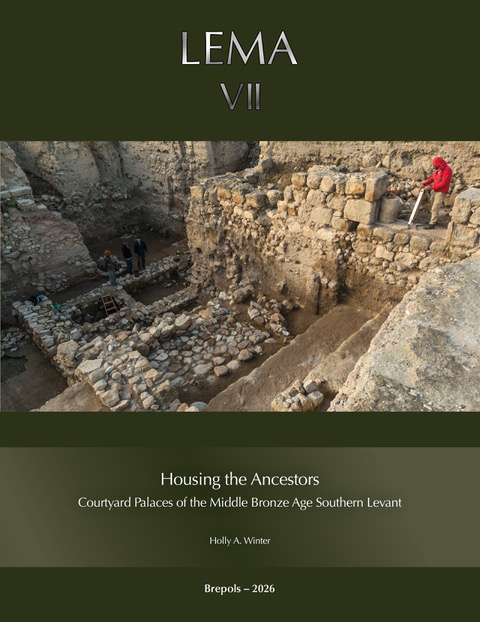

 Invisible Labour in Antiquity
Visualizing Obscure Work in the Ancient Mediterannean and West Asia
Volume 1
 Late Antique villae in the Balkans (3rd–7th c. AD): Current Research Questions and Perspectives
HAEMUS Companion to the Late Antique Balkans 1
Volume 4

 New Research on Old Collections in Southwest Asian Archaeology
Proceedings of the Workshop Held at the British Museum, London, 31 July – 2 August, 2023
 Old Aramaic Inscriptions and their Contexts
An Epigraphic, Archaeological, and Historical Synthesis
Volume 63


 Portraying the Individual in the Roman East
Local–Imperial Entanglements in Sculpture, Mosaics, and Paintings (First–Fourth Centuries AD)
Volume 18
 Punning in Odd or Elegant Constructions in Jeremiah
The Convergence of Linguistics, Rhetoric, and Textuality in the Hebrew Text of Jeremiah

 Shame in the Worlds of the Hebrew Bible and Akkadian Texts
A Linguistic Study and Its Implications
Volume 33
 Small Worlds and Relational Agencies: Local Societies in Early Medieval Iberia
Pequeños mundos y Agencias relacionales: Sociedades locales altomedievales en la Península Ibérica
 Telling Contexts
Archaeological and Textual Studies in Honor of Elizabeth Bloch-Smith and Mark S. Smith
 The Body
Lived, Cultured, Adorned: Essays on Dress and the Body in the Bible and Ancient Near East in Honor of Nili S. Fox
 The Discourse of Rites
Shaping and Reshaping the (Counter-)Priestly Rituals Conducted Outside the Tabernacle

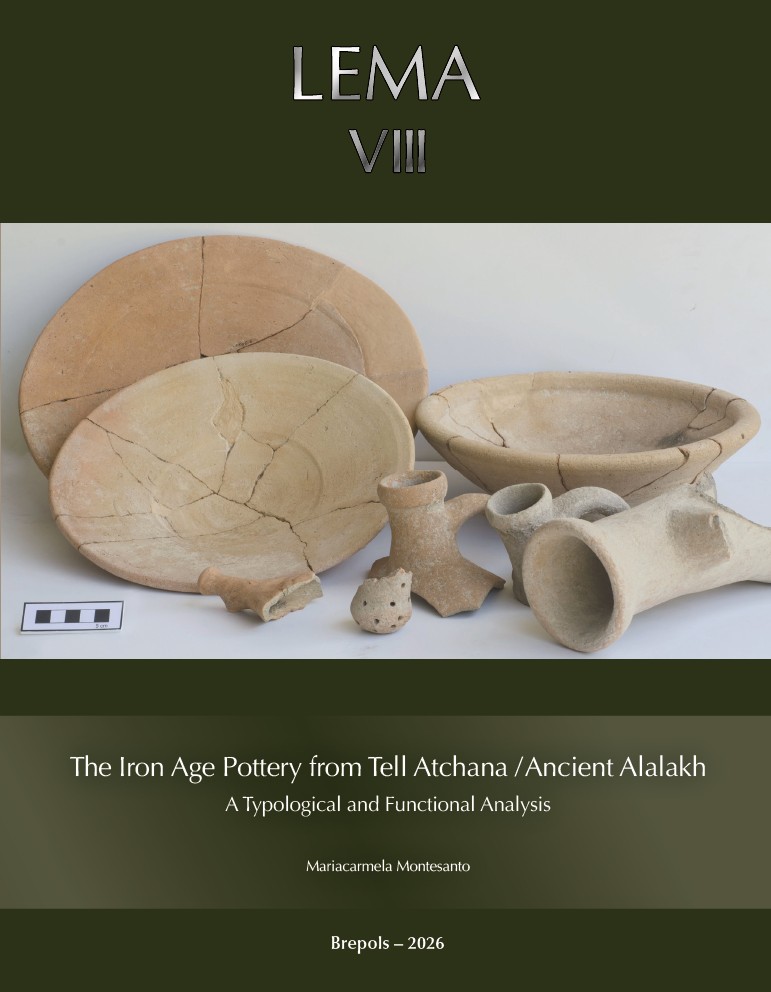 The Iron Age Pottery from Tell Atchana / Ancient Alalakh
A Typological and Functional Analysis
Volume 8

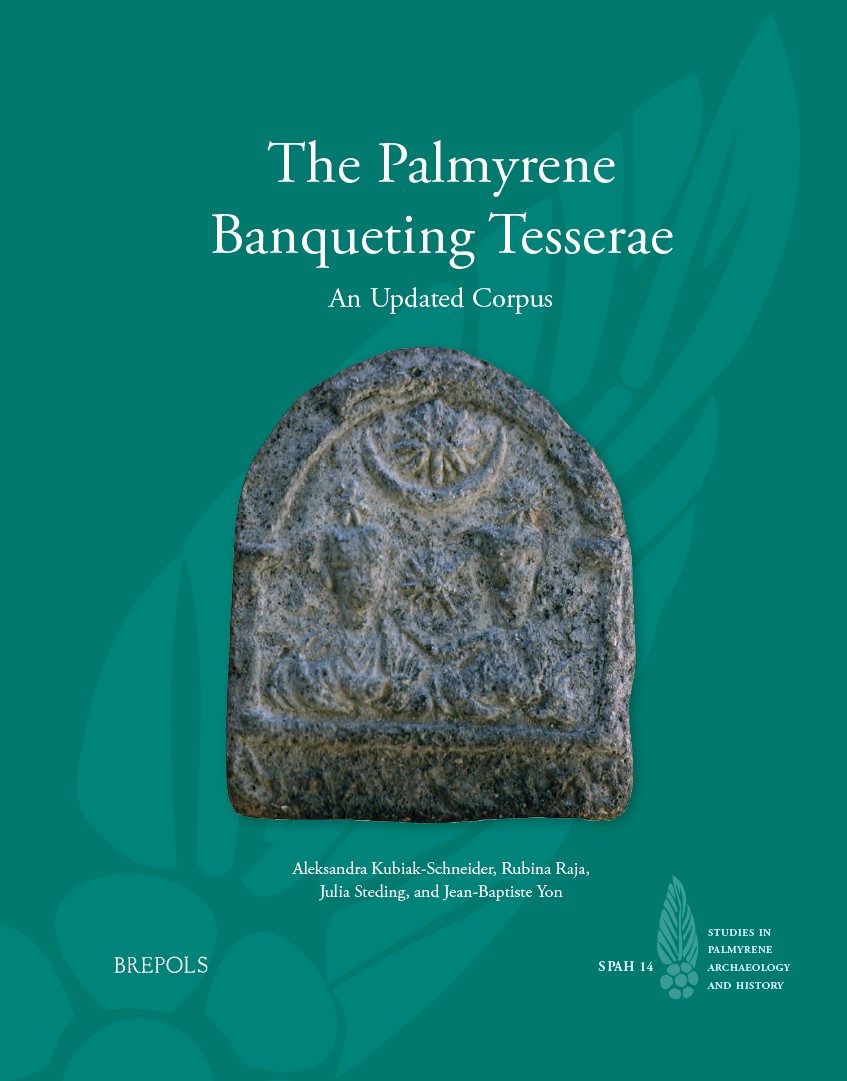


 Writing in the Church of the Nativity in Bethlehem
Inscription and Graffiti in a Multilingual and Multigraphic Perspective
Volume 45