
Words and Ideas
The Roots of Plato's Philosophy
by Fritz-Gregor Herrmann

Hardback (Published)
(December 2007)
ISBN: 9781905125203
6.1 x 9.17 inches
Price: $85.00
In stock
Plato did not create his philosophy ex nihilo, but rather drew on four centuries of literary production in epic and lyric poetry, on ethnography and historiography, tragedy and comedy, medical and mathematical research, oratory and rhetorical theory, as well as on Presocratic philosophy. Words & Ideas offers a study of Plato’s philosophical language against this cultural background, retracing to their origins the history and development of the key terms of the Theory of Forms as presented in the Phaedo. ‘Form’ or ‘idea’, ‘ousia’ or ‘being’, ‘participation’, ‘presence’ and ‘community’ are among the concepts investigated. The aim is to determine both the connotations of Plato’s philosophical terms and the precise historical and philosophical contexts on which Plato drew in the formulation of his thoughts. In tracing the roots of Plato’s philosophy, Words & Ideas demarcates afresh Plato’s position regarding the protagonists of pre-Socratic philosophy: Parmenides and the Eleatics, Anaxagoras and Diogenes of Apollonia, Leucippus and Democritus, Philolaus and the Pythagoreans. This identifcation of his sources allows us, in many cases for the first time, to judge what in the arguments of the dialogues is Plato’s own contribution and what is there only as part of a philosophical or pre-philosophical inheritance.
- By (author) Fritz-Gregor Herrmann
Other Titles in this Series


Similar Books


 Drunk the Potion, No Whit Charmed
The Doctrine of Pure and Perfect Souls from Iamblichus to Damascius

 Epiphanies of the Divine in the Septuagint and the New Testament
Fifth International Symposium of the Corpus Judaeo-Hellenisticum Novi Testamenti (CJHNT), 14-17 May 2015, Nottingham


 Language and Power in the Roman Empire and Early India
Hierarchy, Ambiguity, and the Art of Reading the Signs in Cosmopolitan Cultures
 Late Antique villae in the Balkans (3rd–7th c. AD): Current Research Questions and Perspectives
HAEMUS Companion to the Late Antique Balkans 1
Volume 4
 Libertinage et philosophie à l’époque classique (XVIe-XVIIIe siècle)
Athéisme, Modernité et Sécularisation / Atheism, Modernity and Secularization
Volume 23
 Nurturing the Elite
Representations of Drinking, Eating, and Religious Vessels in Palmyrene Funerary Iconography
Volume 13


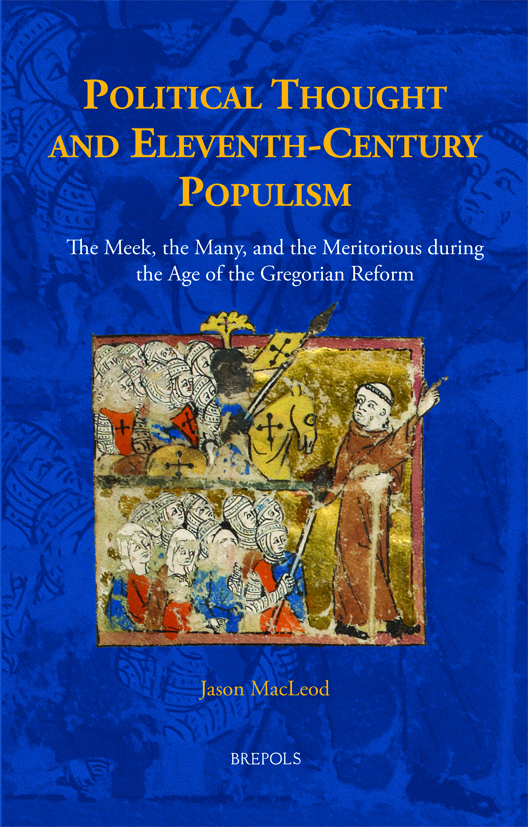 Political Thought and Eleventh-Century Populism
The Meek, the Many, and the Meritorious during the Age of the Gregorian Reform
Volume 38


 The Compositional History of the Book of Kings
An Analysis of the Evaluative Frameworks in 1 Kings 14–2 Kings 25

 The Latin Hermes in Translation
Asclepius, Glosses on Trismegistus, Book of Six Principles of Things, Book of 24 Philosophers
Volume 50

![Book cover: Transitive Media [Philosophy]](https://isd.stisonbooks.com/images/books/native/9781804132333.jpg?asset_id=66970)

 Contesting Labeled Identities
The Sociology of Gentilics in Biblical and Northwest Semitic Literature


 After Life in Roman Paganism. L’Égypte des astrologues. Les Mages hellénisés
Introductions historiographiques
Volume 7


 Diodor über den ersten Sklavenaufstand auf Sizilien
Ein philologischer und historischer Kommentar
Volume 67
