
Will a Frenchman Fight?
translated and edited by Steve Muhlberger

Paperback (Published)
(October 2015)
ISBN: 9781937439170
7.99 x 10 inches
Price: $27.95
In stock
This book describes a campaign of the Hundred Years War in 1380-1. The campaign itself was a great chevauch, or raid, by the English through France and though it had its practical goals, it was also a striking illustration of the place of chivalric self-image in shaping warfare. Colour illustrations.
The rulers of both England and France had reason to be unhappy as the 1380s dawned. Although the French regime was in better shape than it had been in a while, the country still lay open to English attack and the populace was angry about it. The English regime was no happier; it was futilely trying to realize the gains seemingly promised by the victory at Poitiers back in 1356. This had been its constant occupation for a quarter century, but ultimate success seemed as far away as ever. Will a Frenchman Fight? describes a campaign of the Hundred Years War in 1380-1 in which a variety of different kinds of combat and different motives for fighting are evident. The campaign itself was a great chevauchee, or raid, by the English through France and though it had its practical goals, it was also a striking illustration of the place of chivalric self-image in shaping warfare. The English hoped to weaken their opponents by demonstrating that the French king, Charles V, could not defend his subjects. The French king had practical reasons for wishing to avoid spectacular but dangerous set battles similar to Crecy and Poitiers–battles that had been catastrophic for the French. Avoiding battle, however, had its price. If enough people in France concluded that the English were right in their scorn for royal power, that power would be significantly reduced. In the fourth volume of the Deeds of Arms series, Professor Muhlberger demonstrates that although Charles V’s strategy for avoiding battle was prudent, it was unpopular, showing how considerations of war, peace and personal honor were tightly bound together, and that direct confrontation of man against man or army against army was the most satisfying way of settling such issues. Color illustrations, maps, and a comprehensive bibliography complement this fascinating text.
Introduction The Sources Buckingham's Campaign Begins (Froissart) The Confrontation at Troyes (Froissart) The Deeds of Arms at Toury and Marchenoir (Froissart) Buckingham in Brittany (Froissart) The Siege of Nantes (Cabaret) The Deeds of Arms at Vannes (Froissart) The Deeds of Arms at Vannes (Cabaret) Nicholas Clifford and Jean Boucinel (Froissart) Bibliography
- Edited by Steven Muhlberger
- Translated by Steven Muhlberger
Other Titles in this Series


Similar Books
 A Collaborative Tapestry in Honour of Shirley Ann Brown / Une fresque brodée en l’honneur de Shirley Ann Brown
The Bayeux Tapestry Seen by her Colleagues and Friends / La Tapisserie de Bayeux vue par ses collègues et amis
 Behind the Scenes of Medieval Roofs
An Overview of the Roofing Systems of Italian Churches
Volume 90






 Innovation and Medieval Communities
The Circulation of Ideas and Practices in and out of the Town (1200-1500)
Volume 63
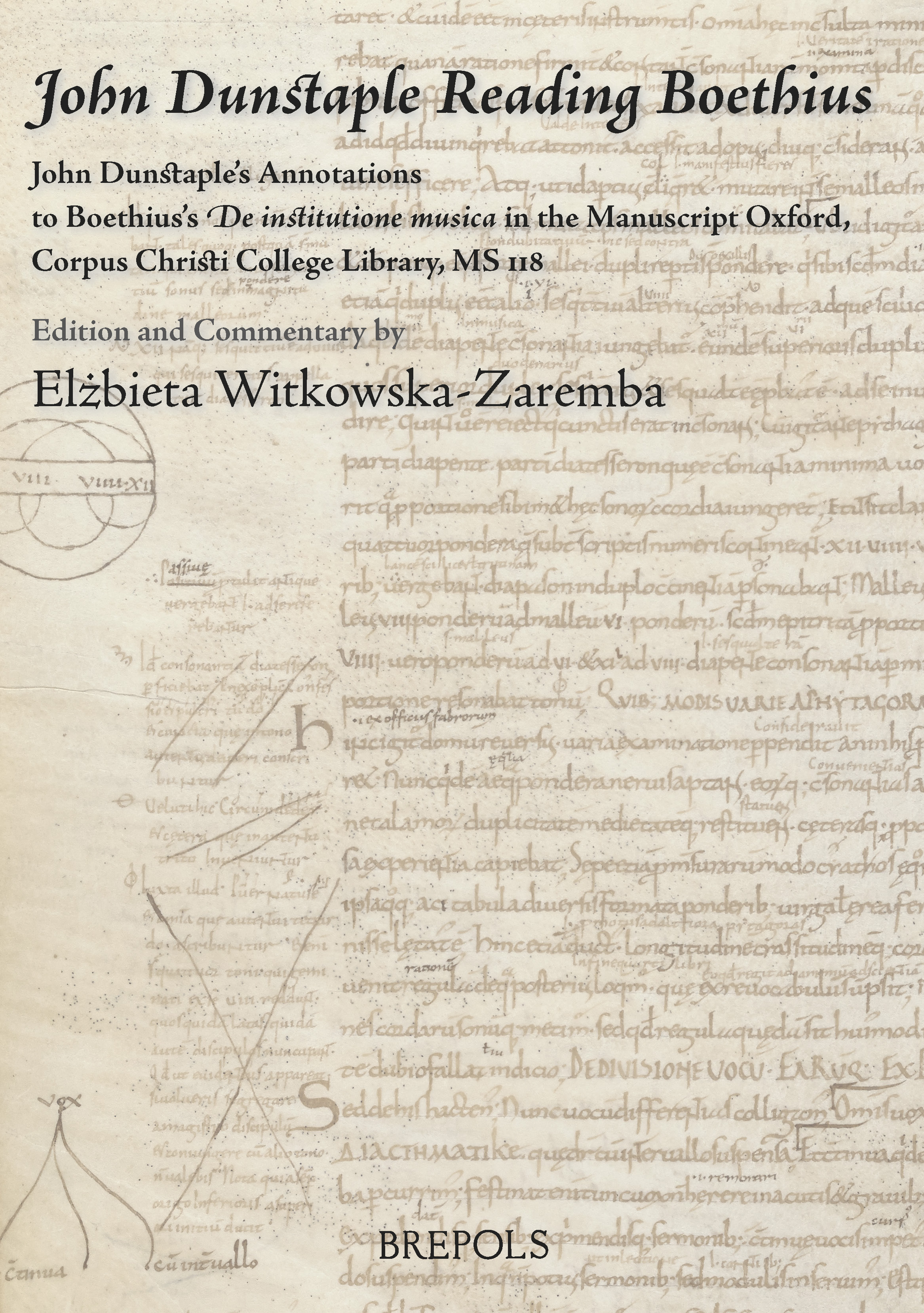 John Dunstaple Reading Boethius
John Dunstaple’s Annotations to Boethius’s “De institutione musica” in the Manuscript Oxford, Corpus Christi College Library, MS 118
 Linguistic and Cultural Dynamics in a Frontier Society
New Perspectives on Northeastern Bavaria and Western Bohemia in the Early Middle Ages
Volume 9

 Medieval Debates on Foreknowledge: Future Contingents, Prophecy, and Divination
Acts of the XXVII Annual Colloquium of the SIEPM, Trento 12-15 September 2023
Volume 31
 Medieval Yeghegis, Armenia
History, Archaeology, Society. Local Multiplicities and Global Connections of a Rural Centre on the Silk Road(s)


 Power and Women in Southeast and Central Europe in Late Medieval and Early Modern Period (1300-1600)
Volume 10


 The Anglo-Norman Bible’s Books of Kings, a Critical Edition
(BL Royal 1 C III, fols 234r-274v)
Volume 37


 The Embodied Court in the Premodern World
Understanding the Physicality, Performativity and Lifecycle of Bodies at Court in Europe and Beyond, 1400-1800
Volume 4


 The Middle English ‘Medicines for Horses’
Edited from the Manuscript formerly at Kensington Palace, HRH Duke of Gloucester MS s.n. (olim York House MS 45)
Volume 69
