
Where Kingship Descended from Heaven
Studies on Ancient Kish
edited by Karen L. Wilson and Deborah Bekken

From 1923 to 1933, the Chicago Field Museum and the University of Oxford conducted archaeological excavations at the site of Kish, located on the floodplain of the Euphrates River in modern Iraq approximately 80 kilometers south of Baghdad. Over the course of ten years of work, the expedition explored seventeen different mounds both inside and outside the ancient boundaries of Kish. The finds were divided at the end of each season, with the Iraq Museum retaining half of the objects and any one-of-a-kind items and the two excavating institutions splitting the remainder. Beginning in 2004, the Field Museum undertook a reevaluation of its Kish holdings. To highlight new research and insights into the material culture from Kish and our understanding of the importance of the site to Mesopotamian archaeology, the Field Museum held a symposium in 2008 that brought together an international group of scholars who presented papers on various aspects of the ancient city. This volume, which grew out of that symposium, presents a wide array of studies on the excavated material remains from Kish, including cuneiform texts, animal figurines, human remains, lithics, figural stucco wall decorations, and more.
- Edited by Deborah Bekken
- Edited by Karen L. Wilson
Other Titles in this Series
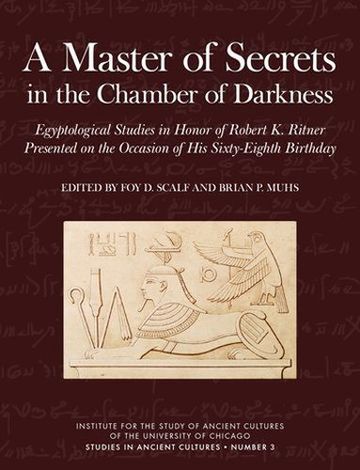 A Master of Secrets in the Chamber of Darkness
Egyptological Studies in Honor of Robert K. Ritner Presented on the Occasion of His Sixty-Eighth Birthday
Volume 3

Similar Books





 Archaeological Excavations at Irmis Rka: An Investigation of a Multi-Layered Settlement in Southwest Georgia
Results from the 2020 Season: Early Bronze Age to Medieval Occupations


 Boğazköy Tablets in the Museum of Anatolian Civilizations (Bo 9032–Bo 9097)
Anadolu Medeniyetleri Müzesinde Bulunan Boğazköy Tabletleri (Bo 9032–Bo 9097)
Volume 4


 Catuvellaunia and Rome: Economic and Political Relations during the Final Decades Pre-conquest
The Role of Grain from Southeastern Britain and Its Potential for Maintenance of the Roman Military along the Frontier on the Rhine
 Colour Concept “Secoli bui” a colori
Codici cromatici e architetture dipinte nell’età tardoantica e medievale
 Connecting the Dots: Counting, Writing, and the Beginnings of Civilization
The Secret Lives of Clay Tokens: A Memoir

 Crossing Disciplines in the Study of Archaeology and Prehistoric Art: Insights from the Sahara and Mediterranean Africa
Proceedings of the XX UISPP World Congress (5–9 September 2023, Timișoara, Romania) Volume / Session 18
 Curating the Prehistoric Past
Studies on West Asian Archaeology and Beyond in Honour of Yoshihiro Nishiaki

 Economic Trends in China During the Age of Confucius (1000–250 BC)
The Archaeological Evidence
Volume 10
 ENTANGLED AFRICA
Intra-African Relations Between Rain Forest and Mediterranean from Around 4,000 BCE to 1,500 CE


 Exploring Gender Dynamics across the Ancient Near East
Collected Essays of Gender and Methodology in the Ancient Near East (GeMANE) 4 and 5
Volume 7
 Exploring Prehistoric Pottery in Japan
A Study of Organic Inclusions, Adhering Materials, and Impressions of Woven Items


 From Coast to Coast
Current Archaeological Research on Cultural Exchange along and across the Baltic Sea
Volume 19
 Frontiers of the Roman Empire: The Frontier of the Roman Province of Raetia
Grenzen des Römischen Reiches: Die Grenze der Römischen Provinz Raetien

 Gold, Silver and Glass: Power Networks, Cultural Identities, Technology Transfers and Agency across the Old World (7th Century BC – 1st Century AD)
Proceedings of a Conference Held at the British Museum, 16–18 June 2023
 Harvesting the Margins of the Viking World
Decentralizing Economies in Late Iron Age Fennoscandia
Volume 6
 Ḫattušaš utnē išḫameški
Hittite and Other Ancient Near Eastern Studies Presented to Piotr Taracha on the Occasion of His 65th Birthday

 Images of Anonymous Women
A Semiotic Approach to Image-Text Relations in Interpretation of Ancient Near Eastern Art and the Hebrew Bible
Volume 310

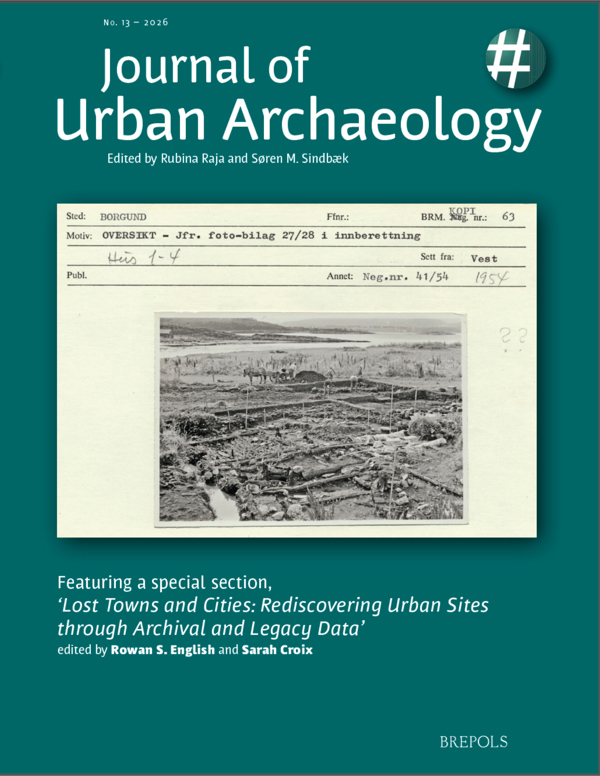 Journal of Urban Archaeology 13 (2026)
Featuring a special section, ‘Lost Towns and Cities: Rediscovering Urban Sites through Archival and Legacy Data’