
Votive Deposits in Early Dynastic Temples
Proceedings of the Workshop held at the 10th ICAANE in Vienna, April 2016
edited by Sophie Cluzan

English summary: Between 2900 and 2330 BCE, the Euphrates and Tiger alluvial plain was the site of kingdoms known to be the first to use writing in both an intensive and an extensive way and within different contexts, from practical to political, economic, religious or historical ones. Along with this decisive evolution, for the first time human settlements clearly witnessed the existence of hierarchical political and religious systems as parts of an interregional network. While we can find many examples of diversity between them, these first historical kingdoms share many features and noticeable similarities. The deposition of goods in temples is one of these although it obviously followed different processes. Starting with the beginning of excavations in this region at the end of the 19th century, recognition of this phenomenon yielded quantities of objects, mostly linked by their types and qualities. Even if variation between the contexts was recognized, all drew attention to the actual links between parts of the society and the divinities once honoured to which they are a testimony. Even though Early Dynastic kings are linked to gods in many special ways, this trend did not lead to the exclusion of other parts of society from being represented in the temples, at least through their deposition of goods. In turn, this can be viewed as the reflection of a different approach to the temple as an institution, to religion or to power itself, and must be considered as one of the key features of Early Dynastic societies. This volume offers a set of recent studies presented at the 10th ICAANE. It brings together scholars whose works provide evidence of how an integrative approach mixing concept, context, text, materiality and symbols can give a more realistic account of this diverse phenomenon and its relevance in a historical perspective. German description: Im Zeitraum 2900-2330 v. Chr. existierten in der Ebene zwischen Euphrat- und Tigris Konigreiche, die erstmals umfassend Schrift in verschiedenen Kontexten verwendeten. Parallel zu dieser Entwicklung gab es erstmals hierarchische, politische und religiose Systeme, die Teil eines uberregionalen Netzwerks waren. Trotz zahlreicher Unterschiede weisen diese ersten historischen Konigreiche doch viele Ahnlichkeiten auf. Die Deponierung von unterschiedlichen Objekten in Tempeln ist eine dieser Gemeinsamkeiten, auch wenn ihr offensichtlich unterschiedliche Praktiken zugrunde lagen. Seit dem Beginn der Ausgrabungen in dieser Region Ende des 19. Jahrhunderts wurde diesem Phanomen grosse Aufmerksamkeit geschenkt, wodurch zahlreiche Objekte freigelegt wurden. Auch wenn die Unterschiede zwischen den Kontexten fruh erkannt wurden, wiesen alle auf die Verbindungen zwischen Teilen der Gesellschaft und den einst verehrten Gottheiten hin. Obgleich die fruhdynastischen Konige in vielerlei Hinsicht mit den Gottheiten verbunden sind, fuhrte dieser Umstand nicht dazu, dass andere Teile der Gesellschaft von der Prasenz in den Tempeln ausgeschlossen wurden, zumindest nicht was die Deponierung von Weihgaben betrifft. Dies wiederum kann als Ausdruck einer anderen Einstellung zum Tempel als Institution, zur Religion oder zur Herrschaft an sich betrachtet werden und muss als eines der Hauptmerkmale der fruhdynastischen Gesellschaften angesehen werden. Dieser Band enthalt eine Reihe neuerer Studien, die im Rahmen der 10. ICAANE vorgestellt wurden. Die Beitrage zeigen, wie ein integrativer Ansatz, der Kontext, Text, materielle Kultur und Symbolik miteinander verbindet, eine umfassende Darstellung dieses sehr vielfaltigen Phanomens ermoglichen kann.
- Edited by Sophie Cluzan
Other Titles in this Series
 The Ancient Throne
The Mediterranean, Near East, and Beyond, from the 3rd Millenium BCE to the 14th Century CE
Volume 14

 Western Anatolia before Troy. Proto-Urbanisation in the 4th Millenium BC?
Proceedings of the International Symposium held at the Kunsthistorisces Museum Wien Vienna, Austria, 21-24 November, 2012
Volume 1
 The Early Iron Age at Tell Abu al-Kharaz, Jordan Valley
Tradition, Innovation and Intercultural Relations in the Eastern Mediterranean around 1100 BC
Volume 16
 Cukurici Hoyuk 2
Das 5. und das 4. Jahrtausend v. Chr. in Westanatolien und der Ostagais. Mit einem Beitrag von Barbara Horejs
Volume 7
 Policies of Exchange. Political Systems and Modes of Interaction in the Aegean and the Near East in the 2nd Millenium B.C.E
Proceedings of the International Symposium at the University of Freiburg Institute for Archaeological Studies, 30th May - 2nd June 2012
Volume 2
 Archaeology of Central Asia during the 1st millennium BC, from the Beginning of the Iron age to the Hellenistic period
Proceedings from the Workshop held at 10th ICAANE
Volume 18
 Landscape Archaeology in Southern Caucasia. Finding Common Ground in Diverse Environments
Proceedings of the Workshop held at 10th ICAANE in Vienna, April 2016
 Archaologie und Republik
Reflexionen zur Archaologie in Osterreich in der Ersten und Zweiten Republik
Volume 28
 The Archaeology of the Arabian Peninsula 2
Connecting the Evidence. Proceedings of the International Workshop held at the 10th International Congress on the Archaeology of the Ancient Near East in Vienna on April 25, 2016
Volume 19
 Archaeology across Frontiers and Borderlands
Fragmentation and Connectivity in the North Aegean and the Central Balkans from the Bronze Age to the Iron Age
Volume 9


 Platia Magoula Zarkou. The Neolithic Period
Environment, Stratigraphy and Architecture, Chronology, Tools, Figurines and Ornaments
Volume 23
 The Central/Western Anatolian Farming Frontier
Proceedings of the Neolithic Workshop held at 10th ICAANE in Vienna, April 2016
Volume 12

 Human Iconography and Symbolic Meaning in Near Eastern Prehistory
Proceedings of the Workshop held at 10th ICAANE in Vienna, April 2016
Volume 11
 Ancient Lagash
Current Research and Future Trajectories: Proceedings of the Workshop held at the 10th ICAANE in Vienna, April 2016
Volume 24
 Textile Workers
Skills, Labour and Status of Textile Craftspeople Between the Prehistoric Aegean and the Ancient Near East
Volume 13

 Punta di Zambrone I
1200 B.C.E. - A Time of Breakdown, a Time of Progress in Southern Italy and Greece
Volume 17
 Formation, Organisation and Development of Iron Age Societies. A Compartive View
Proceedings of the Workshop held at the 10th ICAANE in Vienna, April 2016
Volume 15
 The Archaeology of North Arabia. Oases and Landscapes
Proceedings of the International Congress held at the University of Vienna, 5-8 December, 2013
Volume 4
 Old Excavation Data. What can we do?
Proceedings of the Workshop held at the 10th ICAANE in Vienna, April 2016
Volume 16

Similar Books


 Connecting the Dots: Counting, Writing, and the Beginnings of Civilization
The Secret Lives of Clay Tokens: A Memoir

 Exploring Gender Dynamics across the Ancient Near East
Collected Essays of Gender and Methodology in the Ancient Near East (GeMANE) 4 and 5
Volume 7


 Ḫattušaš utnē išḫameški
Hittite and Other Ancient Near Eastern Studies Presented to Piotr Taracha on the Occasion of His 65th Birthday

 New Research on Old Collections in Southwest Asian Archaeology
Proceedings of the Workshop Held at the British Museum, London, 31 July – 2 August, 2023
 Old Aramaic Inscriptions and their Contexts
An Epigraphic, Archaeological, and Historical Synthesis
Volume 63

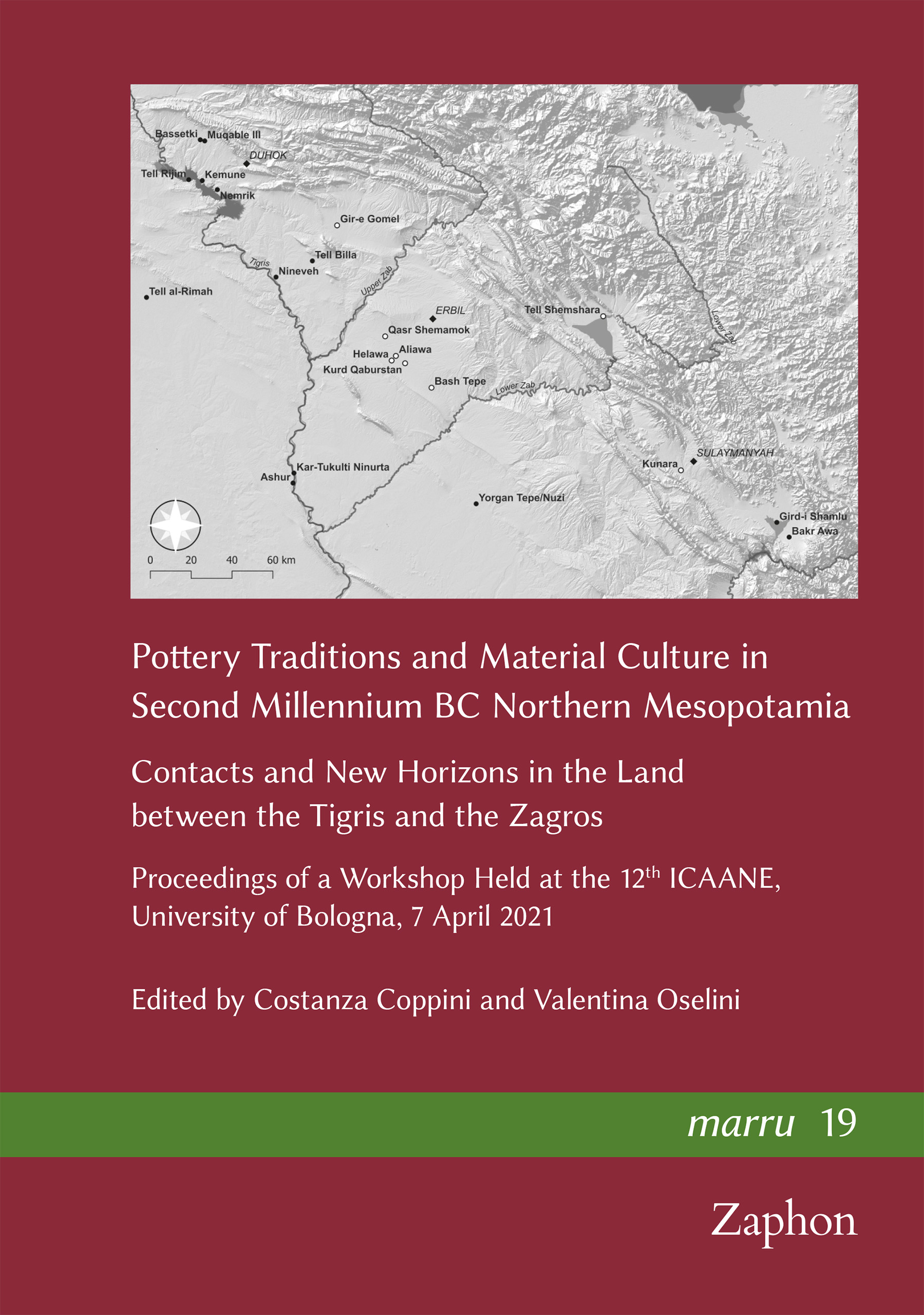 Pottery Traditions and Material Culture in Second Millennium BC Northern Mesopotamia
Contacts and New Horizons in the Land between the Tigris and the Zagros. Proceedings of a Workshop Held at the 12th ICAANE, University of Bologna, 7 April 2021
Volume 19
 Punning in Odd or Elegant Constructions in Jeremiah
The Convergence of Linguistics, Rhetoric, and Textuality in the Hebrew Text of Jeremiah
 Shame in the Worlds of the Hebrew Bible and Akkadian Texts
A Linguistic Study and Its Implications
Volume 33
 Telling Contexts
Archaeological and Textual Studies in Honor of Elizabeth Bloch-Smith and Mark S. Smith
 The Body
Lived, Cultured, Adorned: Essays on Dress and the Body in the Bible and Ancient Near East in Honor of Nili S. Fox
 The Discourse of Rites
Shaping and Reshaping the (Counter-)Priestly Rituals Conducted Outside the Tabernacle
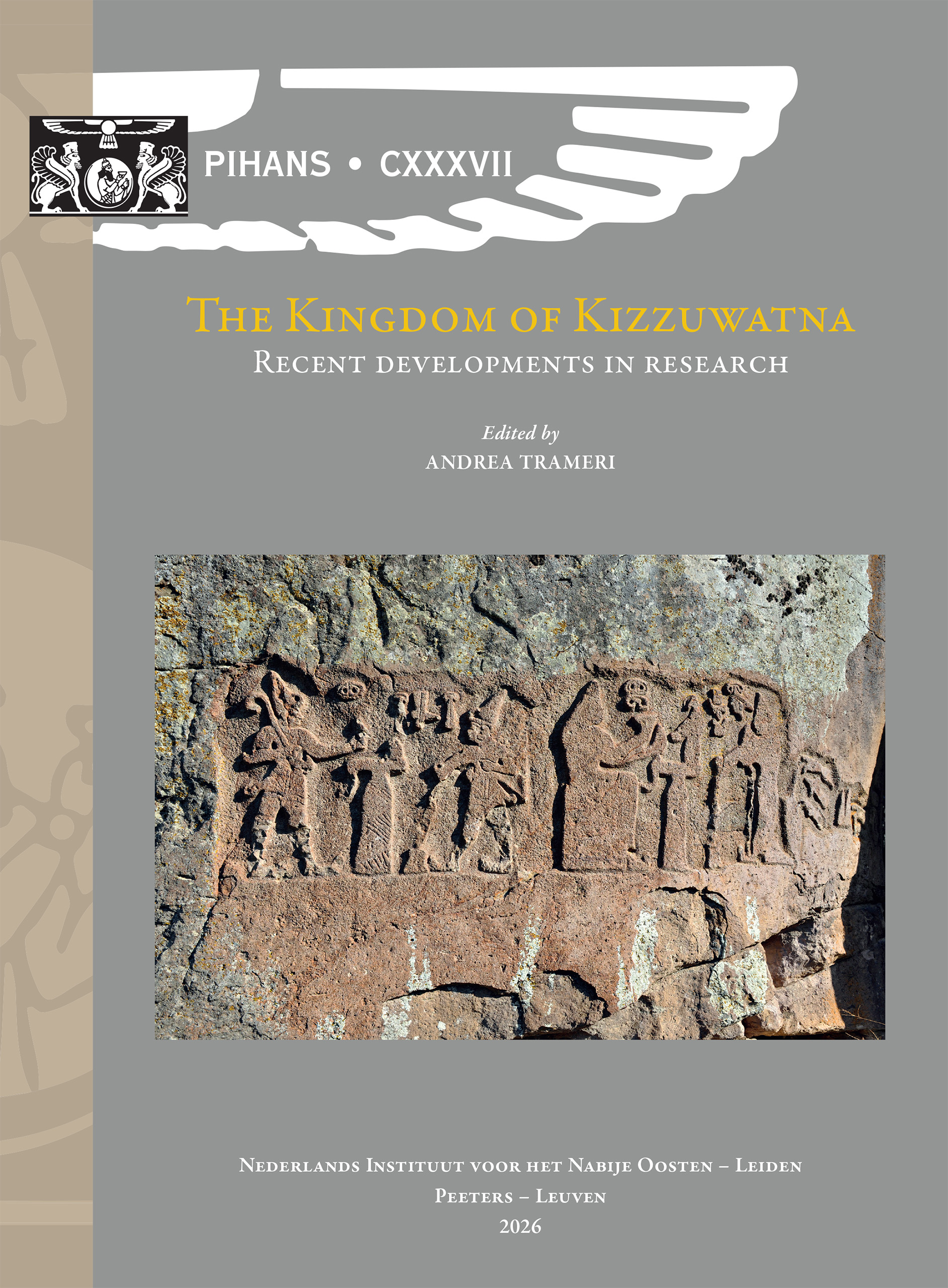 The Kingdom of Kizzuwatna: Recent Developments in Research
Proceedings of the Third NINO Postdoctoral Research Fellow Annual Conference, Leiden, 23rd-25th March 2023
Volume 137


 Die Entwicklung erdbebensicherer Bautechniken in der Frühen und Mittleren Eisenzeit in Ostanatolien
Volume 11
 Die JHWH-Religion und die Vorstellung göttlicher Gesetzgebung
Überschneidungen zwischen der Rechtsentwicklung und der Sphäre der Religion in der Geschichte des antiken Israel und Juda

 Kultur – Kontakt – Kultur
Beiträge anlässlich der 66. Rencontre Assyriologique Internationale in Frankfurt/Main und Mainz, 25.–29. Juli 2022
Volume 35
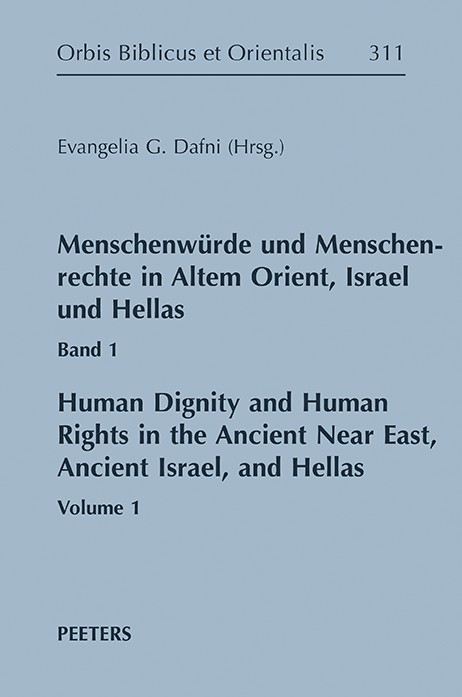 Menschenwürde und Menschenrechte im Altem Orient, Israel und Hellas. Band 1
Human Dignity and Human Rights in the Ancient Near East, Ancient Israel, and Hellas. Volume 1
Volume 311
 Ptolemaiou Procheiroi Kanones. Les «Tables Faciles» de Ptolemée. Volume 2a: Tables A3-A13
Édition critique, Transcription
 Sprachwissenschaftliche und kulturhistorische Reflexionen
Festschrift zu Ehren von Jörg Klinger
Volume 31

 Vom Mädchen zur Frau
Weihgaben als Indikatoren rituellen und kommunikativen Handelns von Frauen in griechischen Kulten
Volume 188
 Von der Symmachie zur Arché und zurück
Die Entwicklungsphasen des Ersten Attischen Seebundes (478/7–404 v. Chr.)