
Two Lyres from Ur
By (author) Maude De Schauensee

Hardback (Published)
(July 2002)
ISBN: 9780924171888
5.47 x 8.46 inches
Price: $29.95
On back order
Chronicles the history, conservation, and reconservation of two spectacular lyres discovered at Ur in the Great Death Pit of the Royal Cemetery during the 1928-29 season. A comprehensive analysis within the economic, historical, and sociological context of mid-third millennium Mesopotamia. Includes photographs, CAT-scans, X-rays, and color plates.
During the 1928-29 season at Ur, in the Great Death Pit of the Royal Cemetery, C. Leonard Woolley discovered two spectacular musical instruments-a silver Boat-shaped Lyre and a magnificent lyre with the head of a bull made of gold sheet and a lapis lazuli beard. This book chronicles their history, conservation, and reconservation. While little was known about mid-third millennium Mesopotamian archaeology early last century, it was clear that the Sumerians had developed a vigorous trade in luxury goods, with an economy that necessitated a highly structured government whose leaders could command rich and elaborate graves that included a full panoply of musical instruments. In meticulous detail, using both traditional methods and new X-ray and electronic imaging investigative techniques, Maude de Schauensee probes and analyzes the construction of the two lyres held by the University Museum while providing an economic, historical, and sociological context in which to better understand them. She examines the decorative motifs along with the materials and the techniques of the builders of these instruments. The illustrations-10 pieces of line art, 25 photographs, 6 CAT-scans, 5 X-rays, and 24 color plates-supply additional details. This book presents new information and conservation descriptions for the first time. Musicologists, art historians, Near East scholars and archaeologists, and general readers will find this book’s new analysis of the instruments of an ancient culture of significant interest.
Maude de Schauensee served as Keeper, later the Fowler/Van Santvoord Keeper, of the Near Eastern Collections at the Penn Museum. She participated in six field seasons of The Hasanlu Project (1959-1974) and the 1967 field season of the University of Chicago at Selenkehiye, Syria. She serves as Associate Editor of the Hasanlu Publications. Her publications include Two Lyres from Ur (2003), Peoples and Crafts in Period IVB at Hasanlu, Iran (2011) for which she wrote two chapters and served as volume editor, and articles on material from the Period IVB levels at Hasanlu. Jennifer Swerida is a Visiting Assistant Professor at Kennesaw State University and a Consulting Scholar of the Penn Museum. She is also Co-Director of the Bat Archaeological Project (Sultanate of Oman) and Assistant Director of the Nax.ivan Archaeological Project (Nax.ivan, Azerbaijan). Her research interests center on identity formation and alternative forms of social complexity in the Ancient Near East.
- By (author) Maude De Schauensee
Similar Books






 Boğazköy Tablets in the Museum of Anatolian Civilizations (Bo 9032–Bo 9097)
Anadolu Medeniyetleri Müzesinde Bulunan Boğazköy Tabletleri (Bo 9032–Bo 9097)
Volume 4
 Connecting the Dots: Counting, Writing, and the Beginnings of Civilization
The Secret Lives of Clay Tokens: A Memoir

 Curating the Prehistoric Past
Studies on West Asian Archaeology and Beyond in Honour of Yoshihiro Nishiaki

 Exploring Gender Dynamics across the Ancient Near East
Collected Essays of Gender and Methodology in the Ancient Near East (GeMANE) 4 and 5
Volume 7


 Ḫattušaš utnē išḫameški
Hittite and Other Ancient Near Eastern Studies Presented to Piotr Taracha on the Occasion of His 65th Birthday




 Kultur – Kontakt – Kultur
Beiträge anlässlich der 66. Rencontre Assyriologique Internationale in Frankfurt/Main und Mainz, 25.–29. Juli 2022
Volume 35
 Money of Mercenaries in the Cimmerian Bosporus
From the Mithridatic Wars to the Roman-Bosporan War of AD 45-49
Volume 45

 New Research on Old Collections in Southwest Asian Archaeology
Proceedings of the Workshop Held at the British Museum, London, 31 July – 2 August, 2023
 Old Aramaic Inscriptions and their Contexts
An Epigraphic, Archaeological, and Historical Synthesis
Volume 63

 Politics, Peoples, and Polities in the Ancient Near East
Proceedings of the 69th Rencontre Assyriologique Internationale, Helsinki
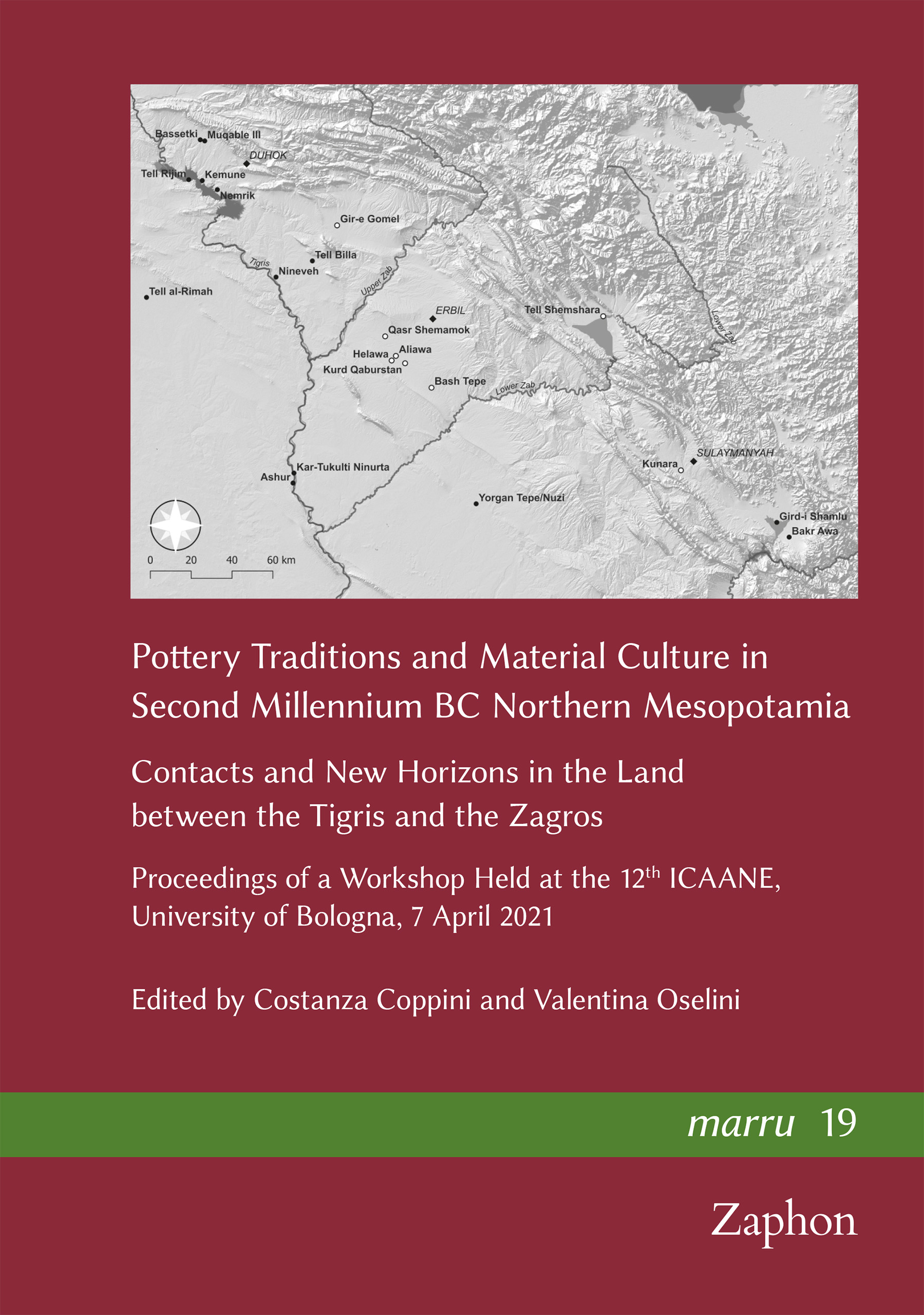 Pottery Traditions and Material Culture in Second Millennium BC Northern Mesopotamia
Contacts and New Horizons in the Land between the Tigris and the Zagros. Proceedings of a Workshop Held at the 12th ICAANE, University of Bologna, 7 April 2021
Volume 19
 Punning in Odd or Elegant Constructions in Jeremiah
The Convergence of Linguistics, Rhetoric, and Textuality in the Hebrew Text of Jeremiah

 Sertorius, the Exiles of the Sullan Regime and the Provinces of the Empire
Legitimacy, Morality and Imperial Discourse in the 70s BCE
 Shame in the Worlds of the Hebrew Bible and Akkadian Texts
A Linguistic Study and Its Implications
Volume 33

 Telling Contexts
Archaeological and Textual Studies in Honor of Elizabeth Bloch-Smith and Mark S. Smith
 The Body
Lived, Cultured, Adorned: Essays on Dress and the Body in the Bible and Ancient Near East in Honor of Nili S. Fox
 The Discourse of Rites
Shaping and Reshaping the (Counter-)Priestly Rituals Conducted Outside the Tabernacle
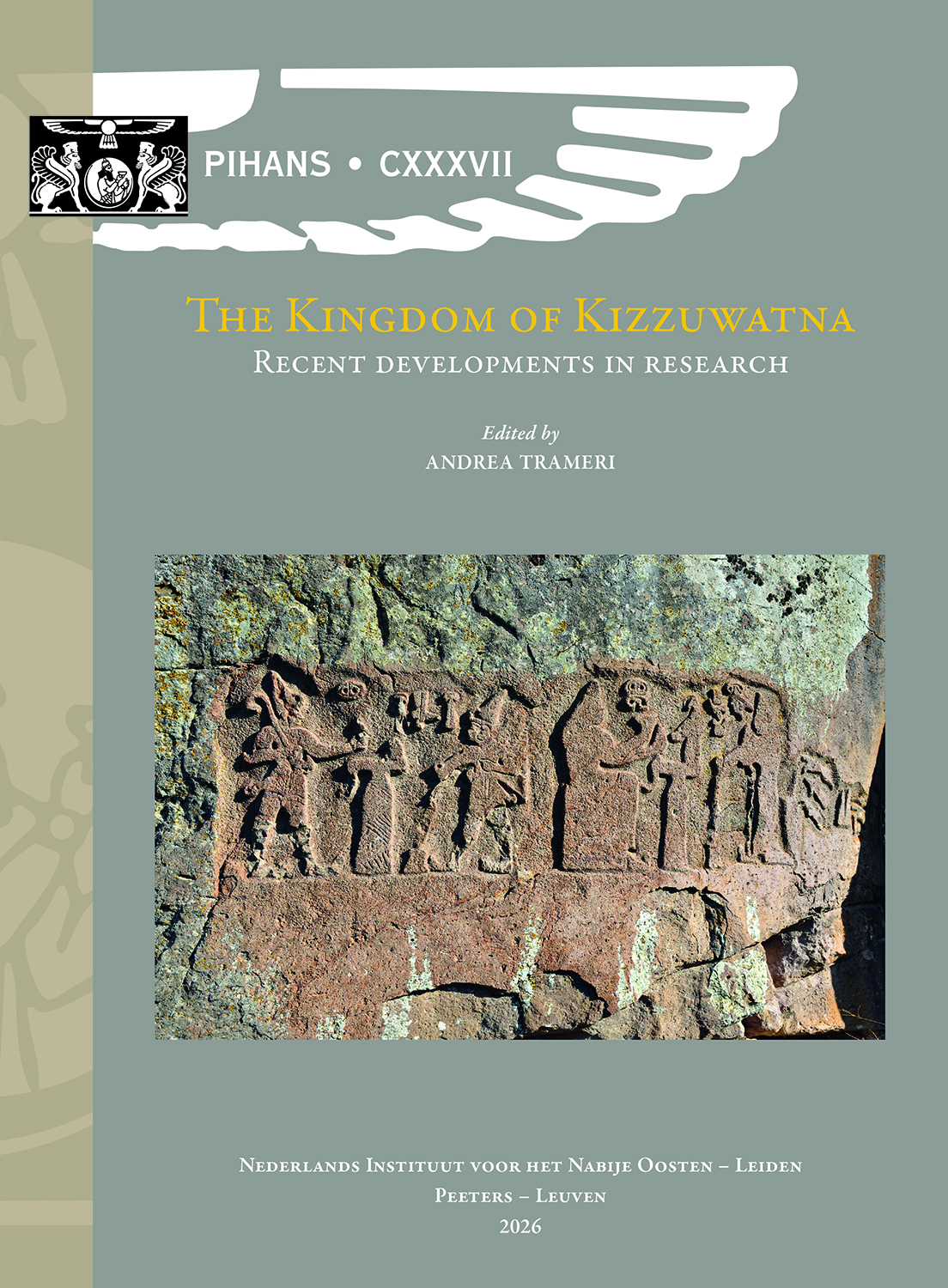 The Kingdom of Kizzuwatna: Recent Developments in Research
Proceedings of the Third NINO Postdoctoral Research Fellow Annual Conference, Leiden, 23rd-25th March 2023
Volume 137