Tumuli Graves and other Stone Structures on the North Coast of Kuwait Bay (Al-Subiyah 2007-2012)
by Rutkowski Lukasz
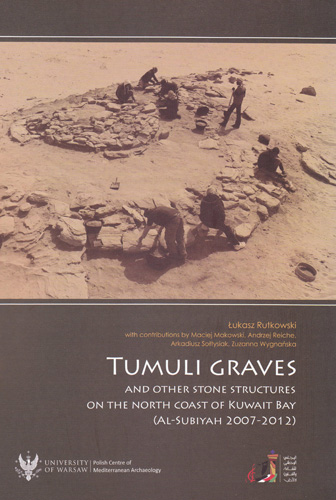
Hundreds of stone structures, mainly circular burial mounds made of rough local stone, are found scattered in the coastal region of Al-Subbiyah, a desert plateau extending along the north coast of Kuwait Bay. Since 2007 the KuwaitiPolish Archaeological Mission (KPAM), a joint project of the Polish Centre of Mediterranean Archaeology, University of Warsaw and National Council for Culture, Arts and Letters of the state of Kuwait, has been working in the region, carrying out among others an extensive survey and selected excavation of these stone structures. The “Tumulus Project”, which started as a small salvage excavation of a cluster of burial mounds in 2007, building on archaeological work in the region by Kuwaiti and Gulf Cooperation Council (GCC) teams since the turn of the 21st century, was expanded in the course of successive seasons to include a belt of land approximately 20-kilometers long running parallel to the shoreline. More than two hundred archaeological sites/structures, including around 130 tumuli and around 100 stone features of different type, were recorded. A select 40 stone structures were excavated, this counting 27 tumuli, seven of the mysterious elongated structures and six structures of a different kind. The archaeological evidence suggests that most of the tumuli were constructed during the Bronze Age. The present volume discusses the results of six seasons of investigations, from 2007 to 2012.
Hundreds of stone structures, mainly circular burial mounds made of rough local stone, are found scattered in the coastal region of Al-Subbiyah, a desert plateau extending along the north coast of Kuwait Bay. Since 2007 the KuwaitiPolish Archaeological Mission (KPAM), a joint project of the Polish Centre of Mediterranean Archaeology, University of Warsaw and National Council for Culture, Arts and Letters of the state of Kuwait, has been working in the region, carrying out among others an extensive survey and selected excavation of these stone structures. The “Tumulus Project”, which started as a small salvage excavation of a cluster of burial mounds in 2007, building on archaeological work in the region by Kuwaiti and Gulf Cooperation Council (GCC) teams since the turn of the 21st century, was expanded in the course of successive seasons to include a belt of land approximately 20-kilometers long running parallel to the shoreline. More than two hundred archaeological sites/structures, including around 130 tumuli and around 100 stone features of different type, were recorded. A select 40 stone structures were excavated, this counting 27 tumuli, seven of the mysterious elongated structures and six structures of a different kind. The archaeological evidence suggests that most of the tumuli were constructed during the Bronze Age. The present volume discusses the results of six seasons of investigations, from 2007 to 2012.
- By (author) Lukasz Rutkowski
Similar Books





 Boğazköy Tablets in the Museum of Anatolian Civilizations (Bo 9032–Bo 9097)
Anadolu Medeniyetleri Müzesinde Bulunan Boğazköy Tabletleri (Bo 9032–Bo 9097)
Volume 4
 Connecting the Dots: Counting, Writing, and the Beginnings of Civilization
The Secret Lives of Clay Tokens: A Memoir

 Curating the Prehistoric Past
Studies on West Asian Archaeology and Beyond in Honour of Yoshihiro Nishiaki

 Exploring Gender Dynamics across the Ancient Near East
Collected Essays of Gender and Methodology in the Ancient Near East (GeMANE) 4 and 5
Volume 7


 Ḫattušaš utnē išḫameški
Hittite and Other Ancient Near Eastern Studies Presented to Piotr Taracha on the Occasion of His 65th Birthday




 Kultur – Kontakt – Kultur
Beiträge anlässlich der 66. Rencontre Assyriologique Internationale in Frankfurt/Main und Mainz, 25.–29. Juli 2022
Volume 35
 Money of Mercenaries in the Cimmerian Bosporus
From the Mithridatic Wars to the Roman-Bosporan War of AD 45-49
Volume 45

 New Research on Old Collections in Southwest Asian Archaeology
Proceedings of the Workshop Held at the British Museum, London, 31 July – 2 August, 2023
 Old Aramaic Inscriptions and their Contexts
An Epigraphic, Archaeological, and Historical Synthesis
Volume 63

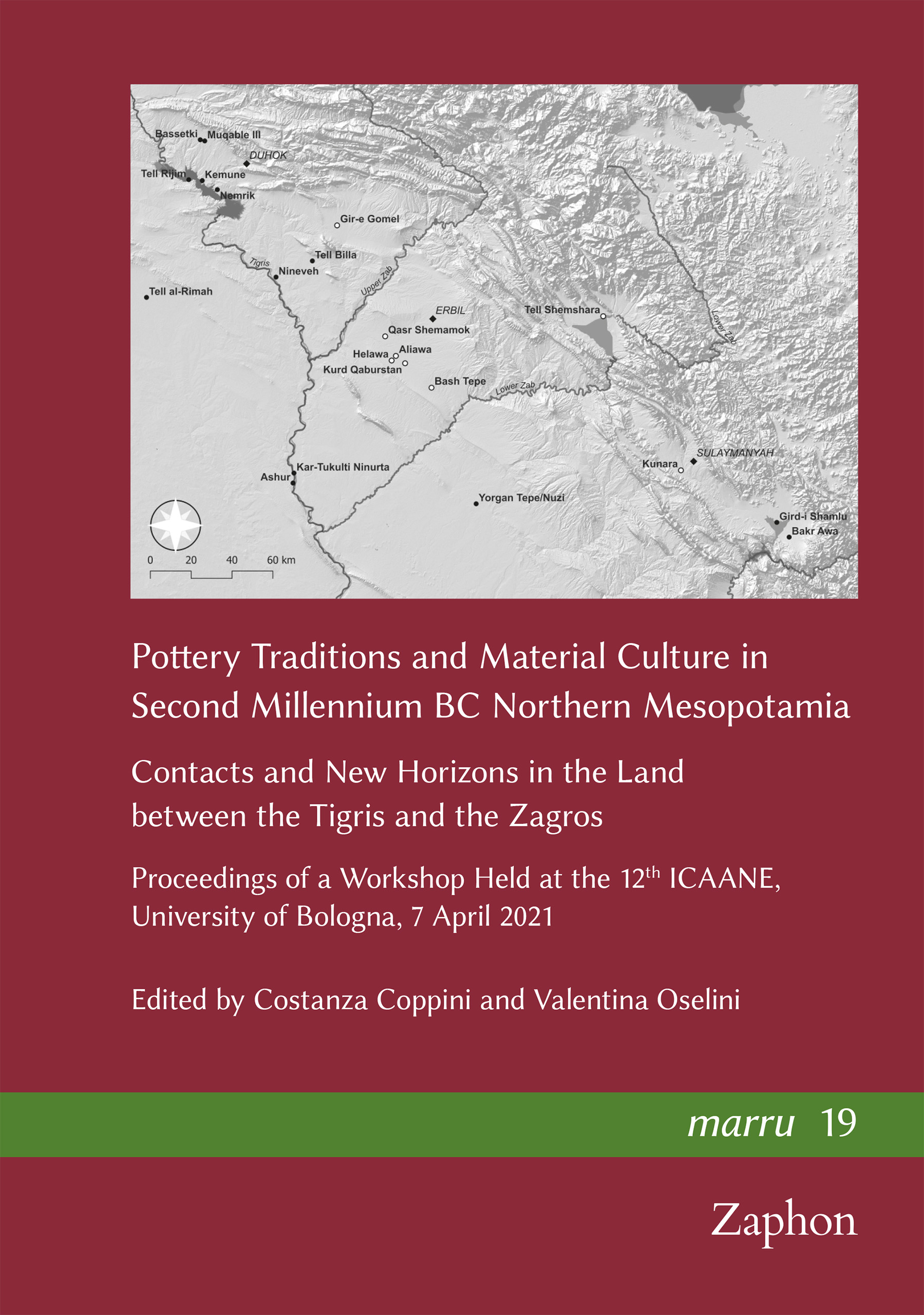 Pottery Traditions and Material Culture in Second Millennium BC Northern Mesopotamia
Contacts and New Horizons in the Land between the Tigris and the Zagros. Proceedings of a Workshop Held at the 12th ICAANE, University of Bologna, 7 April 2021
Volume 19
 Punning in Odd or Elegant Constructions in Jeremiah
The Convergence of Linguistics, Rhetoric, and Textuality in the Hebrew Text of Jeremiah

 Sertorius, the Exiles of the Sullan Regime and the Provinces of the Empire
Legitimacy, Morality and Imperial Discourse in the 70s BCE
 Shame in the Worlds of the Hebrew Bible and Akkadian Texts
A Linguistic Study and Its Implications
Volume 33

 Telling Contexts
Archaeological and Textual Studies in Honor of Elizabeth Bloch-Smith and Mark S. Smith
 The Body
Lived, Cultured, Adorned: Essays on Dress and the Body in the Bible and Ancient Near East in Honor of Nili S. Fox
 The Discourse of Rites
Shaping and Reshaping the (Counter-)Priestly Rituals Conducted Outside the Tabernacle
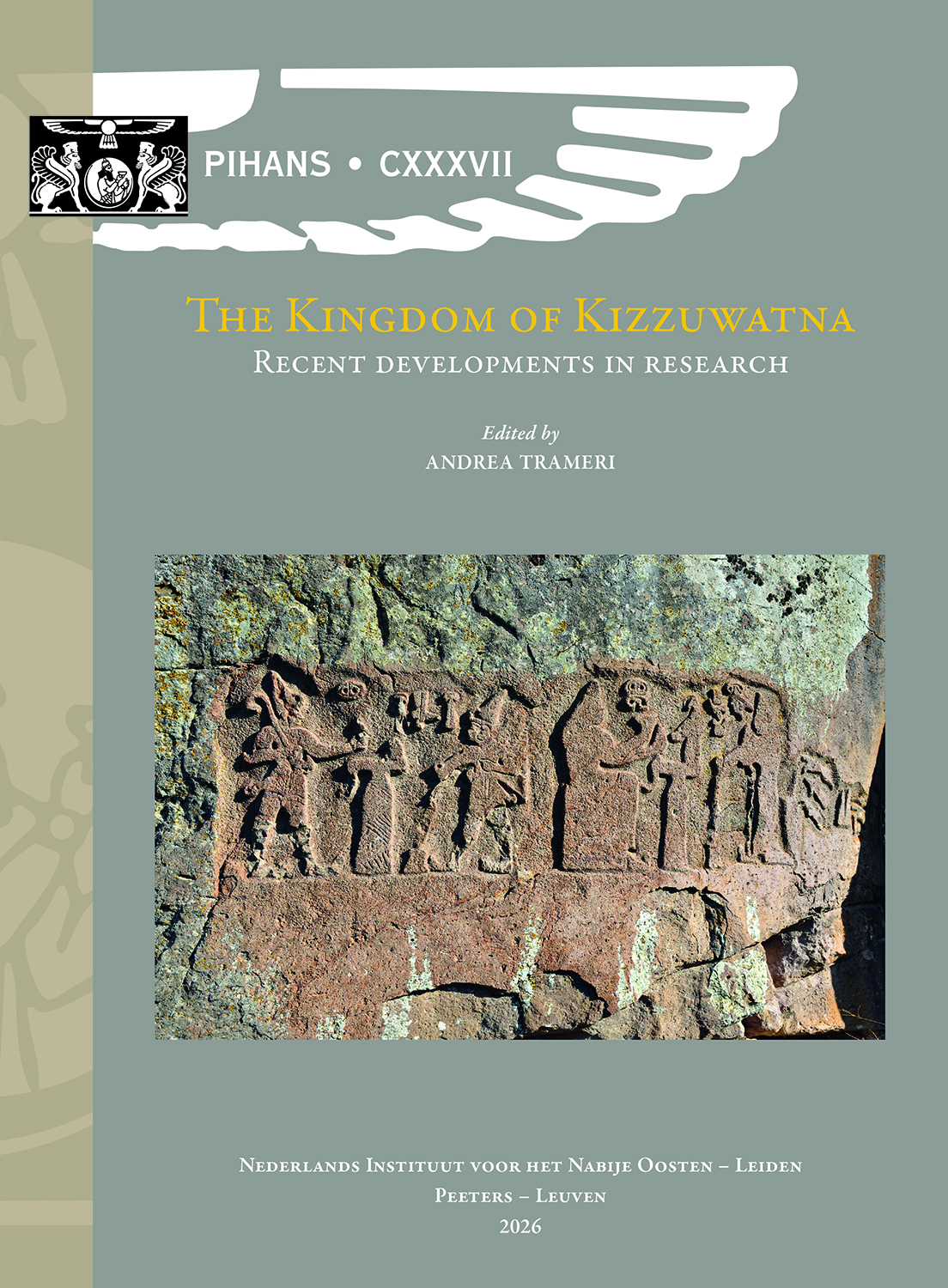 The Kingdom of Kizzuwatna: Recent Developments in Research
Proceedings of the Third NINO Postdoctoral Research Fellow Annual Conference, Leiden, 23rd-25th March 2023
Volume 137