
The Treatises of Vices and Virtues in Latin and the Vernacular
By (author) R Newhauser

Newhauser’s work on the genre of the treatise on vices and virtues is, in effect, an attempt to resolve a paradox of modern scholarship. We have witnessed, in the past thirty years in particular, a rapid growth in the number of studies on the vices and virtues in the Middle Ages and on individual vices or virtues or on works containing information about them – and nevertheless there is almost no scholarship on the tractatus de vitiis et virtutibus as the one medieval genre devoted exclusively to these moral constructs. Newhauser, thus, has taken on the task of establishing the genre, more or less for the first time, and this pioneering work has also essentially influenced the goals of his volume: if it is impossible at this stage to assess with finality the problems involved in the transmission of representatives of the genre due to their overwhelming number and the incompleteness of bibliographic aids to collections of medieval manuscripts, one can nevertheless begin to sketch the outlines of the genre, its historical development, and its importance within the corpus of medieval religious literature in sufficient detail and with enough attention to genre theory to serve as a guide for future research in this vast field of literature and to draw attention to some of the areas in which medievalists have much to gain by further investigations of representatives of the genre.
Newhauser’s work on the genre of the treatise on vices and virtues is, in effect, an attempt to resolve a paradox of modern scholarship. We have witnessed, in the past thirty years in particular, a rapid growth in the number of studies on the vices and virtues in the Middle Ages and on individual vices or virtues or on works containing information about them – and nevertheless there is almost no scholarship on the tractatus de vitiis et virtutibus as the one medieval genre devoted exclusively to these moral constructs. Newhauser, thus, has taken on the task of establishing the genre, more or less for the first time, and this pioneering work has also essentially influenced the goals of his volume: if it is impossible at this stage to assess with finality the problems involved in the transmission of representatives of the genre due to their overwhelming number and the incompleteness of bibliographic aids to collections of medieval manuscripts, one can nevertheless begin to sketch the outlines of the genre, its historical development, and its importance within the corpus of medieval religious literature in sufficient detail and with enough attention to genre theory to serve as a guide for future research in this vast field of literature and to draw attention to some of the areas in which medievalists have much to gain by further investigations of representatives of the genre.
- By (author) R Newhauser
Other Titles in this Series


Similar Books
 A Collaborative Tapestry in Honour of Shirley Ann Brown / Une fresque brodée en l’honneur de Shirley Ann Brown
The Bayeux Tapestry Seen by her Colleagues and Friends / La Tapisserie de Bayeux vue par ses collègues et amis

 Behind the Scenes of Medieval Roofs
An Overview of the Roofing Systems of Italian Churches
Volume 90








 Innovation and Medieval Communities
The Circulation of Ideas and Practices in and out of the Town (1200-1500)
Volume 63
 John Dunstaple Reading Boethius
John Dunstaple’s Annotations to Boethius’s “De institutione musica” in the Manuscript Oxford, Corpus Christi College Library, MS 118
 Linguistic and Cultural Dynamics in a Frontier Society
New Perspectives on Northeastern Bavaria and Western Bohemia in the Early Middle Ages
Volume 9

 Medieval Debates on Foreknowledge: Future Contingents, Prophecy, and Divination
Acts of the XXVII Annual Colloquium of the SIEPM, Trento 12-15 September 2023
Volume 31
 Medieval Yeghegis, Armenia
History, Archaeology, Society. Local Multiplicities and Global Connections of a Rural Centre on the Silk Road(s)




 Power and Women in Southeast and Central Europe in Late Medieval and Early Modern Period (1300-1600)
Volume 10



 The Anglo-Norman Bible’s Books of Kings, a Critical Edition
(BL Royal 1 C III, fols 234r-274v)
Volume 37


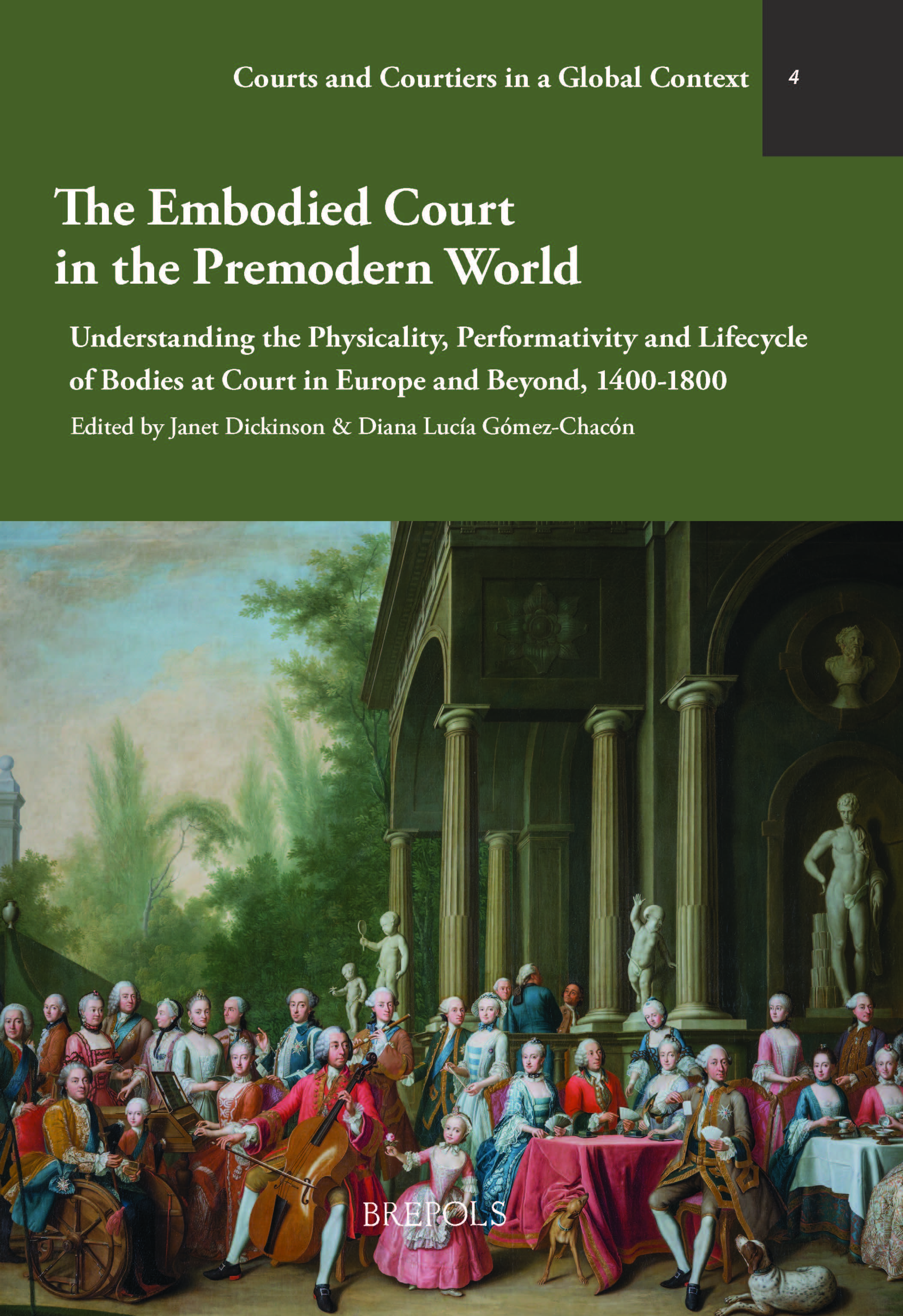 The Embodied Court in the Premodern World
Understanding the Physicality, Performativity and Lifecycle of Bodies at Court in Europe and Beyond, 1400-1800
Volume 4


