
The Roman Marble Sculptures from the Sanctuary of Pan at Caesarea Philippi/Panias (Israel)
by Elise A. Friedland

This is the first publication on a deposit of broken marble statues, discovered in 1992 during excavations of the Roman Sanctuary of Pan at Caesarea Philippi , in Panias, Israel.
“Friedland has done an excellent job of examining from all possible angles this difficult corpus of fragmentary statuary from Panias.” — Irene Bald Romano, University of Arizona, Bryn Mawr Classical Review (2013.03.41) This constitutes the first publication of a deposit of broken, marble statues, discovered in 1992 during excavations of the Roman Sanctuary of Pan at Caesarea Philippi (Banias, Israel). From 245 fragments, twenty-nine statues ranging from colossal to miniature and representing mainstream Graeco-Roman deities and mythological figures are reconstructed. Most date stylistically to the first through the late fourth centuries AD. A catalogue discusses each sculpture’s subject, comparanda, workshop associations, and date; three interpretive chapters present the artistic and material origins of the sculptures; patterns of patronage, chronology of sculptural dedication, and display; and sculptural evidence for the sanctuary’s pantheon.
Chapter 1 - The Sculptures as Idealplastik The Levant: A Viable Venue for Roman Marble Sculpture? History of the Scholarship on Roman Marble Sculpture from the Levant The Historical Context of the Sculptures The Archaeological Context of the Sculptures Findspot of the Sculptures Outline of Chapters: Origins
Patronage, Chronology, and Display
Subjects
and Function Chapter 2 - The Origins of the Sculptures: Marble Provenience, Technical and Stylistic Characteristics, Production, and Acquisition Marble Provenience: Isotopic Analyses of the Paneion Sculptures Sculptural Traditions of the Paneion Sculptures: Technical and Stylistic Analyses Production of the Paneion Sculptures: Evidence for Carving Marble Statuary in the Levant Ports of Entry into the Levant and Modes of Acquisition Conclusion: The Asiatic Origins of the Sculptures Chapter 3 - Patronage, Chronology, and Display: Patterns of Sculptural Dedication at the Sanctuary The Epigraphic Evidence Related to Sculptural Dedication The Patrons of the Sculptures The Chronology of Sculptural Dedication The Display of the Sculptures Patterns of Sculptural Dedication at the Sanctuary The Chronology of Sculptural Dedication at the Sanctuary in Light of the Imperial Marble Trade in the Levant Conclusion Chapter 4 - The Subjects of the Sculptures: The Graeco-Roman Pantheon of the Sanctuary of Pan The Sculptural Evidence for the Main Cult Deities of the Sanctuary The Sculptural Evidence for "Visiting Deities": The "Circle of Pan" The Sculptural Evidence for "Visiting Deities": Non-Pan-Related Figures The Sculptural Evidence for the Imperial Cult The Absence of Private Portraits at the Sanctuary Conclusion Chapter 5 - The Function and Meaning of the Sculptures: The Sanctuary of Pan as Graeco-Roman Cult Center in the Levant The Sculptures from the Sanctuary of Pan: Origins, Chronology, Patrons, Display, Subjects Local Context: Function and Meaning of the Sculptures Regional Context: A Graeco-Roman Sanctuary in a Semitic Milieu Roman Imperial Context: The Paneion Sculptures and "Romanization" Conclusion Catalogue of the Sculptures Appendices 1. Findspots for Sculptural Fragments Discovered in Dumps Associated with the Tripartite Hall 2. Findspots for Sculptural Fragments Discovered Throughout the Site 3. Small, Non-Restorable Sculptural Fragments Discovered at the Sanctuary of Pan, Caesarea Philippi/Panias 4. Bust of Antinous from Caesarea Philippi/Panias Bibliography Index Tables Illustrations
- By (author) Elise A. Friedland
Other Titles in this Series


 The Roman Aqaba Project Final Report, Volume 1
The Regional Environment and the Regional Survey
Volume 19

 Cyprus and the Balance of Empires
Art and Archaeology from Justinian I to the Coeur de Lion
Volume 20
 University of Michigan and University of Minnesota Excavations at Tel Kedesh I
The Hellenistic Archive and its Sealings
Volume 30

 Caesarea Maritima Excavations in the Old City 1989-2003 Conducted by the University of Maryland and the University of Haifa, Final Reports
Volume 1: The Temple Platform (Area TP), Neighboring Quarters (Area TPS and Z), and the Inner Harbor Quays (Area I): Hellenistic Evidence, King Herods Harbor Temple, Intermediate Occupation, and the Octagonal Harbor Church
Volume 27

 All Things Cypriot
Studies on Ancient Environment, Technology, and Society in Honor of Stuart Swiny
Volume 28


 The Archaeological Survey of the Desert Roads between Berenike and the Nile Valley
Expeditions by the University of Michigan and the University of Delaware to the Eastern Desert of Egypt, 1987-2015
Volume 26


Similar Books






 Connecting the Dots: Counting, Writing, and the Beginnings of Civilization
The Secret Lives of Clay Tokens: A Memoir
 Contesting Labeled Identities
The Sociology of Gentilics in Biblical and Northwest Semitic Literature

 Curating the Prehistoric Past
Studies on West Asian Archaeology and Beyond in Honour of Yoshihiro Nishiaki
 Drunk the Potion, No Whit Charmed
The Doctrine of Pure and Perfect Souls from Iamblichus to Damascius

 Epigraphic “Shades” from Hellenistic Thrace
Contextualizing Inscriptions in Greek from Thracian Tombs

 Epiphanies of the Divine in the Septuagint and the New Testament
Fifth International Symposium of the Corpus Judaeo-Hellenisticum Novi Testamenti (CJHNT), 14-17 May 2015, Nottingham


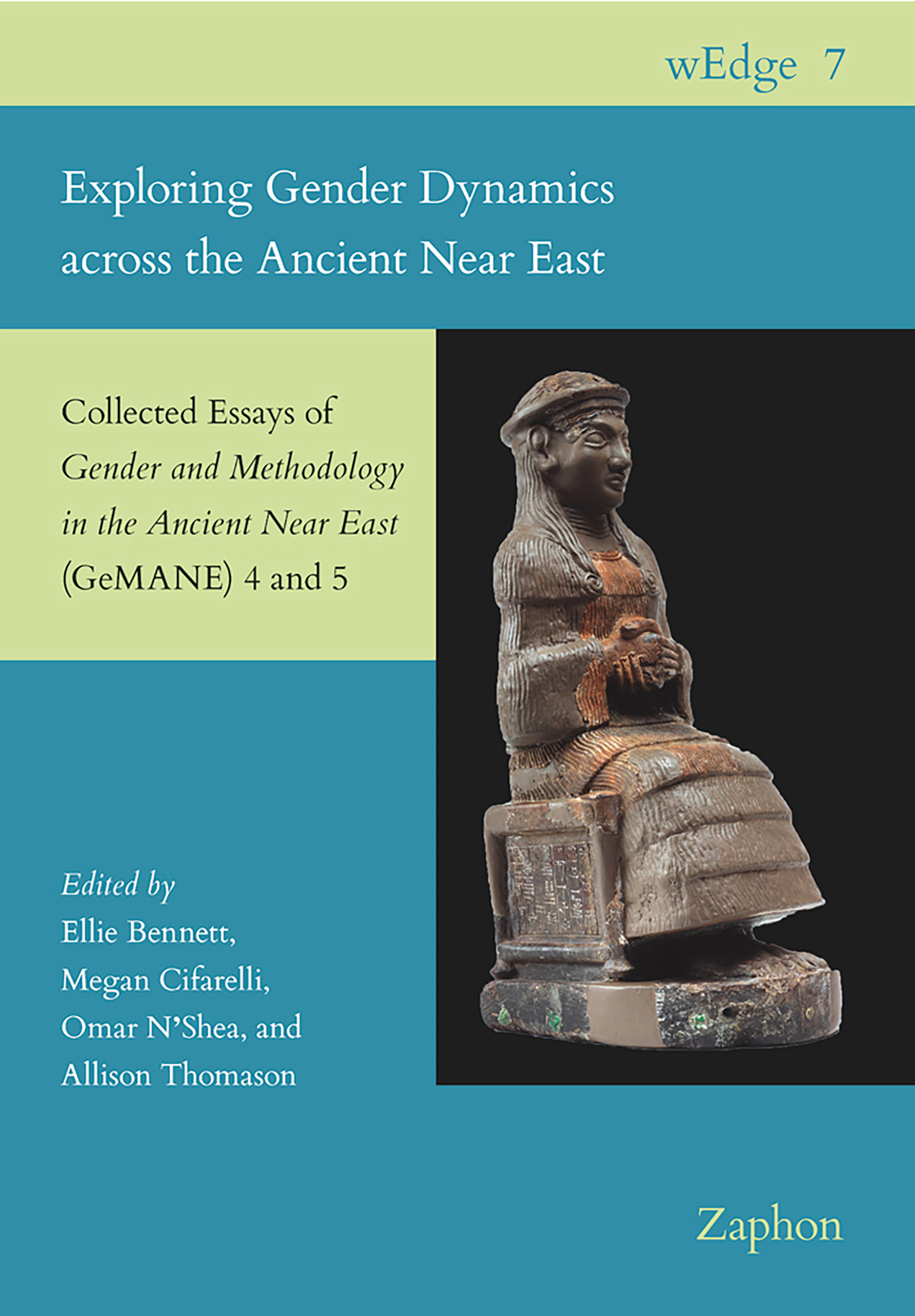 Exploring Gender Dynamics across the Ancient Near East
Collected Essays of Gender and Methodology in the Ancient Near East (GeMANE) 4 and 5
Volume 7


 Gold, Silver and Glass: Power Networks, Cultural Identities, Technology Transfers and Agency across the Old World (7th Century BC – 1st Century AD)
Proceedings of a Conference Held at the British Museum, 16–18 June 2023
 Ḫattušaš utnē išḫameški
Hittite and Other Ancient Near Eastern Studies Presented to Piotr Taracha on the Occasion of His 65th Birthday




 Kultur – Kontakt – Kultur
Beiträge anlässlich der 66. Rencontre Assyriologique Internationale in Frankfurt/Main und Mainz, 25.–29. Juli 2022
Volume 35
 Language and Power in the Roman Empire and Early India
Hierarchy, Ambiguity, and the Art of Reading the Signs in Cosmopolitan Cultures
 Late Antique villae in the Balkans (3rd–7th c. AD): Current Research Questions and Perspectives
HAEMUS Companion to the Late Antique Balkans 1
Volume 4
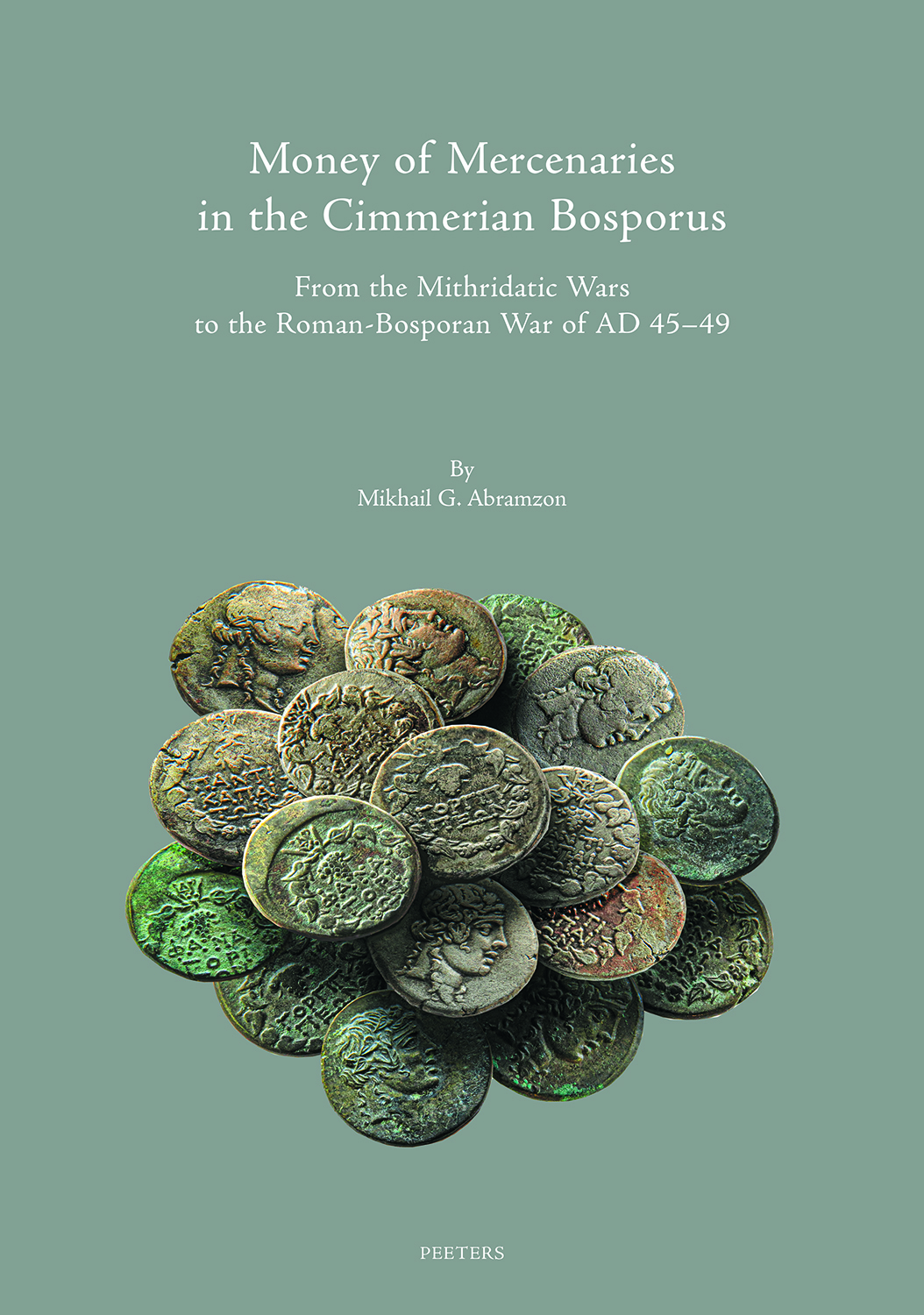 Money of Mercenaries in the Cimmerian Bosporus
From the Mithridatic Wars to the Roman-Bosporan War of AD 45-49
Volume 45

