
The Roman Aqaba Project Final Report, Volume 1
The Regional Environment and the Regional Survey
by S. Thomas Parker and Andrew M. Smith II

Hardback (Published)
(March 2014)
ISBN: 9780897570428
8.58 x 10.98 inches
Price: $20.00
In stock
This first of three projected volumes of the project’s final report focuses on the regional environment and the regional survey. Analysis of the environment employs a wide range of evidence to analyse the physiography, geology, soils, seismic history, climate and natural resources.
Recent scholarship on the Roman Empire has focused on the nature of its economy, including sites that served as nodules of commercial exchange. Aila was such a port city on the Red Sea on the southeastern frontier of the Empire, now within modern Aqaba in Jordan. The city of Aila emerged in the late 1st century BC within the Nabataean kingdom, a client state of the Roman Empire. The port continued to flourish into the early Islamic period, handling trade between the Empire and south Arabia, east Africa, and India. The Roman Aqaba Project aimed to reconstruct Aila’s economy diachronically. The project research design included a regional archaeological and environmental survey, excavation of the ancient city, and analysis of material remains relevant to Aila’s economy. Six field seasons were conducted between 1994 and 2002, providing a detailed picture of the economic history of the city. Excavation revealed major elements of the city, such as domestic quarters, industrial facilities, fortifications, and a monumental building interpreted as an early Christian church. This first of three projected volumes of the project’s final report focuses on the regional environment and the regional survey. Analysis of the environment employs a wide range of evidence to analyze the physiography, geology, soils, seismic history, climate, and natural resources. Various lines of evidence are employed to reconstruct the paleoclimate, which seems to have remained essentially hyperarid since early historical times. The report also includes results of an intensive archaeological survey of Wadi Araba, the shallow valley extending north from Aqaba to the Dead Sea. The project surveyed the southeastern the valley, recording 334 archaeological sites, most previously unrecorded. These of these were small and unobtrusive and ranged in date from Paleolithic to Late Islamic, but especially common were sites of the Chalcolithic/Early Bronze Age and the Early Roman/Nabataean periods, suggesting more intensive occupation in these periods. The volume also includes chapters on artifacts collected by the survey, including chipped stone tools, pottery, and Nabataean inscriptions. Aila apparently lacked any significant agricultural hinterland. The city was largely dependent on imports from more distant sources.
List of Illustrations List of Tables Abbreviations Chapter 1: Introduction
S. Thomas Parker Chapter 2: The Regional Environment
Tina M. Niemi Chapter 3: Fish, Dates, and Flying Machines:Ethno-History and Aerial Photography in the Investigation of Aqaba, Jordan
John D. Rucker & Tina M. Niemi Chapter 4: The Southeast Araba Archaeological Survey SAAS Catalog of Sites
Andrew M. Smith II Chapter 5: Analysis and Interpretation of Lithic Assemblages Recovered from Sites in the Southeast Araba Archaeological Survey
Donald O. Henry, Marni Cochrane, Cassandra Burns & Travis Taverna Chapter 6: The Pottery from the Survey
S. Thomas Parker Chapter 7: Semitic Inscriptions
David F. Graf Chapter 8: The Hinterland of Roman Aila
S. Thomas Parker & Andrew M. Smith II Index
- By (author) S. Thomas Parker
- By (author) Andrew M. Smith
Other Titles in this Series


 Cyprus and the Balance of Empires
Art and Archaeology from Justinian I to the Coeur de Lion
Volume 20


 University of Michigan and University of Minnesota Excavations at Tel Kedesh I
The Hellenistic Archive and its Sealings
Volume 30

 Caesarea Maritima Excavations in the Old City 1989-2003 Conducted by the University of Maryland and the University of Haifa, Final Reports
Volume 1: The Temple Platform (Area TP), Neighboring Quarters (Area TPS and Z), and the Inner Harbor Quays (Area I): Hellenistic Evidence, King Herods Harbor Temple, Intermediate Occupation, and the Octagonal Harbor Church
Volume 27
 The Roman Marble Sculptures from the Sanctuary of Pan at Caesarea Philippi/Panias (Israel)
Volume 17
 All Things Cypriot
Studies on Ancient Environment, Technology, and Society in Honor of Stuart Swiny
Volume 28


 The Archaeological Survey of the Desert Roads between Berenike and the Nile Valley
Expeditions by the University of Michigan and the University of Delaware to the Eastern Desert of Egypt, 1987-2015
Volume 26


Similar Books


 Caesar’s Visions and Impact on the Roman Empire
Revisiting the Archaeological and Historical Record of the 40s BC
Volume 2

 Connecting the Dots: Counting, Writing, and the Beginnings of Civilization
The Secret Lives of Clay Tokens: A Memoir


 Etruscan and Roman Hellenistic Anatomical ex votos
Reassessing Popular Religious Expressions in Central Italy
Volume 8


 Ḫattušaš utnē išḫameški
Hittite and Other Ancient Near Eastern Studies Presented to Piotr Taracha on the Occasion of His 65th Birthday


 Invisible Labour in Antiquity
Visualizing Obscure Work in the Ancient Mediterannean and West Asia
Volume 1
 Late Antique villae in the Balkans (3rd–7th c. AD): Current Research Questions and Perspectives
HAEMUS Companion to the Late Antique Balkans 1
Volume 4

 New Research on Old Collections in Southwest Asian Archaeology
Proceedings of the Workshop Held at the British Museum, London, 31 July – 2 August, 2023
 Old Aramaic Inscriptions and their Contexts
An Epigraphic, Archaeological, and Historical Synthesis
Volume 63


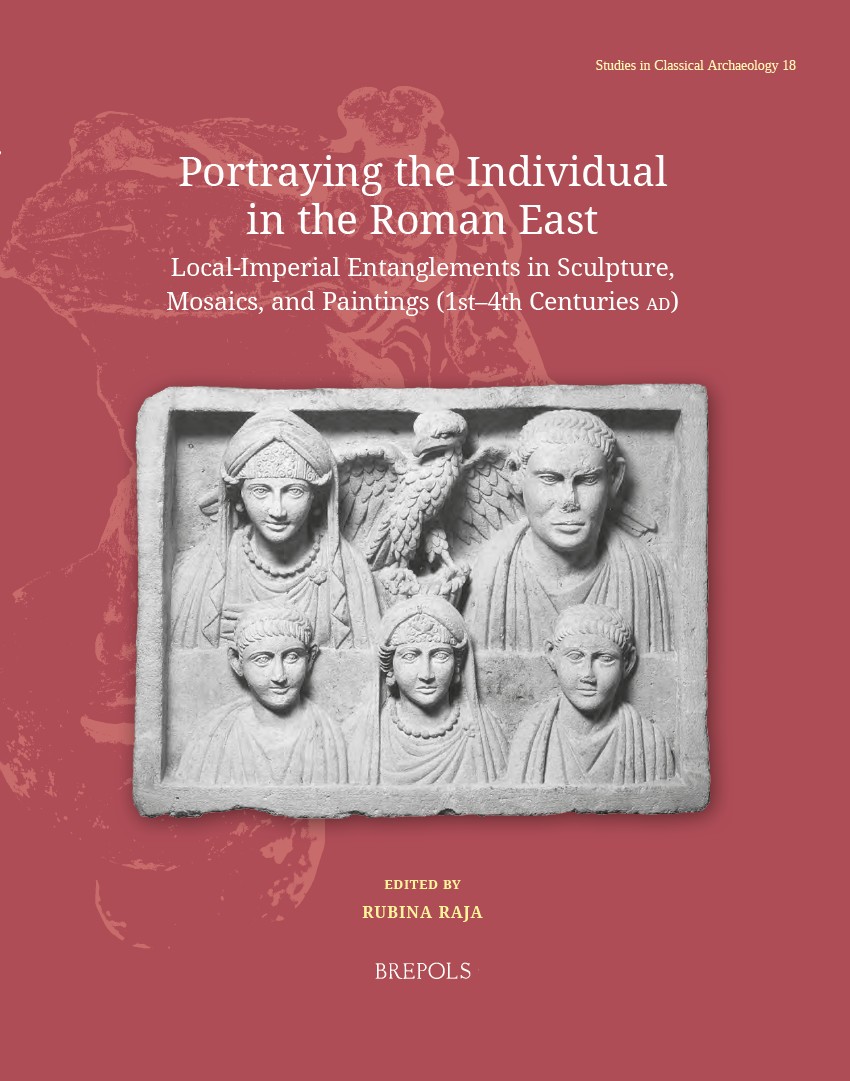 Portraying the Individual in the Roman East
Local–Imperial Entanglements in Sculpture, Mosaics, and Paintings (First–Fourth Centuries AD)
Volume 18
 Punning in Odd or Elegant Constructions in Jeremiah
The Convergence of Linguistics, Rhetoric, and Textuality in the Hebrew Text of Jeremiah

 Shame in the Worlds of the Hebrew Bible and Akkadian Texts
A Linguistic Study and Its Implications
Volume 33
 Small Worlds and Relational Agencies: Local Societies in Early Medieval Iberia
Pequeños mundos y Agencias relacionales: Sociedades locales altomedievales en la Península Ibérica
 Telling Contexts
Archaeological and Textual Studies in Honor of Elizabeth Bloch-Smith and Mark S. Smith
 The Body
Lived, Cultured, Adorned: Essays on Dress and the Body in the Bible and Ancient Near East in Honor of Nili S. Fox
 The Discourse of Rites
Shaping and Reshaping the (Counter-)Priestly Rituals Conducted Outside the Tabernacle

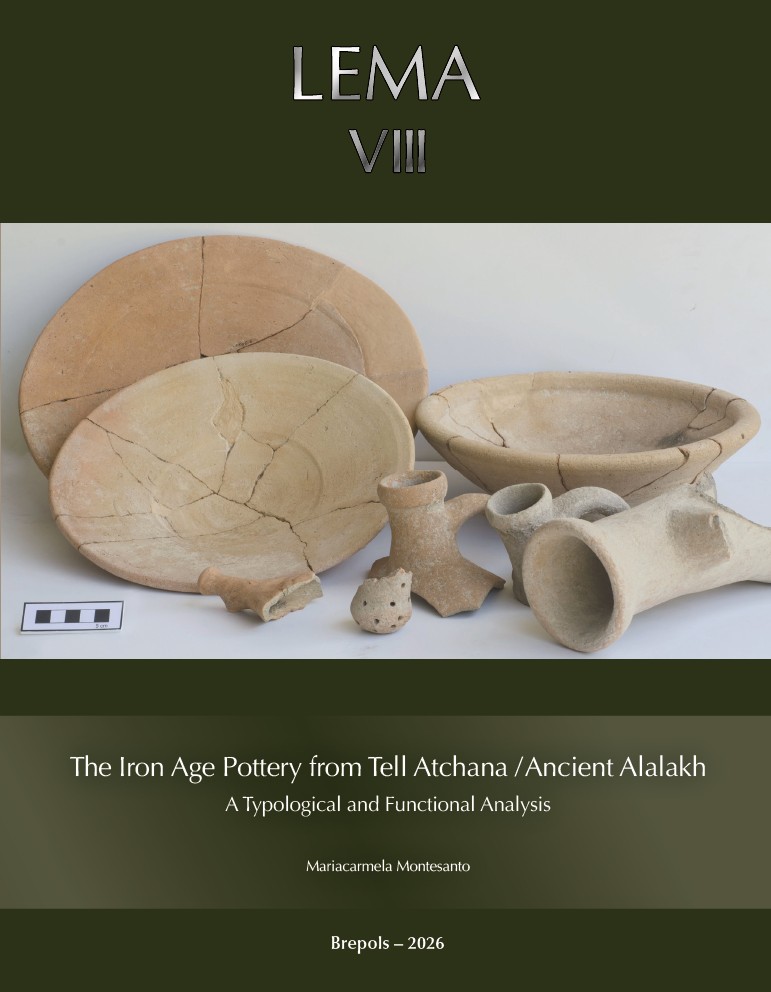 The Iron Age Pottery from Tell Atchana / Ancient Alalakh
A Typological and Functional Analysis
Volume 8



 Writing in the Church of the Nativity in Bethlehem
Inscription and Graffiti in a Multilingual and Multigraphic Perspective
Volume 45