The Pax Assyriaca: The Historical Evolution of Civilisations and Archaeology of Empires
By (author) Benjamin Toro

Paperback (Published)
(February 2022)
ISBN: 9781789690620
8.07 x 11.46 inches
Price: $55.00
In stock
This study of the evolutionary process of ancient civilisations stresses the complementarity between theoretical principles and the relevant historical and archaeological evidence. Taking its approach from World Systems Theory, it focuses on the origin, development and collapse of the first, ‘Near Eastern’, stage of the ‘Central Civi
This volume provides a study of the evolutionary process of ancient civilizations, stressing the comparison between theoretical principles and relevant historical and archaeological evidence. For this reason, the study focusses on the origin, development and collapse of the first stage of the ‘Central Civilization’, which was the result of the merger of two primeval civilizations, Mesopotamia and Egypt, during the ‘Near Eastern phase’ of this Central Civilisation. This merger seems to have been the result of the political expansion of an imperial entity coming from Mesopotamia under the aegis of the so-called Neo-Assyrian Empire from 1000 BC to 600 BC – better known as the Pax Assyriaca – although the process of full integration with Egypt seems to have been concluded, according to the archaeological records, only by the successor empires of Assyria circa 430 BC.
Introduction ;
The concept of civilisationThe historical evolution of civilisationsFirst aim of this study: the Central Civilisation and the Mesopotamian / Egyptian mergerSecond aim of this study: the methodological approach to the archaeological knowledge of the Ancient Near EastThird aim of this study: an approach to World Systems Theory and archaeology Chapter 1: The Historical Evolution of the Ancient Near East and the Rise of the Assyrian Phenomenon ;
The Ancient Near East as geopolitical entityThe Land of Mesopotamia as the Cradle of CivilisationThe Mesopotamian symbiosisThe Assyrian phenomenonThe Ancient Near East and the ‘catastrophe’ at the end of the Bronze Age Chapter 2: The Neo-Assyrian Empire and the Pax Assyriaca The archaeology of empires: theories, approaches and problemsThe meaning of ‘empire’ and its principal dimensionsThe Neo-Assyrian expansion and the peripheral polities under its dominationThe Neo-Assyrian hierarchy of its imperial coreThe Neo-Assyrian order and its global context Chapter 3: Ancient Egypt and the Pax Assyriaca General introduction to the Egyptian civilisationAncient Egypt, the Neo-Assyrian expansion and its peripheral polities of dominationAncient Egypt and the Neo-Assyrian imperial coreAncient Egypt and the Neo-Assyrian order in its global context Chapter 4: The Collapse of the Pax Assyriaca The collapse of the Neo-Assyrian EmpireAncient Egypt and the collapse of the Neo-Assyrian Empire Conclusion ;
Bibliography
Benjamin Toro has a BA in History from the University of Chile and an MA in Classical Studies from the Universidad Metropolitana de Ciencias de la Educación (UMCE). He has completed Postgraduate Studies at the Institute of Archaeology and the Rothberg School at the Hebrew University of Jerusalem. He has gained an MPhil in Cuneiform Studies and a DPhil in Ancient Near Eastern Studies from the University of Birmingham. He is Assistant Professor of Ancient Near Eastern History and First Civilizations at the University of Concepción.
- By (author) Benjamin Toro
'According to a (prevailing, but not undisputed) research opinion, the Assyrians succeeded in achieving an “Assyrian peace” for most of the 7th century BC (specifically ca. 700-620 BC) through their foreign and expansion policy, which created good economic opportunities in the controlled regions. The author aims to describe this evolutionary process in more detail by simultaneously drawing on historical sources and archaeological findings.' (Translated from German) - W. Zwickel (2024): Zeitschrift für die Alttestamentliche Wissenschaft
—
Similar Books





 Boğazköy Tablets in the Museum of Anatolian Civilizations (Bo 9032–Bo 9097)
Anadolu Medeniyetleri Müzesinde Bulunan Boğazköy Tabletleri (Bo 9032–Bo 9097)
Volume 4
 Connecting the Dots: Counting, Writing, and the Beginnings of Civilization
The Secret Lives of Clay Tokens: A Memoir

 Curating the Prehistoric Past
Studies on West Asian Archaeology and Beyond in Honour of Yoshihiro Nishiaki

 Exploring Gender Dynamics across the Ancient Near East
Collected Essays of Gender and Methodology in the Ancient Near East (GeMANE) 4 and 5
Volume 7


 Ḫattušaš utnē išḫameški
Hittite and Other Ancient Near Eastern Studies Presented to Piotr Taracha on the Occasion of His 65th Birthday




 Kultur – Kontakt – Kultur
Beiträge anlässlich der 66. Rencontre Assyriologique Internationale in Frankfurt/Main und Mainz, 25.–29. Juli 2022
Volume 35
 Money of Mercenaries in the Cimmerian Bosporus
From the Mithridatic Wars to the Roman-Bosporan War of AD 45-49
Volume 45

 New Research on Old Collections in Southwest Asian Archaeology
Proceedings of the Workshop Held at the British Museum, London, 31 July – 2 August, 2023
 Old Aramaic Inscriptions and their Contexts
An Epigraphic, Archaeological, and Historical Synthesis
Volume 63

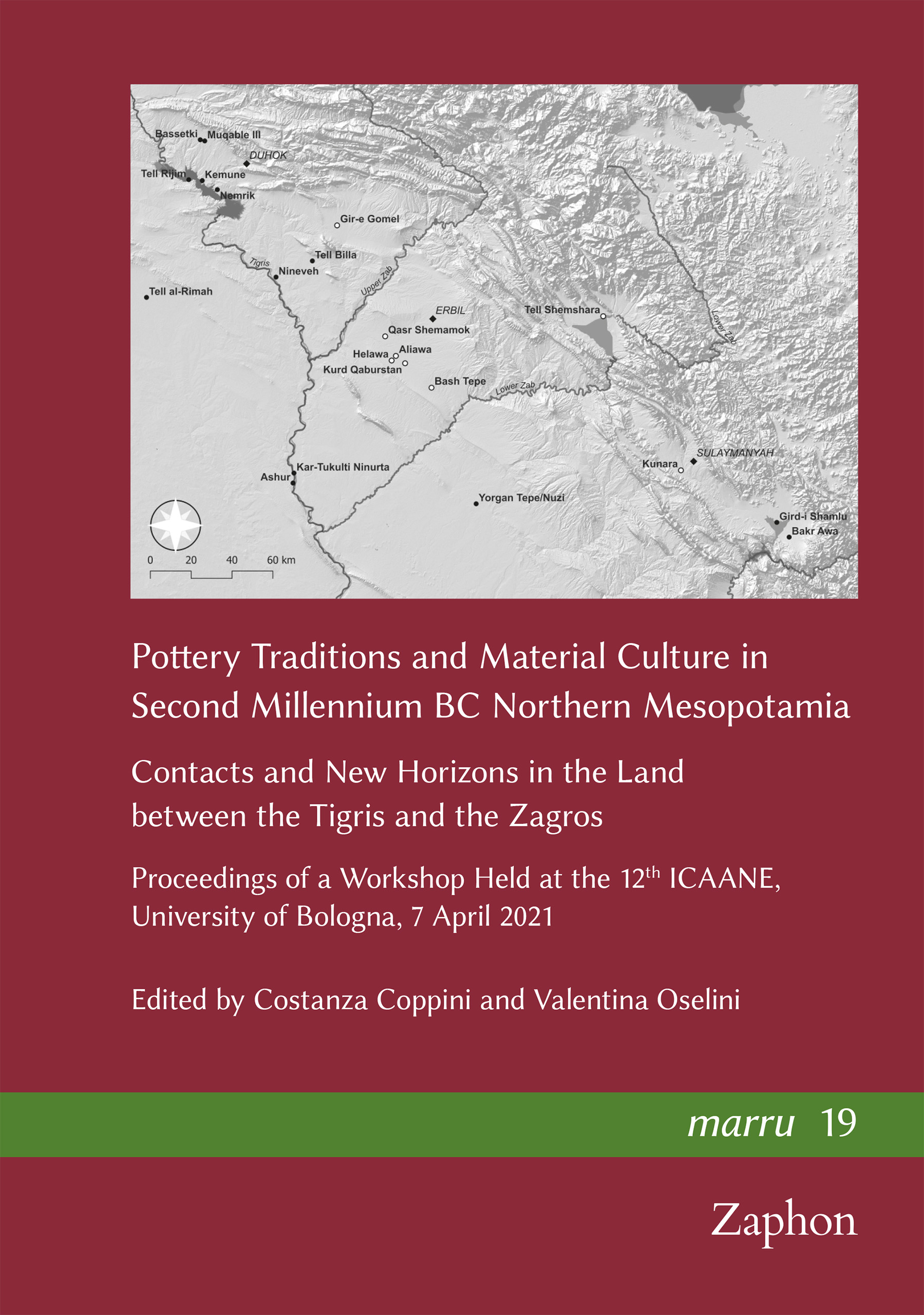 Pottery Traditions and Material Culture in Second Millennium BC Northern Mesopotamia
Contacts and New Horizons in the Land between the Tigris and the Zagros. Proceedings of a Workshop Held at the 12th ICAANE, University of Bologna, 7 April 2021
Volume 19
 Punning in Odd or Elegant Constructions in Jeremiah
The Convergence of Linguistics, Rhetoric, and Textuality in the Hebrew Text of Jeremiah

 Sertorius, the Exiles of the Sullan Regime and the Provinces of the Empire
Legitimacy, Morality and Imperial Discourse in the 70s BCE
 Shame in the Worlds of the Hebrew Bible and Akkadian Texts
A Linguistic Study and Its Implications
Volume 33

 Telling Contexts
Archaeological and Textual Studies in Honor of Elizabeth Bloch-Smith and Mark S. Smith
 The Body
Lived, Cultured, Adorned: Essays on Dress and the Body in the Bible and Ancient Near East in Honor of Nili S. Fox
 The Discourse of Rites
Shaping and Reshaping the (Counter-)Priestly Rituals Conducted Outside the Tabernacle
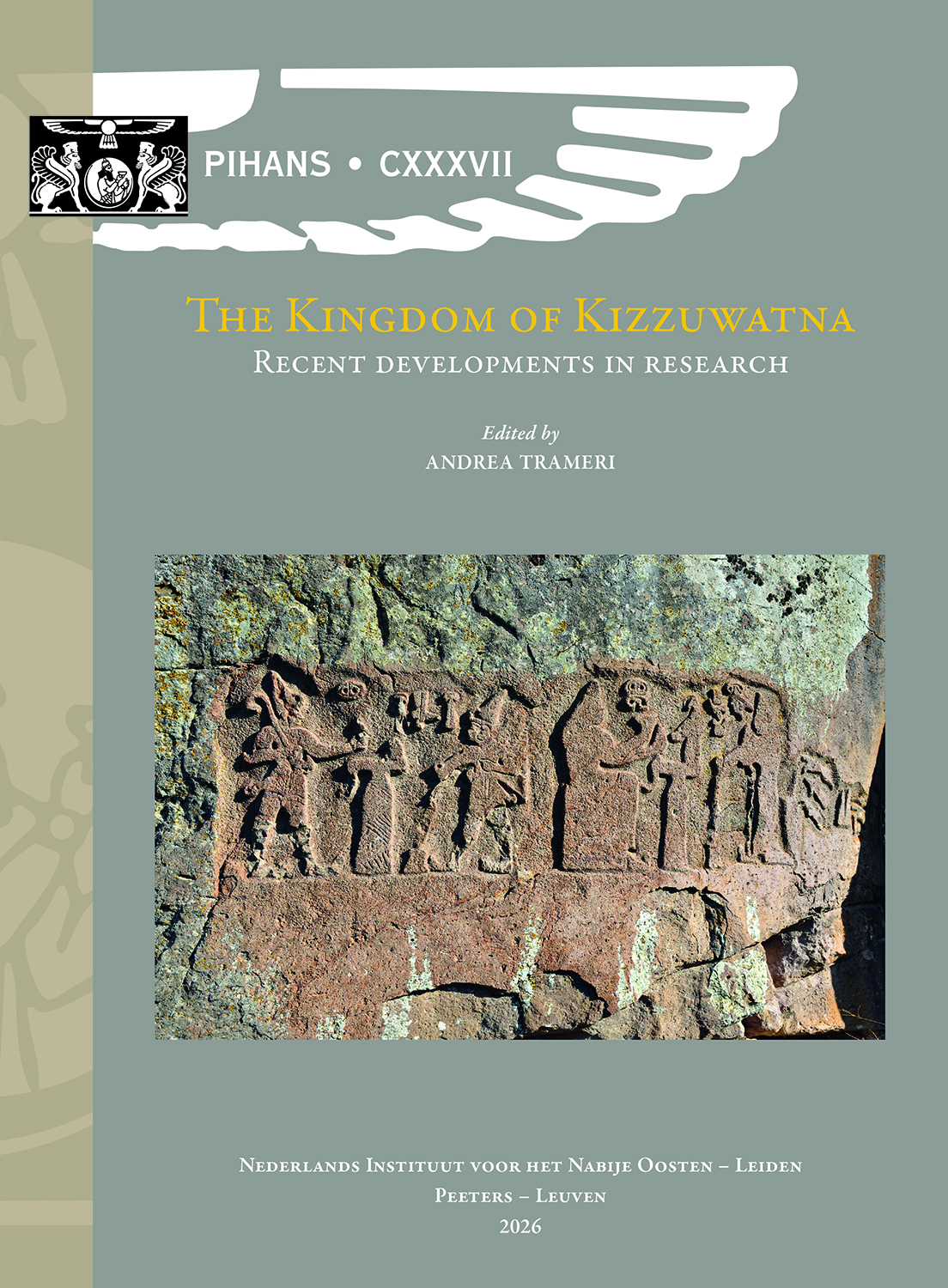 The Kingdom of Kizzuwatna: Recent Developments in Research
Proceedings of the Third NINO Postdoctoral Research Fellow Annual Conference, Leiden, 23rd-25th March 2023
Volume 137