
The Mamluk Sultanate from the Perspective of Regional and World History
Economic, Social and Cultural Development in an Era of Increasing International Interaction and Competition
Contributions by Stephan Conermann Contributions by Yehoshua Frenkel Contributions by Albrecht Fuess Contributions by Jo Van Steenbergen Contributions by Robert Irwin Contributions by Nimrod Luz Contributions by Koby Yosef Contributions by Georg Christ Contributions by Bethany Joelle Walker Contributions by Amar Baadj Contributions by Nikolas Jaspert Contributions by Marie Favereau Contributions by Michal Biran Contributions by Cihan Yüksel Muslu Contributions by Reuven Amitai Contributions by John Meloy Contributions by Annick Regourd Contributions by Fiona Handley Edited by Reuven Amitai Edited by Stephan Conermann

Hardback (Published)
(June 2019)
ISBN: 9783847104117
6.3 x 9.33 inches
Price: $113.00
In stock
The Mamluk Sultanate represents an extremely interesting case study to examine social, economic and cultural developments in the transition into the rapidly changing modern world. On the own hand, it is the heir of a political and military tradition that goes back hundreds of years, and brought this to a high pitch that enabled astounding victories over serious external threats. On the other hand it was increasingly confronted with “modern” problems that would necessitate fundament changes in its structure and content.
The Mamluk Sultanate represents an extremely interesting case study to examine social, economic and cultural developments in the transition into the rapidly changing modern world. On the one hand, it is the heir of a political and military tradition that goes back hundreds of years, and brought this to a high pitch that enabled astounding victories over serious external threats. On the other hand, as time went on, it was increasingly confronted with “modern” problems that would necessitate fundamental changes in its structure and content. The Mamluk period was one of great religious and social change, and in many ways the modern demographic map was established at this time. This volume will show that the situation of the Mamluk Sultanate, was far from that of decadence, and until the end it was a vibrant society (although not without tensions and increasing problems) that did its best to adapt and compete in a rapidly changing world.
- Contributions by Stephan Conermann
- Contributions by Yehoshua Frenkel
- Contributions by Albrecht Fuess
- Contributions by Jo Van Steenbergen
- Contributions by Robert Irwin
- Contributions by Nimrod Luz
- Contributions by Koby Yosef
- Contributions by Georg Christ
- Contributions by Bethany Joelle Walker
- Contributions by Amar Baadj
- Contributions by Nikolas Jaspert
- Contributions by Marie Favereau
- Contributions by Michal Biran
- Contributions by Cihan Yüksel Muslu
- Contributions by Reuven Amitai
- Contributions by John Meloy
- Contributions by Annick Regourd
- Contributions by Fiona Handley
- Edited by Reuven Amitai
- Edited by Stephan Conermann
Similar Books
 A Collaborative Tapestry in Honour of Shirley Ann Brown / Une fresque brodée en l’honneur de Shirley Ann Brown
The Bayeux Tapestry Seen by her Colleagues and Friends / La Tapisserie de Bayeux vue par ses collègues et amis
 Behind the Scenes of Medieval Roofs
An Overview of the Roofing Systems of Italian Churches
Volume 90


 Cities through Time
Glimpses into Urbanity and Community in Mediaeval to Modern West Asia and Egypt
Volume 1

 Cuneiform Artefacts from Archaeological Contexts: New Research on Ancient Iraq
Proceedings of a Conference Held at the Bavarian Academy of Sciences and Humanities, July 4–5, 2024
Volume 2




 Global Gulf
Geo-Economic, Geo-Political, and Geo-Technological Transformation in Saudi Arabia, the United Arab Emirates, and Qatar


 Innovation and Medieval Communities
The Circulation of Ideas and Practices in and out of the Town (1200-1500)
Volume 63
 Ismail Hakki Bursevi’s translation of and commentary on Fusus al-Hikam By Muhyiddin Ibn ‘Arabi
Volumes 1-4
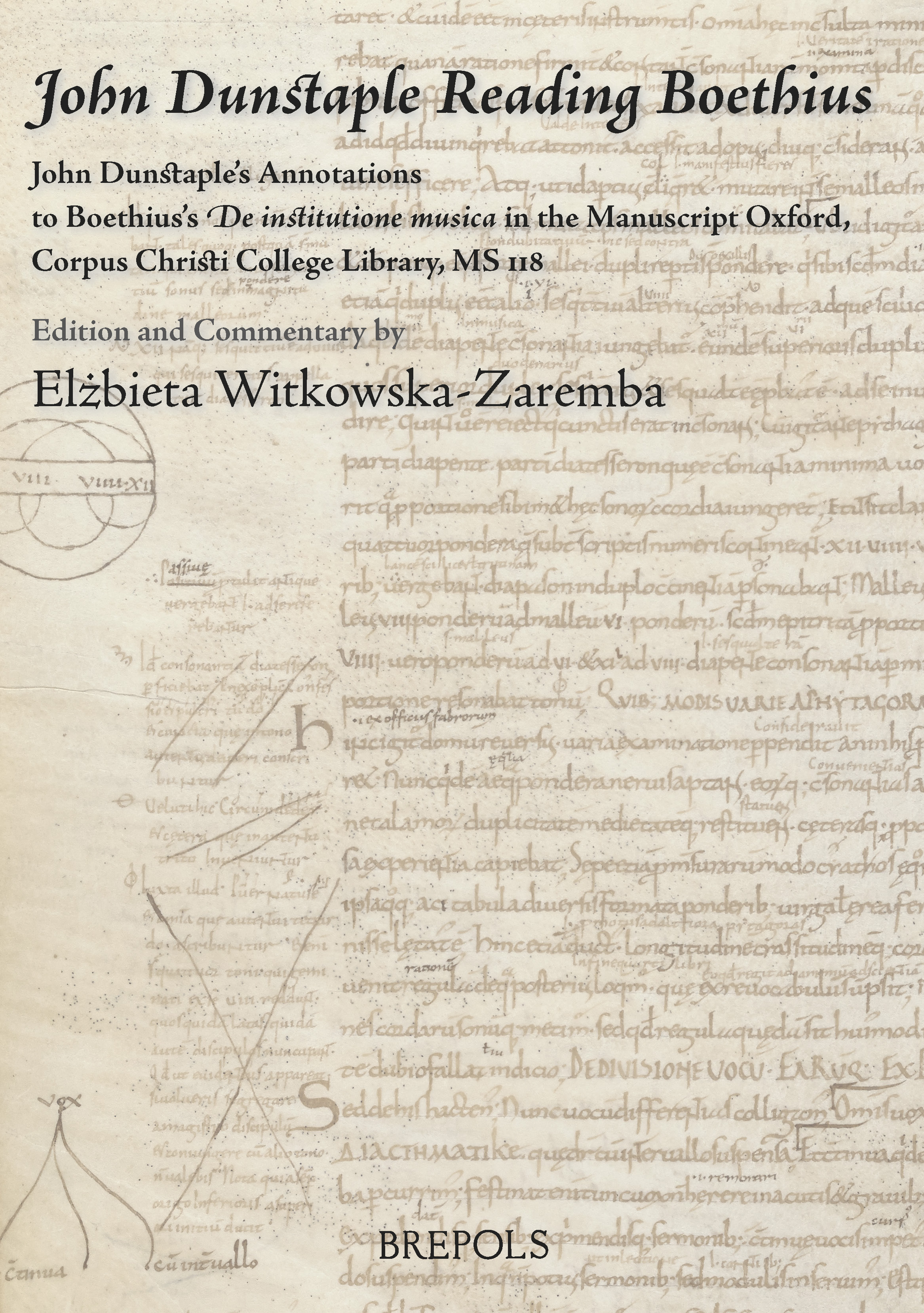 John Dunstaple Reading Boethius
John Dunstaple’s Annotations to Boethius’s “De institutione musica” in the Manuscript Oxford, Corpus Christi College Library, MS 118
 Linguistic and Cultural Dynamics in a Frontier Society
New Perspectives on Northeastern Bavaria and Western Bohemia in the Early Middle Ages
Volume 9
 Medieval Debates on Foreknowledge: Future Contingents, Prophecy, and Divination
Acts of the XXVII Annual Colloquium of the SIEPM, Trento 12-15 September 2023
Volume 31
 Medieval Yeghegis, Armenia
History, Archaeology, Society. Local Multiplicities and Global Connections of a Rural Centre on the Silk Road(s)
 Monastic Manuscripts from the Eastern Mediterranean (Sinai, Jerusalem, Antioch)
Production, Use, and Contexts


 Power and Women in Southeast and Central Europe in Late Medieval and Early Modern Period (1300-1600)
Volume 10
 Qatar’s Societal Security
Towards the Inclusive National Concept of ‘Baladna’ Identity, Migration and External Threats Since 2017


 The Anglo-Norman Bible’s Books of Kings, a Critical Edition
(BL Royal 1 C III, fols 234r-274v)
Volume 37