
The End of Postwar
Essays on the Work of Ian Buruma
edited by M. Boone, J. Tollebeek and G. Deneckere
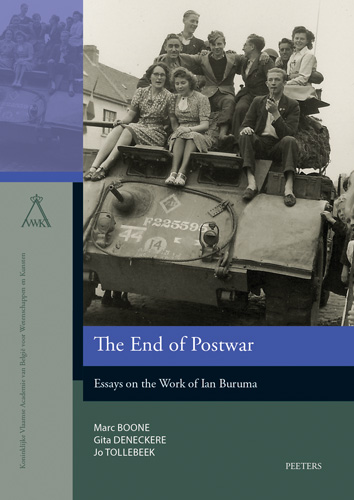
In the autumn of 2015 the Dutch-English publicist Ian Buruma gave direction to the thinker’s programme ‘The End of Postwar’, organised by the Flemish Royal Academy. The programme was triggered by Buruma’s publication Year zero: a history of 1945, which focuses on the coming into being of a new global order in the aftermath of World War Two. The birth of a welfare state and the European unification process were its two most remarkable achievements. Both, however, have been under constant pressure since the beginning of the 21st century. Two workshops and a two-day symposium brought together thinkers from the scientific, cultural and political worlds in order to reflect on the central theme of ‘The end of postwar: which future for Europe?’. This collection of essays reflects the debates, which dealt with issues such as the re-invention of the welfare state, the breach of the postwar consensus, the durability of humanism and the role of a United Europe as an answer to history.
In the autumn of 2015 the Dutch-English publicist Ian Buruma gave direction to the thinker’s programme ‘The End of Postwar’, organised by the Flemish Royal Academy. The programme was triggered by Buruma’s publication Year zero: a history of 1945, which focuses on the coming into being of a new global order in the aftermath of World War Two. The birth of a welfare state and the European unification process were its two most remarkable achievements. Both, however, have been under constant pressure since the beginning of the 21st century. Two workshops and a two-day symposium brought together thinkers from the scientific, cultural and political worlds in order to reflect on the central theme of ‘The end of postwar: which future for Europe?’. This collection of essays reflects the debates, which dealt with issues such as the re-invention of the welfare state, the breach of the postwar consensus, the durability of humanism and the role of a United Europe as an answer to history.
- Edited by M Boone
- Edited by G Deneckere
- Edited by J Tollebeek
Other Titles in this Series
 Affluence and Inequality in the Low Countries
The City of 's-Hertogenbosch in the Long Sixteenth Century, 1500-1650
Volume 28
 Regime Change at a Distance
Austria and the Southern Netherlands Following the War of the Spanish Succession (1716-1725)
Volume 29
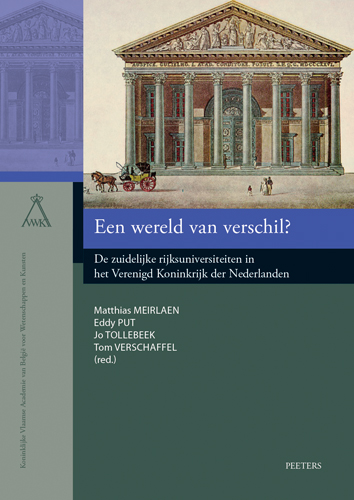 Een wereld van verschil?
De zuidelijke rijksuniversiteiten in het Verenigd Koninkrijk der Nederlanden
Volume 36
 ‘Gesamtkunstwerk’
de ontwikkeling van een idee: Duitse muziekesthetica tussen Verlichting en Romantiek (1750-1850)
Volume 31
Similar Books


 As Messianism Turns to Heresy
The Regenstein Chair Lectures On Lurianic Kabbalah and Shabbatai Tzevi at Hebrew Union College - Cincinnati

 Beyond Sovereign Courts
Agents and Practices in Early Modern Spanish and Habsburg Diplomacy
Volume 3





 Dis/United States of Vulnerability
Literary and Cultural Transgressions in U.S. Poetry Since the 1960s
Volume 330


 European Drama and Performance Studies
Dramatisations politiques. Théâtre, politique et idéologie au XIXe siècle (1806-1914)
Volume 27

 Food Security under Armed Conflict
Global Knowledge Landscape and Public Attention to Social, Economic, and Humanitarian Dimensions


 Innovationes Lovanienses: Arts, Law and Theology at the University of Louvain (1425–1797)
Studium Lovaniense: Learning across Borders, 2
Volume 18


 Modernization, Crises, Cultural Revolutions
Yugoslavia’s 1960s and 1970s through the amateur film lens
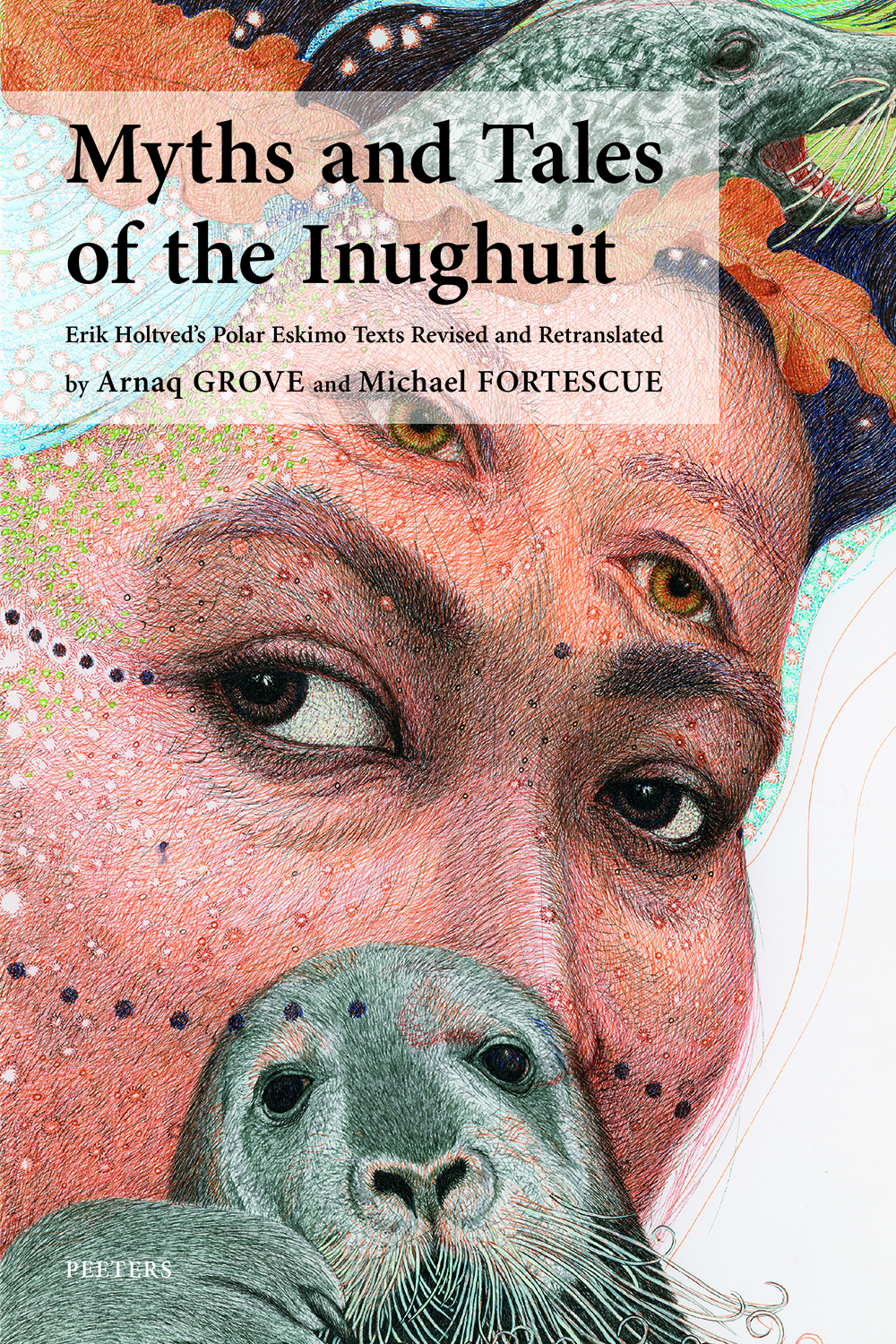 Myths and Tales of the Inughuit
Erik Holtved's Polar Eskimo Texts Revised and Re-translated into Danish and English
Volume 475, 12


 Students, Scholars and Their Books at the University of Louvain (1425-1797)
Studium Lovaniense: Learning across Borders, 1
Volume 17