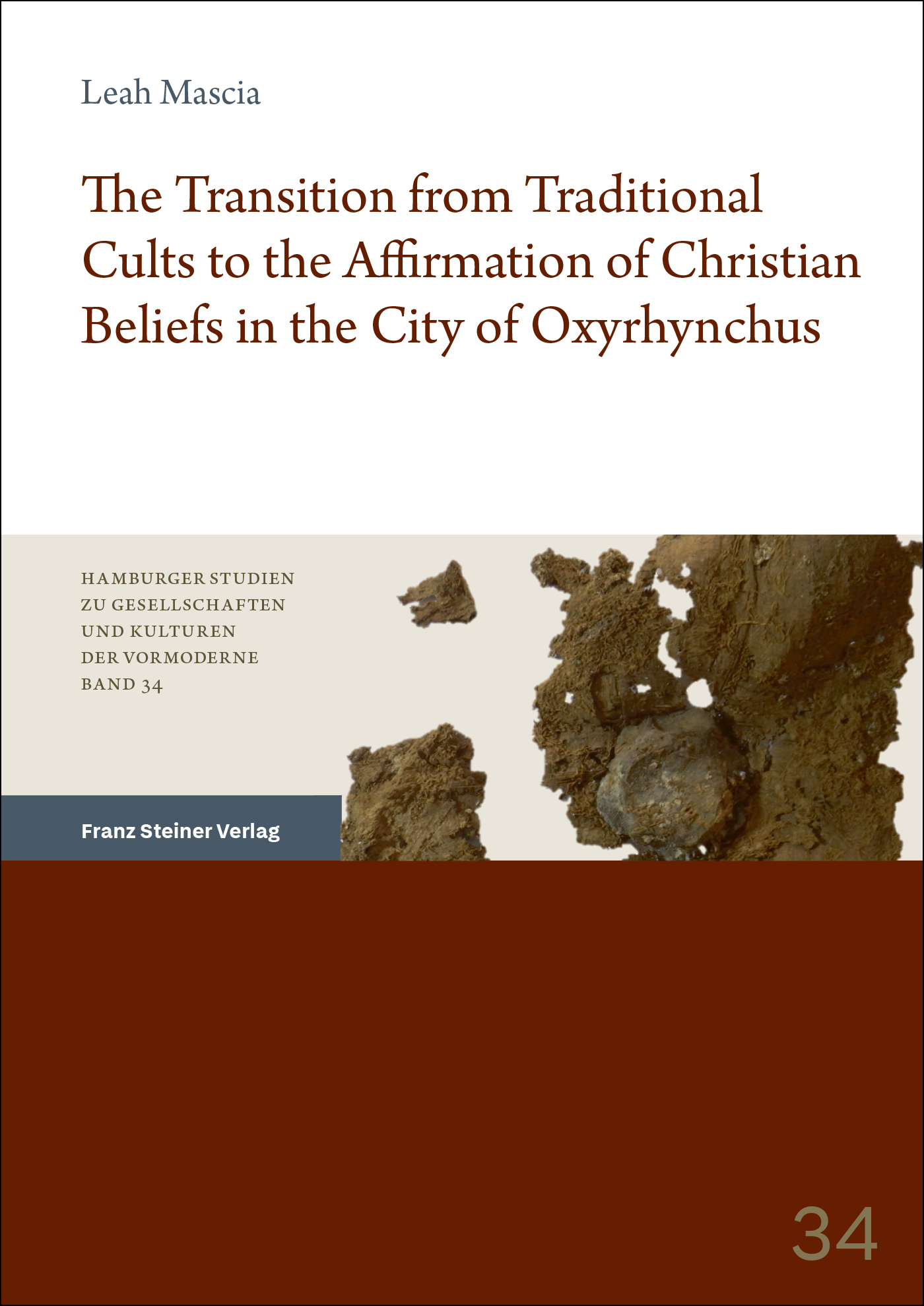
The Dinka Settlement Complex 2018
Continuing the excavations at Qalat-i Dinka and the Lower Town
edited by Karen Radner, F. Janoscha Kreppner and Andrea Squitieri

The good state of preservation and the excellent archaeological accessibility directly below the modern surface make the 60 hectare large Dinka Settlement Complex (DSC, including Gird-i Bazar and Qalat-i Dinka) in the Bora Plain a key site for the investigation of the Iron Age in the Zagros mountains of northeastern Iraq and northwestern Iran. In 2018, the Peshdar Plain Project’s excavations and its continuing geophysical survey and palaeo-environmental investigations have further improved our understanding of the extended Iron Age settlement, and also brought to light new information on other periods of the Bora Plain’s long history, both much older (Late Chalcolithic 1-2) and much younger (Middle Islamic Period) than the Iron Age occupation on which our research continues to focus. The present work offers a comprehensive report of the 2018 fieldwork activities, which included excavations, a programme of environmental studies (geology, geomorphology, soil analysis) and the continuation of the geophysical survey. Excavations took place in three parts of the settlement: in the Upper Town on the western slope of Qalat-i Dinka, in a new area of the Lower Town (“Dinka Lower Town operation 3” = DLT3), and in Gird-i Bazar where anthropologist Kathleen Downey exposed and interpreted more of the accumulation of human skeletons in the well of Room 49 in Building I (Grave 71). The excavations on Qalat-i Dinka revealed on the one hand the monumental Building P, occupied by elite inhabitants as suggested by the high quality and value of the finds encountered there (including ivory fittings, beads of carnelian and Egyptian Blue and other jewellery as well as nine identical iron arrowheads), and on the other hand an elaborate fortification that once consisted of a high wooden palisade (of which the base survives) and a glacis that protected its more sensitive stretches. Radiocarbon dates and the pottery finds make it clear that this part of the settlement was occupied during the same broad Iron Age horizon as the areas excavated in the Lower Town of the settlement. DLT3 was chosen for excavation because radiocarbon analysis of a charcoal sample recovered in 2015 from the section of the geoarchaeological trench GA42 had produced a probable date range of 830-789 calBC (95.4 % probability). Our work there aimed at investigating continuities and discontinuities that might have resulted from the annexation of the Bora Plain and the DSC into the Assyrian Empire and the establishment of the Border March of the Palace Herald in the second half of the 9th century BC. In addition to evidence for two distinct building phases during DSC’s Iron Age main occupation period, this area yielded good contexts dating to the Late Chalcolithic period, including a pottery kiln. The volume presents the pottery and the small finds from the 2018 excavation areas. Among the Iron Age materials from Qalat-i Dinka, Egyptian faience covered in the synthetic pigment Naples Yellow was identified by archaeometric analysis while a broken brick from DLT3 can be assigned to the Neo-Assyrian period because of a title preserved in its fragmentary cuneiform inscription, most likely to Shalmaneser III (r. 859-824 BC), the founder of the Border March of the Palace Herald. The volume also includes analyses of some materials previously excavated at Gird-i Bazar. Tina Greenfield presents results of the identification and quantitative analyses of the animal bones recovered in 2015 and 2016 while Patrick Arneitz and Roman Leonhardt offer an archaeomagnetic study of the pottery kiln first identified in 2015.
- Edited by F. Janoscha Kreppner
- Edited by Karen Radner
- Edited by Andrea Squitieri
Other Titles in this Series
 The Dinka Settlement Complex 2017
The Final Season at Gird-i Bazar and First Work in the Lower Town
Volume 3
 Exploring the Neo-Assyrian Frontier with Western Iran
The 2015 Season at Gird-i Bazar and Qalat-i Dinka
Volume 1

Similar Books





 Boğazköy Tablets in the Museum of Anatolian Civilizations (Bo 9032–Bo 9097)
Anadolu Medeniyetleri Müzesinde Bulunan Boğazköy Tabletleri (Bo 9032–Bo 9097)
Volume 4
 Connecting the Dots: Counting, Writing, and the Beginnings of Civilization
The Secret Lives of Clay Tokens: A Memoir

 Curating the Prehistoric Past
Studies on West Asian Archaeology and Beyond in Honour of Yoshihiro Nishiaki

 Exploring Gender Dynamics across the Ancient Near East
Collected Essays of Gender and Methodology in the Ancient Near East (GeMANE) 4 and 5
Volume 7


 Ḫattušaš utnē išḫameški
Hittite and Other Ancient Near Eastern Studies Presented to Piotr Taracha on the Occasion of His 65th Birthday




 Kultur – Kontakt – Kultur
Beiträge anlässlich der 66. Rencontre Assyriologique Internationale in Frankfurt/Main und Mainz, 25.–29. Juli 2022
Volume 35
 Money of Mercenaries in the Cimmerian Bosporus
From the Mithridatic Wars to the Roman-Bosporan War of AD 45-49
Volume 45

 New Research on Old Collections in Southwest Asian Archaeology
Proceedings of the Workshop Held at the British Museum, London, 31 July – 2 August, 2023
 Old Aramaic Inscriptions and their Contexts
An Epigraphic, Archaeological, and Historical Synthesis
Volume 63

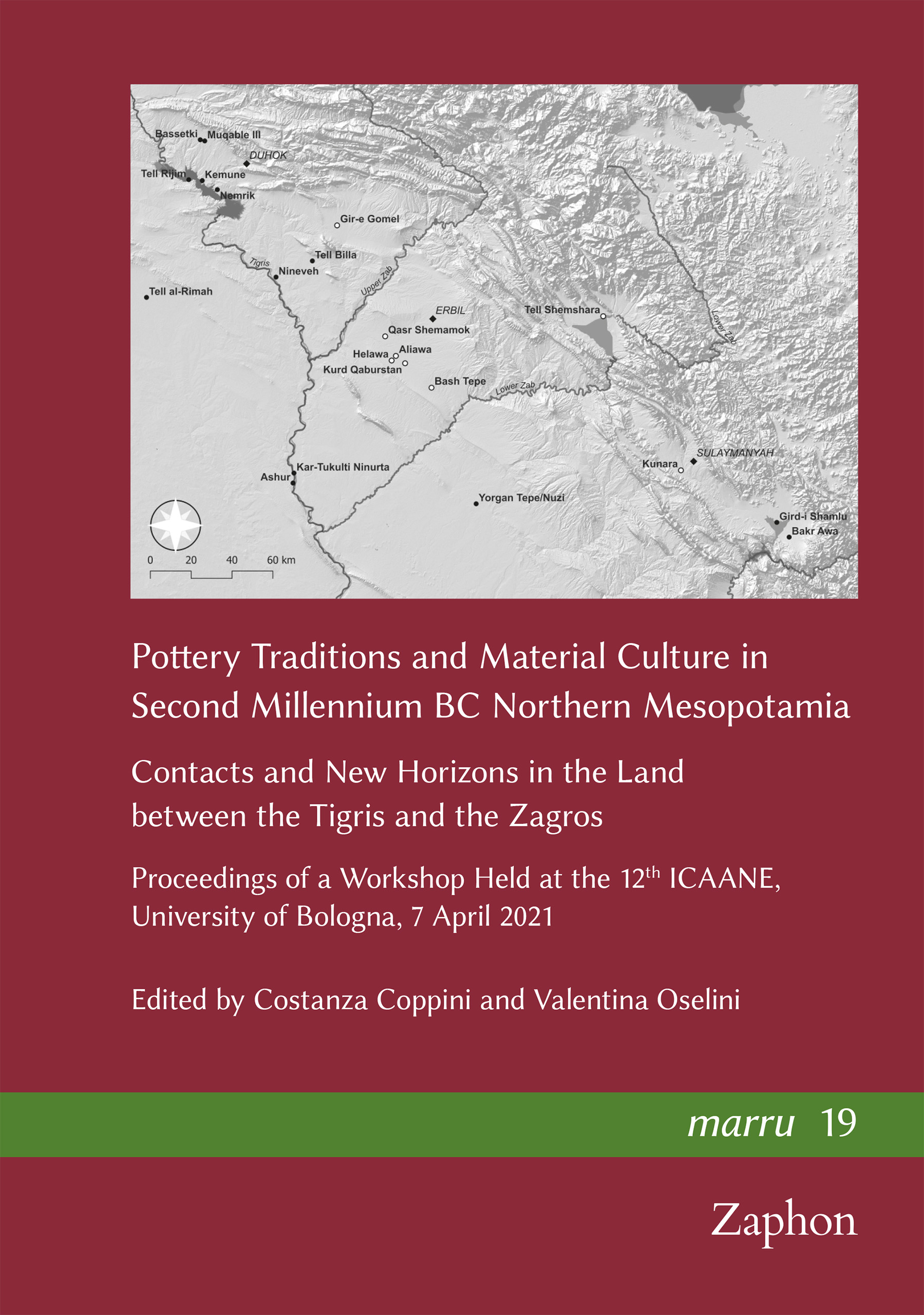 Pottery Traditions and Material Culture in Second Millennium BC Northern Mesopotamia
Contacts and New Horizons in the Land between the Tigris and the Zagros. Proceedings of a Workshop Held at the 12th ICAANE, University of Bologna, 7 April 2021
Volume 19
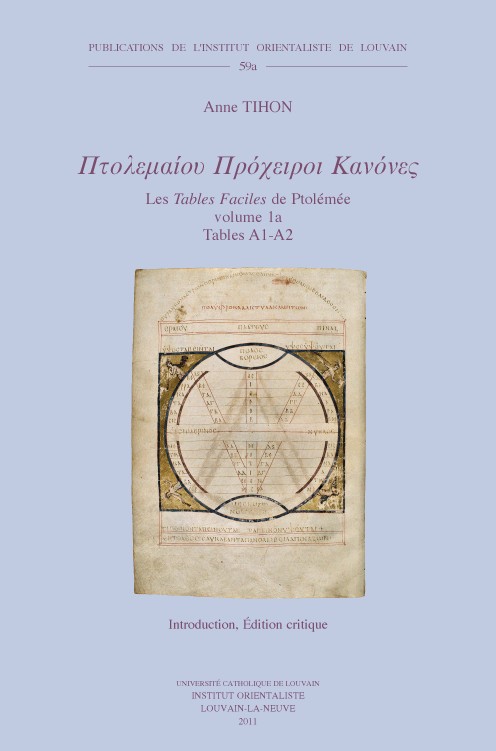
 Punning in Odd or Elegant Constructions in Jeremiah
The Convergence of Linguistics, Rhetoric, and Textuality in the Hebrew Text of Jeremiah

 Sertorius, the Exiles of the Sullan Regime and the Provinces of the Empire
Legitimacy, Morality and Imperial Discourse in the 70s BCE
 Shame in the Worlds of the Hebrew Bible and Akkadian Texts
A Linguistic Study and Its Implications
Volume 33

 Telling Contexts
Archaeological and Textual Studies in Honor of Elizabeth Bloch-Smith and Mark S. Smith
 The Body
Lived, Cultured, Adorned: Essays on Dress and the Body in the Bible and Ancient Near East in Honor of Nili S. Fox
 The Discourse of Rites
Shaping and Reshaping the (Counter-)Priestly Rituals Conducted Outside the Tabernacle
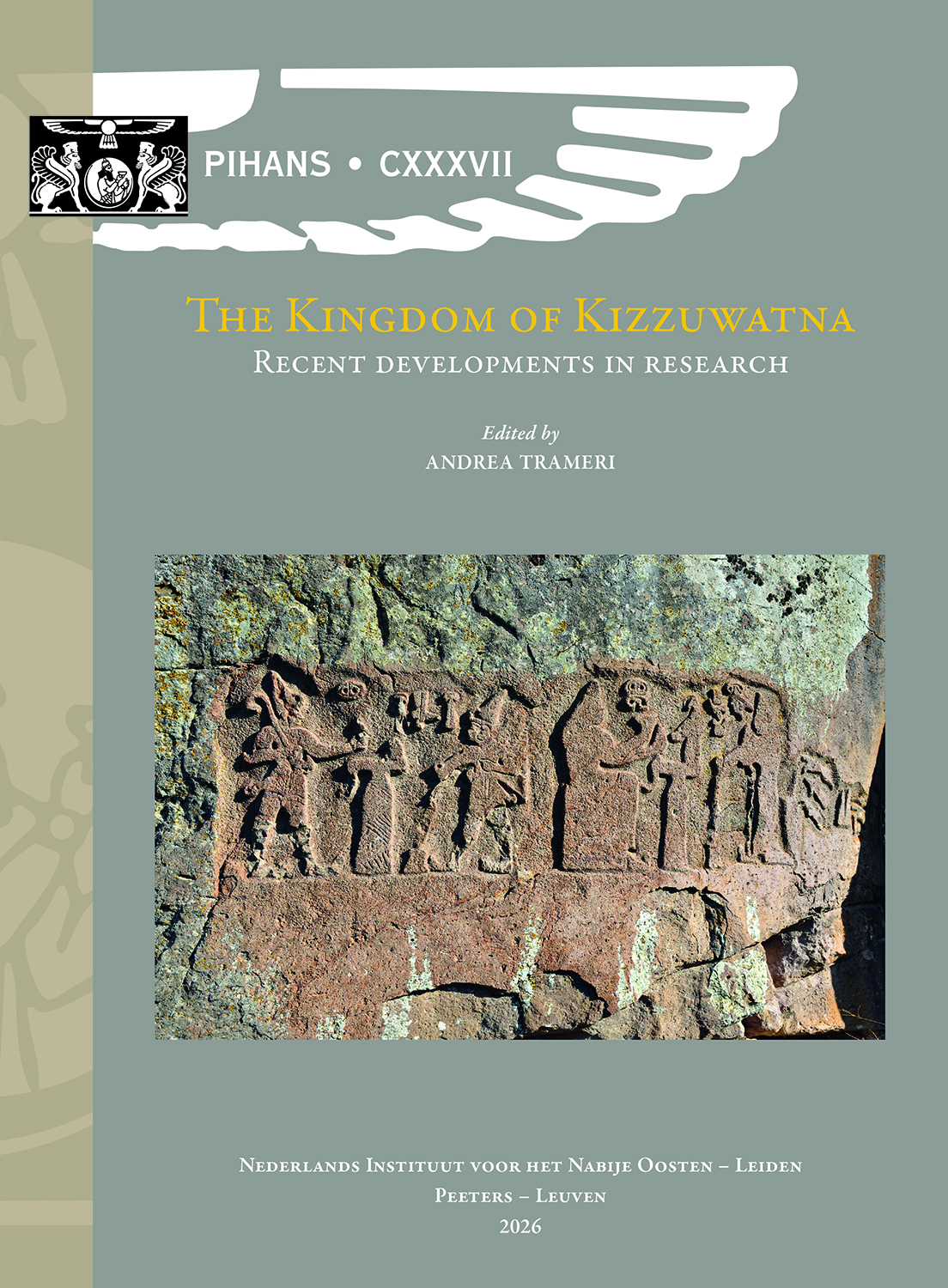 The Kingdom of Kizzuwatna: Recent Developments in Research
Proceedings of the Third NINO Postdoctoral Research Fellow Annual Conference, Leiden, 23rd-25th March 2023
Volume 137