
The Depiction of Character in the Chronographia of Michael Psellos
By (author) Frederick Lauritzen
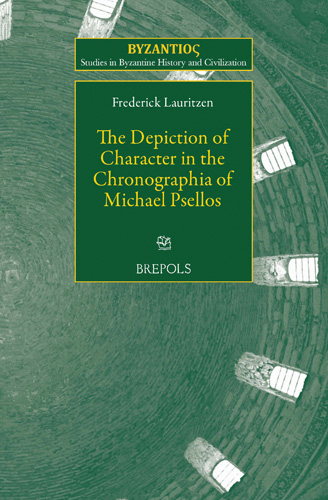
Character is the single most important feature of the Chronographia written by Michael Psellos (1018-1081?). It is an historical account of the events at court from the time of Basil II (986-1025) to Michael VII Doukas (1071-1078) with the insight of someone whose career developed within the imperial court and whose unsurpassed eye f
Character is the single most important feature of the Chronographia written by Michael Psellos (1018-1081?). It is an historical account of the events at court from the time of Basil II (986-1025) to Michael VII Doukas (1071-1078) with the insight of someone whose career developed within the imperial court and his unsurpassed eye for details of personality was enlightened by his intellectual interests. During his lifetime, Psellos was considered the forefront of philosophical studies in the capital and therefore was named consul of philosophers in 1047 and he credited himself with reintroducing Plato on the cultural scene of Constantinople. It was his attractive manner of speech which led him to remain in the emperor’s presence and his rhetorical ability also plays an important role in the Chronographia, especially when he emphasizes or fabricates events to justify his understanding of a person’s mind. Many have employed Psellos’ Chronographia for its value in shedding light on historic events, itself important, though it often neglects the fact that Psellos’ historiography is not based on factual details to explain multiple causes for events, but seeks to attribute blame or merit to the personality of the ruling emperor.
- By (author) Frederick Lauritzen
Other Titles in this Series

Similar Books
 A Collaborative Tapestry in Honour of Shirley Ann Brown / Une fresque brodée en l’honneur de Shirley Ann Brown
The Bayeux Tapestry Seen by her Colleagues and Friends / La Tapisserie de Bayeux vue par ses collègues et amis
 Behind the Scenes of Medieval Roofs
An Overview of the Roofing Systems of Italian Churches
Volume 90






 Innovation and Medieval Communities
The Circulation of Ideas and Practices in and out of the Town (1200-1500)
Volume 63
 John Dunstaple Reading Boethius
John Dunstaple’s Annotations to Boethius’s “De institutione musica” in the Manuscript Oxford, Corpus Christi College Library, MS 118
 Linguistic and Cultural Dynamics in a Frontier Society
New Perspectives on Northeastern Bavaria and Western Bohemia in the Early Middle Ages
Volume 9
 Medieval Debates on Foreknowledge: Future Contingents, Prophecy, and Divination
Acts of the XXVII Annual Colloquium of the SIEPM, Trento 12-15 September 2023
Volume 31
 Medieval Yeghegis, Armenia
History, Archaeology, Society. Local Multiplicities and Global Connections of a Rural Centre on the Silk Road(s)


 Power and Women in Southeast and Central Europe in Late Medieval and Early Modern Period (1300-1600)
Volume 10


 The Anglo-Norman Bible’s Books of Kings, a Critical Edition
(BL Royal 1 C III, fols 234r-274v)
Volume 37


 The Embodied Court in the Premodern World
Understanding the Physicality, Performativity and Lifecycle of Bodies at Court in Europe and Beyond, 1400-1800
Volume 4


 The Middle English ‘Medicines for Horses’
Edited from the Manuscript formerly at Kensington Palace, HRH Duke of Gloucester MS s.n. (olim York House MS 45)
Volume 69
